Supreme Court Guts Voting Rights Act in 6-3 Ruling, Striking Down Louisiana's Majority-Black District
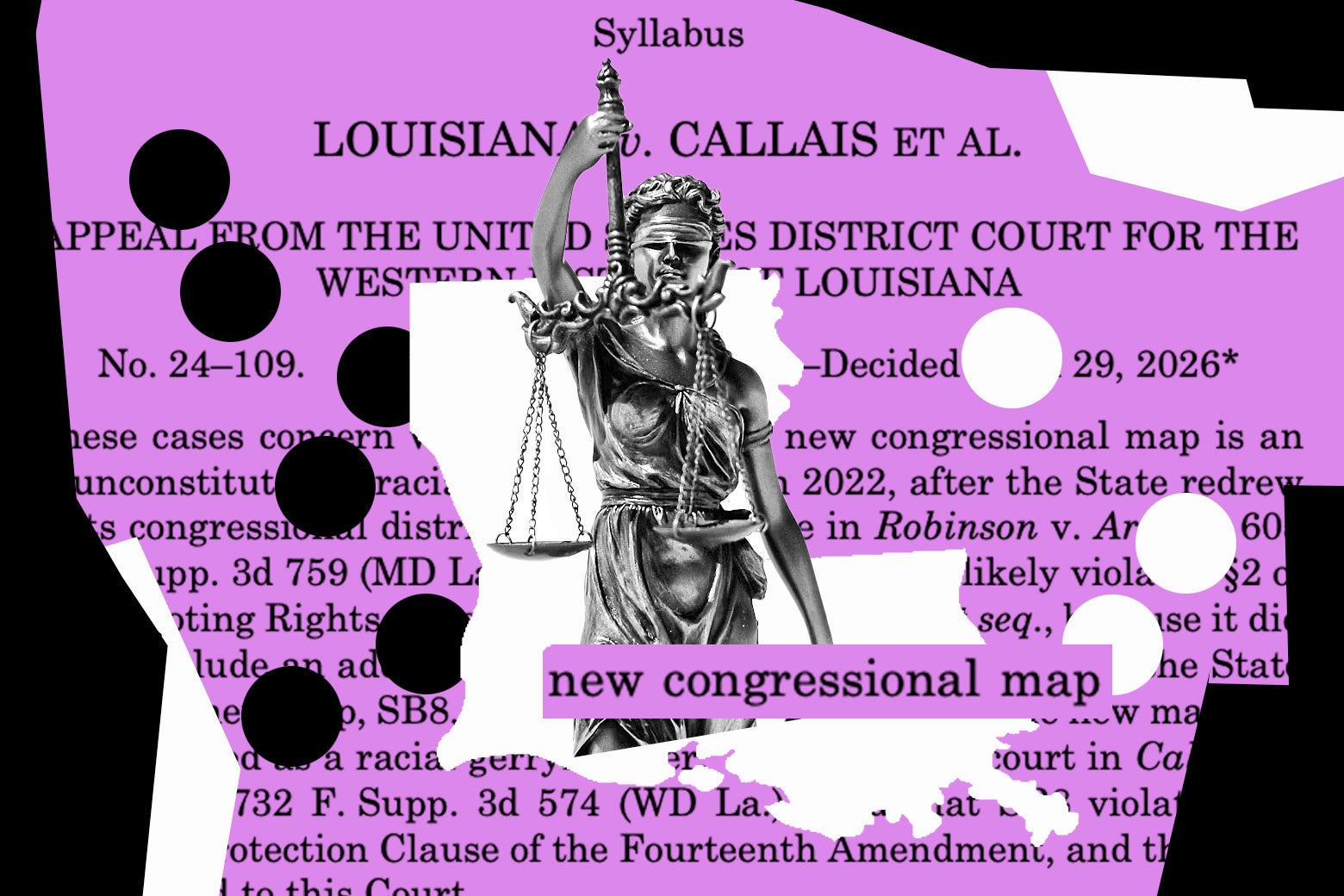
The Supreme Court delivered a seismic blow to the Voting Rights Act of 1965 on April 29, ruling 6-3 along ideological lines in Louisiana v. Callais that Louisiana's majority-Black congressional district constitutes an unconstitutional racial gerrymander. Writing for the conservative majority, Justice Samuel Alito set a dramatically higher bar for when states must create minority-majority districts — a standard that civil rights attorneys warn will make future VRA challenges nearly impossible to win.
Background
The Voting Rights Act of 1965 stands as one of the most consequential pieces of legislation in American history, enacted to dismantle the systematic disenfranchisement of Black voters across the South. Section 2 of the act prohibits any voting practice that discriminates on the basis of race, and its 1982 amendment established an "effects" test — meaning plaintiffs could challenge maps that dilute minority voting power without proving discriminatory intent. That amendment transformed Section 2 into the primary legal tool for challenging racially discriminatory redistricting.
Louisiana's congressional map has been the subject of prolonged litigation. After the 2020 census, civil rights groups sued the state, arguing its map diluted Black voting power. Lower courts ordered Louisiana to draw a second majority-Black district. The state complied, creating the map now before the Supreme Court — which the conservative majority has now struck down as going too far.
Key Developments
Justice Alito's majority opinion held that while race-conscious data can inform mapmaking to remedy documented past discrimination, the evidence of that discrimination must be substantial and specific. The majority found Louisiana's evidence insufficient to justify the second majority-Black district, concluding the state's race-conscious map was an "unconstitutional gerrymander" because Section 2 did not require its creation.
Alito also raised a concern that has animated the conservative legal movement for years: that voting rights lawsuits are being weaponized for partisan ends. Since the Court ruled in 2019 that partisan gerrymandering is beyond federal judicial reach, Alito wrote, plaintiffs may be "dressing their political-gerrymandering claims in racial garb." He argued that courts must disentangle political from racial motivations — a standard that critics say is nearly impossible to meet in practice.
Justice Elena Kagan authored a forceful dissent on behalf of the Court's three liberal justices, reading portions aloud from the bench — a rare signal of profound disagreement. Kagan argued the majority "eviscerates the law" and makes a "nullity" of the 1982 amendment's effects test. "Under the Court's new view," she wrote, "a State can, without legal consequence, systematically dilute minority citizens' voting power."
Why Americans Should Care
The ruling's immediate impact falls hardest on Louisiana's 6th Congressional District, which was drawn to give Black voters — who make up 33 percent of Louisiana's population — a meaningful voice in electing their representative. That district now faces elimination or radical redrawing, likely costing Louisiana its only Black-majority seat.
The consequences extend far beyond Louisiana's borders. States across the South — including Georgia, Alabama, Mississippi, and South Carolina — face pending redistricting litigation under Section 2. This ruling hands state legislatures in those states a powerful new shield against minority-voting-power claims. Congressional delegations from these states could shift significantly before the 2026 midterms, with direct consequences for committee assignments, federal funding priorities, and the balance of power in the House. Civil rights organizations in Atlanta, Jackson, and Columbia are already reassessing their legal strategies in light of the decision.
Why It Matters
This ruling continues a decade-long project by the Roberts Court to dismantle the structural protections of the Voting Rights Act. In 2013's Shelby County v. Holder, the Court gutted Section 5's preclearance requirement, which had required states with histories of discrimination to obtain federal approval before changing voting laws. In 2021's Brnovich v. Democratic National Committee, the Court narrowed Section 2's application to voting procedures. Now, with Louisiana v. Callais, the Court has narrowed Section 2's application to redistricting itself.
The pattern is unmistakable: each ruling removes another enforcement mechanism from the landmark 1965 law. Internationally, the United States has long positioned itself as a model for democratic representation. Countries like Canada and the United Kingdom use independent boundary commissions specifically to insulate redistricting from political manipulation. The American system, by contrast, leaves mapmaking largely to partisan state legislatures — and the Court has now made it harder for federal law to correct the resulting distortions. The second-order effect is a Congress that increasingly fails to reflect the demographic composition of the country it governs.
What's Next
Louisiana must now redraw its congressional map, almost certainly eliminating the second majority-Black district before the 2026 midterms. Civil rights groups have signaled they will pursue alternative legal theories, including state constitutional challenges in jurisdictions with stronger protections. Congress could theoretically amend Section 2 to restore the effects test's original scope, but the current legislative arithmetic makes that prospect remote. The ruling will also accelerate litigation in Georgia and Alabama, where similar redistricting battles are pending.
Sources: Politico; NPR; Associated Press