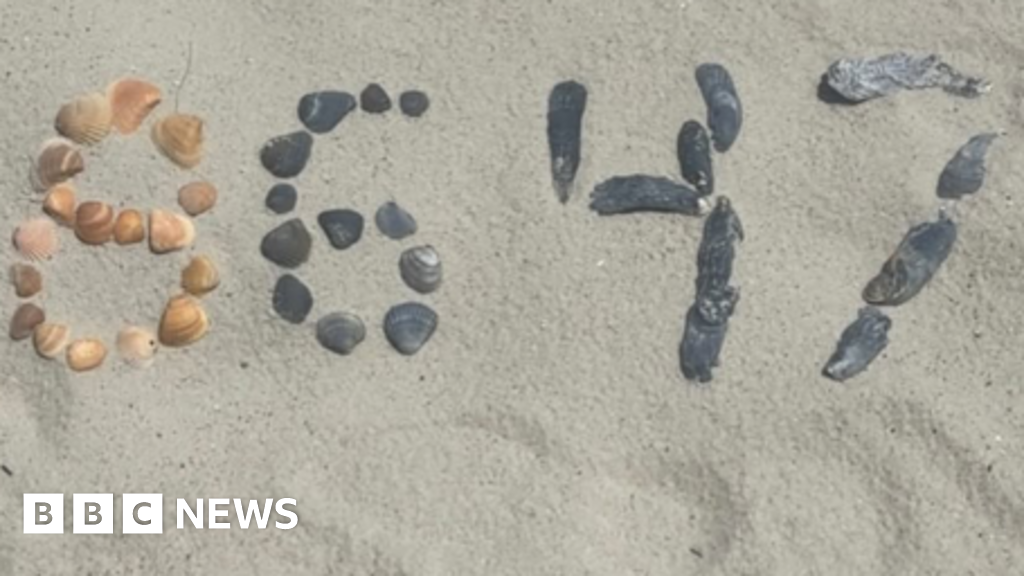
James Comey Indicted Over '86 47' Seashell Post in Second Federal Prosecution of Former FBI Director
A federal grand jury indicted former FBI Director James Comey on April 29 in connection with a 2025 social media post in which he shared an image of seashells arranged to form the numbers "86 47" — a combination that federal prosecutors allege constitutes a threat against President Trump, the 47th president of the United States. Comey, who deleted the post and stated he was unaware of the numbers' violent connotations, now faces his second federal indictment, an extraordinary legal situation for a man who once led the nation's premier law enforcement agency.
Background
James Comey served as FBI Director from 2013 until President Trump fired him in May 2017, a dismissal that triggered the appointment of Special Counsel Robert Mueller and years of political and legal turbulence. Comey subsequently became one of the most prominent critics of the Trump administration, publishing a memoir and making frequent media appearances. His first federal indictment, which preceded this latest charge, stemmed from separate allegations that have been the subject of ongoing litigation.
The phrase "86 47" carries specific meaning in certain online communities, where "86" is used as slang for eliminating or killing someone, and "47" refers to Trump as the 47th president. The Secret Service and Department of Justice have treated similar numerical combinations as potential threats requiring investigation. Comey posted the image in 2025 and deleted it shortly after, stating publicly that he had seen the arrangement as a reference to the ocean and had no knowledge of the phrase's threatening connotation.
Key Developments
The grand jury returned the indictment on April 29, with federal prosecutors in Washington alleging that Comey knowingly posted content that constituted a threat against the president. The specific charges and their statutory basis were not immediately made public in full, but sources familiar with the matter indicated the indictment focuses on whether Comey's intent can be established beyond a reasonable doubt — a high bar given his public statements about ignorance of the phrase's meaning.
Comey's legal team responded swiftly, characterizing the indictment as politically motivated and vowing to contest the charges vigorously. His attorneys pointed to the absence of any prior threatening conduct, his immediate deletion of the post, and his public explanation as evidence that the prosecution lacks merit. Legal analysts noted that intent is the central battleground in any threat prosecution, and that Comey's defense will hinge on convincing a jury that his explanation is credible.
The indictment drew immediate reactions across the political spectrum. Trump allies celebrated it as accountability for a longtime adversary. Civil liberties organizations and former law enforcement officials expressed alarm, arguing that prosecuting a social media post based on an ambiguous numerical arrangement sets a dangerous precedent for free expression.
Why Americans Should Care
The Comey indictment raises fundamental questions about the boundaries of protected speech and the independence of federal prosecutorial decisions. For Americans in states with active political speech cultures — including New York, California, and Texas — the case tests whether social media posts that can be interpreted as threatening, even if not intended as such, can form the basis of federal criminal charges.
The case also lands in the middle of a broader national debate about the politicization of the Justice Department. Congressional Democrats on the House Judiciary Committee have already announced plans to request documents related to the prosecution's origins. In Washington, D.C., where the case will likely be tried, the jury pool will be drawn from a population that voted overwhelmingly against Trump — a factor that defense attorneys will cite in any venue challenge. The outcome will set precedent for how courts treat ambiguous online speech in an era of heightened political polarization.
Why It Matters
The prosecution of a former FBI director for a social media post is without modern precedent in American legal history. The closest historical parallel is the prosecution of political opponents under the Sedition Act of 1918, which criminalized speech deemed disloyal to the government — a law widely regarded today as a constitutional overreach that was eventually allowed to expire. The Supreme Court's modern First Amendment jurisprudence, particularly its 2015 ruling in Elonis v. United States, requires that threat prosecutions establish subjective intent to threaten, not merely that a reasonable person would feel threatened.
Internationally, democracies have struggled with the line between protected political speech and genuine threats. The United Kingdom's Online Safety Act and Germany's NetzDG law both impose content moderation obligations on platforms, but neither criminalizes ambiguous numerical arrangements. The Comey case will test whether American courts apply the Elonis standard rigorously or allow a lower threshold when the alleged target is the sitting president.
What's Next
Comey is expected to be arraigned within days of the indictment. His legal team will almost certainly file a motion to dismiss on First Amendment grounds, arguing that the post does not meet the legal definition of a true threat under Elonis. If the case proceeds to trial, it will become one of the most closely watched criminal proceedings in Washington in years. The Justice Department's decision to pursue the case will face scrutiny from the courts, Congress, and the broader legal community throughout the process.
Sources: Just Security; NPR; Associated Press