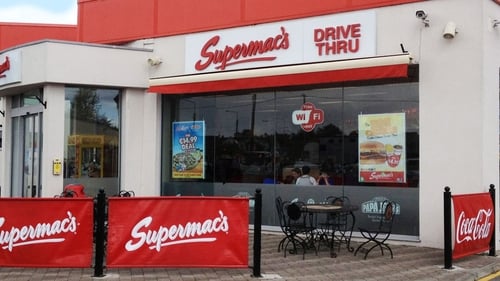
Supermac's Wins UK Trademark Battle Against McDonald's in Landmark Victory for Irish Brand
The Galway-based fast-food chain Supermac's has won a landmark legal battle against McDonald's in the United Kingdom, with the UK Intellectual Property Office ruling this week that the Irish brand is entitled to register its name and logo as a trademark in Britain — a decision that founder Pat McDonagh described as a vindication of his company's right to defend its identity and a crucial step toward expansion across the Irish Sea.
Background
The rivalry between Supermac's and McDonald's is one of the most entertaining David-and-Goliath stories in Irish business history. Pat McDonagh founded Supermac's in Ballinasloe, County Galway, in 1978, building it into a beloved national institution with more than 130 outlets across Ireland. For decades, the chain operated without significant legal friction from its American counterpart — until McDonald's began aggressively challenging Supermac's trademark applications in European and international jurisdictions.
The dispute escalated dramatically in 2017 when Supermac's filed a challenge at the European Union Intellectual Property Office (EUIPO) seeking to cancel McDonald's "Big Mac" trademark, arguing that the American giant had not genuinely used the mark in the EU. In January 2019, the EUIPO ruled in Supermac's favour, cancelling the Big Mac trademark for restaurant services — a ruling that sent shockwaves through the global fast-food industry and made Supermac's a cause célèbre among small business advocates worldwide.
The UK battle has been running in parallel. Following Brexit, the UK Intellectual Property Office operates independently of the EUIPO, and McDonald's formally opposed Supermac's application to register its brand in Britain, arguing that the "Mc/Mac" component of the name would conflict with its existing trademark rights, including "Big Mac" and "McCafé."
Key Developments
The UKIPO has now rejected McDonald's objections in full. The office concluded that the average consumer would not directly confuse the two brands, finding that the differences between the marks were substantial enough that "no link will be made by the average consumer" — even while acknowledging that McDonald's maintains significant reputation and goodwill in the British market. The ruling clears the way for Supermac's to formally register its brand in the UK, providing the legal foundation for potential expansion into Britain.
Pat McDonagh welcomed the decision warmly, describing it as "far more significant" for the company's future business operations than a recent setback at the EUIPO, where in June 2026 an appeal regarding an EU-wide trademark was dismissed on the grounds of potential confusion for German and English-speaking consumers. That EU rejection does not affect Supermac's ability to continue trading under its own name in the Republic of Ireland, where the brand has operated for nearly five decades.
Why It Matters
The UK ruling matters for reasons that extend well beyond Supermac's own commercial interests. It establishes an important precedent for smaller brands seeking to defend their identities against the trademark aggression of multinational corporations. McDonald's has a long history of using its legal resources to challenge any brand that it perceives as encroaching on its "Mc/Mac" territory — a strategy that has been described by critics as trademark bullying. The UKIPO's clear-eyed assessment that consumers are perfectly capable of distinguishing between a Galway chipper and a global fast-food empire is a welcome corrective to that approach.
For Irish business more broadly, the victory is a source of genuine pride. Supermac's has fought these battles largely on its own terms, without the backing of a large legal department or a multinational parent company. The fact that a family-owned Irish business has repeatedly held its own against one of the world's most powerful corporations in multiple jurisdictions is a remarkable achievement.
Local Impact
In Galway, where Supermac's has its roots and its headquarters, the news was greeted with considerable satisfaction. The chain employs thousands of people across Ireland, with a particularly strong presence in the west of the country. A successful expansion into the UK market — now legally possible following the UKIPO ruling — would create significant new employment opportunities, potentially including roles in supply chain, management, and franchise operations. McDonagh has previously indicated that the British market represents a natural next step for the brand, given the large Irish diaspora community in cities like London, Manchester, and Birmingham.
What's Next
Supermac's will now proceed with the formal registration of its trademark in the UK, a process expected to be completed within the next several months. The company is expected to begin exploratory work on potential UK locations in the coming year, with any expansion likely to begin in cities with strong Irish community connections. McDonald's retains the right to appeal the UKIPO decision, though legal observers suggest the grounds for a successful appeal are limited given the clarity of the office's reasoning.