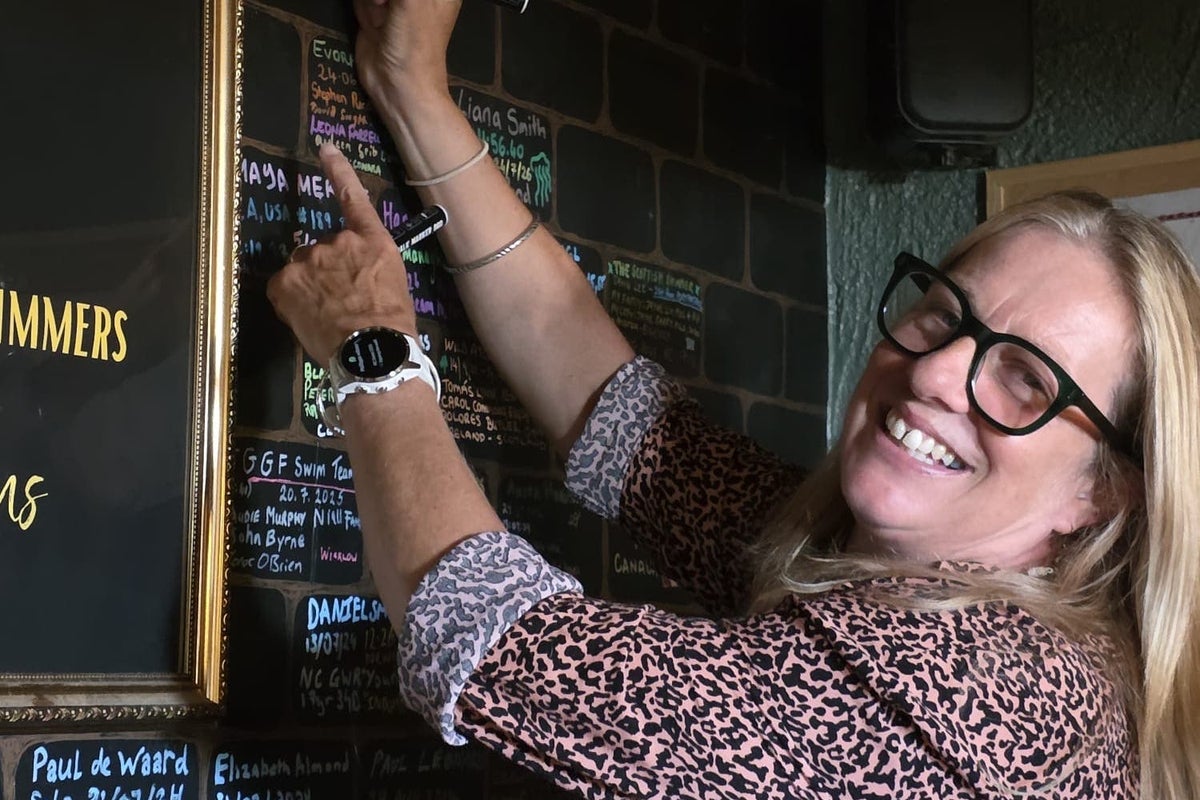
Amazing Grace: Bangor Mother Completes Irish Triple Crown with North Channel Crossing
Grace McLaughlin, a 54-year-old mother of three from Bangor, County Down, has completed the Irish Triple Crown of open water swimming after crossing the North Channel from The Gobbins in Islandmagee to Portpatrick in Scotland — a feat that places her among fewer than 200 people in history to have achieved the elite challenge established by the Irish Long Distance Swimming Association.
Background
The Irish Triple Crown of open water swimming is one of the most demanding endurance challenges in the sport. Established by the Irish Long Distance Swimming Association, it requires the completion of three specific marathon swims: the English Channel, the North Channel, and the Catalina Channel in California. Each crossing presents its own formidable combination of distance, cold water, tidal complexity, and marine hazards. The North Channel, which separates the north-east coast of Ireland from south-west Scotland, is widely regarded as the most difficult of the three — colder, more unpredictable, and notorious for the presence of lion's mane jellyfish, whose stings can be debilitating even for experienced swimmers.
Grace McLaughlin had been building towards this moment for years. A holder of two World Ice Swimming gold medals — including a world record in the 500 metres for her age group — she had already completed the Galway Bay Swim and the Fastnet Swim before setting her sights on the Triple Crown. Her preparation for the North Channel crossing was meticulous, involving months of cold-water acclimatisation, long-distance training sessions, and logistical planning with the Newry-based Infinity Channel Swimming organisation, which provided her support boat and crew.
Open water marathon swimming occupies a unique space in Irish sporting culture. It demands not just physical endurance but a particular kind of mental fortitude — the ability to sustain effort through darkness, cold, and isolation for hours at a time, with no lane rope, no pool wall, and no guarantee of success. The North Channel has defeated many experienced swimmers who have attempted it, and its completion is never routine.
Key Developments
McLaughlin entered the water at The Gobbins in Islandmagee shortly after 2:00 am on Thursday, 13 August 2026, beginning her crossing in darkness. She maintained a steady pace of 57 to 60 strokes per minute throughout the swim, sustained by regular feeds from her support crew aboard the Infinity Channel Swimming vessel. The crossing took 12 hours, 43 minutes, and 57 seconds — a time that reflects both the difficulty of the channel and the consistency of her effort.
Upon reaching Portpatrick in Scotland, McLaughlin followed the tradition observed by all North Channel finishers, signing the Wall of Champions at Pier 36 in Donaghadee on her return — a register of those who have completed the crossing that serves as a permanent record of achievement. With her name added to that list, she became the 199th person and the 84th woman to complete the Irish Triple Crown.
Friends and family who had followed her progress through the night described the moment of completion as deeply emotional. McLaughlin herself, speaking after the swim, credited the support of her crew and the broader open water swimming community in Northern Ireland for sustaining her through the most difficult stretches of the crossing.
Why It Matters
Grace McLaughlin's achievement is a reminder that elite sporting accomplishment is not the exclusive preserve of the young or the professionally trained. At 54, she has completed one of the most demanding endurance challenges in open water swimming — a discipline that rewards experience, patience, and accumulated resilience as much as raw physical capacity. Her story sits within a broader tradition of Irish women excelling in open water marathon swimming, a tradition that includes Ned Denison's pioneering work in developing the sport in Ireland and the achievements of swimmers like Nuala Moore and Sylvia Sheridan.
The North Channel crossing also carries particular resonance in the context of Northern Ireland's sporting landscape. The channel that separates Antrim from Scotland is a physical feature of daily life for communities along the north-east coast, and the achievement of crossing it under human power alone carries a symbolic weight that goes beyond the athletic. For the open water swimming community in County Down and across Northern Ireland, McLaughlin's success is a source of genuine pride.
Local Impact
In Bangor, where McLaughlin lives, the response to her achievement has been warm and immediate. The town has a strong connection to the sea — Bangor Marina is one of the largest in Ireland — and open water swimming has a growing community of practitioners along the County Down coastline. McLaughlin's success is expected to inspire others in the area to take up the sport, and Infinity Channel Swimming, the Newry-based organisation that supported her crossing, has reported increased interest in its training programmes since the swim was completed.
What's Next
McLaughlin has indicated that she intends to continue competing in open water events, though she has not yet announced specific targets for the coming season. The Irish Long Distance Swimming Association will formally recognise her Triple Crown completion at its annual awards ceremony later in the year. For the broader open water swimming community in Northern Ireland, attention now turns to the autumn season of events, including the annual Lough Erne Swim and the Strangford Lough crossing.