Stormont Returns to a Formidable Agenda as Budget Deadlock, Legislative Backlog and Election Clock Create Perfect Storm
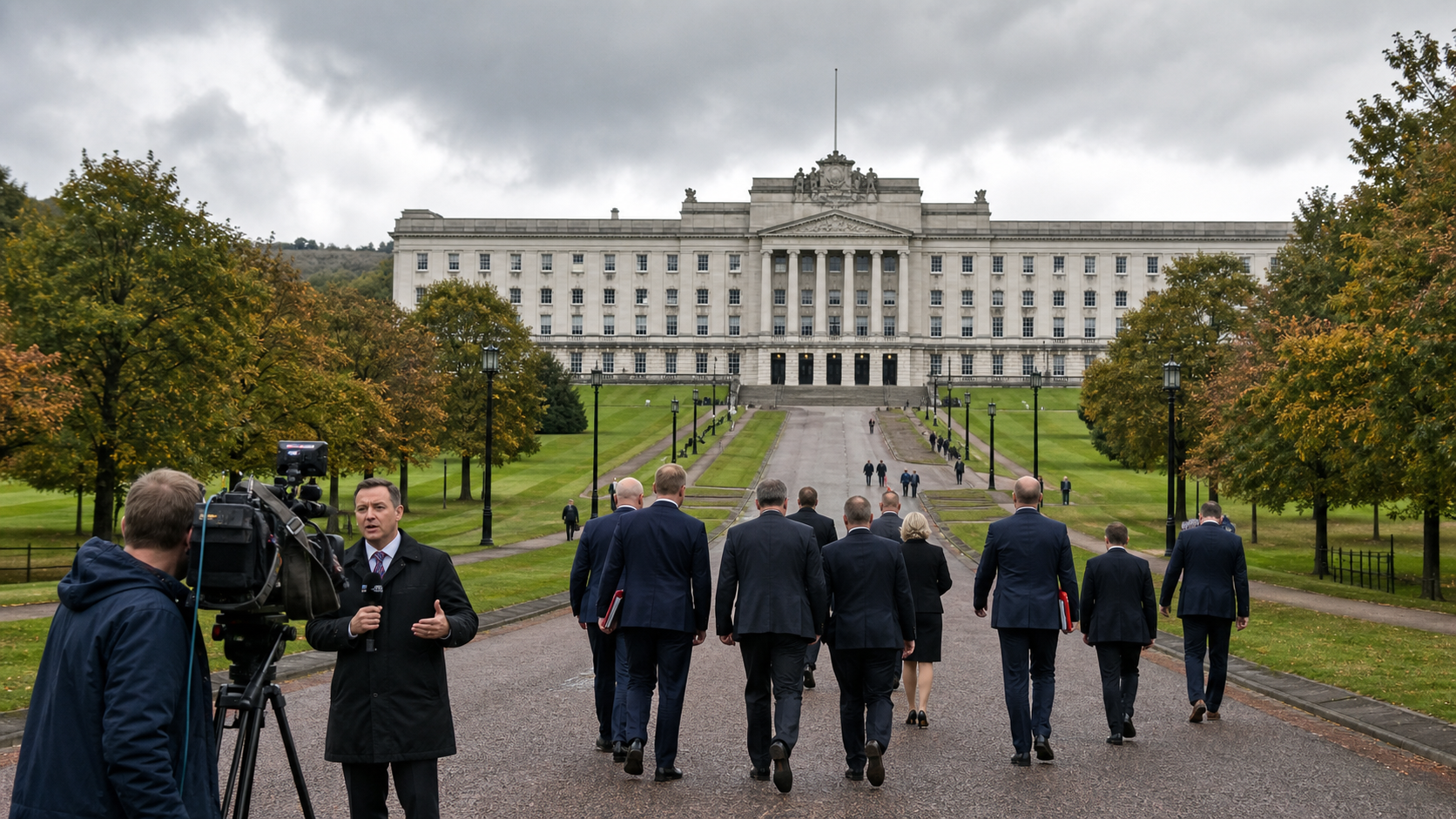
The Northern Ireland Assembly has reconvened after its summer recess to face one of the most pressured legislative periods in the devolved institution's recent history, with ministers operating without a formal budget since April, flagship policies stalled, and the Assembly's dissolution in March 2027 creating a hard deadline that concentrates minds across all five Executive parties.
Background
The Northern Ireland Executive has been operating under contingency spending arrangements since April 2026, when the failure to agree a formal budget left departments without the financial certainty needed for effective planning. The independent think tank Pivotal has characterised this situation as "catastrophic" for public services, noting that the absence of a settled budget prevents departments from making the medium-term commitments — on staffing, capital projects, and service development — that effective governance requires.
The financial picture is stark. The health sector is projecting an overspend of approximately £800 million for the current financial year, driven by a combination of rising demand, agency staffing costs, and the structural underfunding that has characterised the NI health service for more than a decade. Education faces a projected overspend of around £250 million, with school budgets under severe pressure and the Education Authority struggling to meet its statutory obligations. Despite ongoing discussions with Treasury officials in London, no resolution had been reached as of the Assembly's return.
The political context adds further complexity. The Assembly is due to dissolve in March 2027 ahead of a scheduled May election, giving the current Executive fewer than seven months to pass legislation and make decisions that will shape public services for years to come. Speaker Edwin Poots has issued repeated warnings about the limited time available to clear the legislative backlog, and the pre-election atmosphere is already influencing the willingness of parties to take difficult decisions.
Key Developments
The Good Jobs Bill, championed by Economy Minister Caoimhe Archibald of Sinn Féin, is among the most contested items on the legislative agenda. The bill aims to reform employment law in Northern Ireland, introducing stronger protections for workers on zero-hours contracts and improving rights around flexible working. The DUP has expressed reservations, citing concerns from business groups about the potential impact on competitiveness, and the bill's passage before dissolution is far from guaranteed.
The Casement Park redevelopment in west Belfast remains mothballed, caught in a web of legal challenges and financial disputes that have delayed what was once billed as a transformative infrastructure project for the GAA in Ulster. The stadium, which would serve as a major venue for the 2028 European Championship if completed, has become a symbol of the Executive's difficulty in delivering large-scale capital projects. Infrastructure Minister John O'Dowd has indicated that a resolution to the outstanding legal issues is expected before the end of the year, but timelines have slipped repeatedly.
The Race Equality Bill, which would introduce statutory protections against racial discrimination in areas not currently covered by existing legislation, has yet to be tabled, despite commitments from the Executive. The Speaker has warned that the bill cannot be passed before dissolution unless it is introduced within weeks.
Why It Matters
The Assembly's return matters because the decisions — or non-decisions — taken in the coming months will have consequences that extend well beyond the March 2027 dissolution. A budget agreed now would give departments the certainty they need to plan for the 2027-28 financial year; a budget that remains unresolved will leave the incoming Executive, whatever its composition, inheriting a financial crisis rather than a clean slate. The health service, in particular, cannot sustain another year of contingency arrangements without further deterioration in waiting times and service quality.
The pre-election dynamic is a genuine constraint. Parties are reluctant to take decisions that could be used against them in the May 2027 campaign, and the DUP in particular is navigating internal pressures following the conviction of former leader Jeffrey Donaldson. Sinn Féin, as the largest party, is seeking to demonstrate legislative delivery while managing the tension between its Stormont and Dublin agendas. The Alliance Party, which has grown significantly in recent elections, is positioning itself as the party of competent, non-tribal governance — a pitch that requires the Executive to actually govern.
Local Impact
The budget crisis has tangible consequences for communities across Northern Ireland. In Belfast, the failure to agree capital spending has delayed infrastructure projects in areas including the Glider network expansion and road maintenance programmes. Health trusts — the Belfast, South Eastern, Southern, Western, and Northern — are all operating under financial pressure, with waiting lists for elective procedures and outpatient appointments continuing to grow. Schools across the province are managing with budgets that headteachers describe as inadequate, with some cutting teaching assistant hours and extracurricular activities to balance their books. In Derry, Newry, and Antrim, local councils are absorbing some of the pressure through discretionary spending, but their capacity to do so is limited.
What's Next
The Executive is expected to hold a series of intensive budget discussions over the coming weeks, with a formal spending plan the priority before the Assembly rises for its October recess. The Good Jobs Bill is scheduled for its second stage reading in October, with the DUP's position likely to determine whether it can pass before dissolution. The Casement Park legal situation is expected to be resolved by November, at which point a revised project timeline will be published. The Assembly's final plenary session before dissolution is scheduled for March 13, 2027.