Stormont Assembly Passes Renewable Electricity Bill in Cross-Party Vote as NI Seeks to Revive Stalled Green Energy Sector
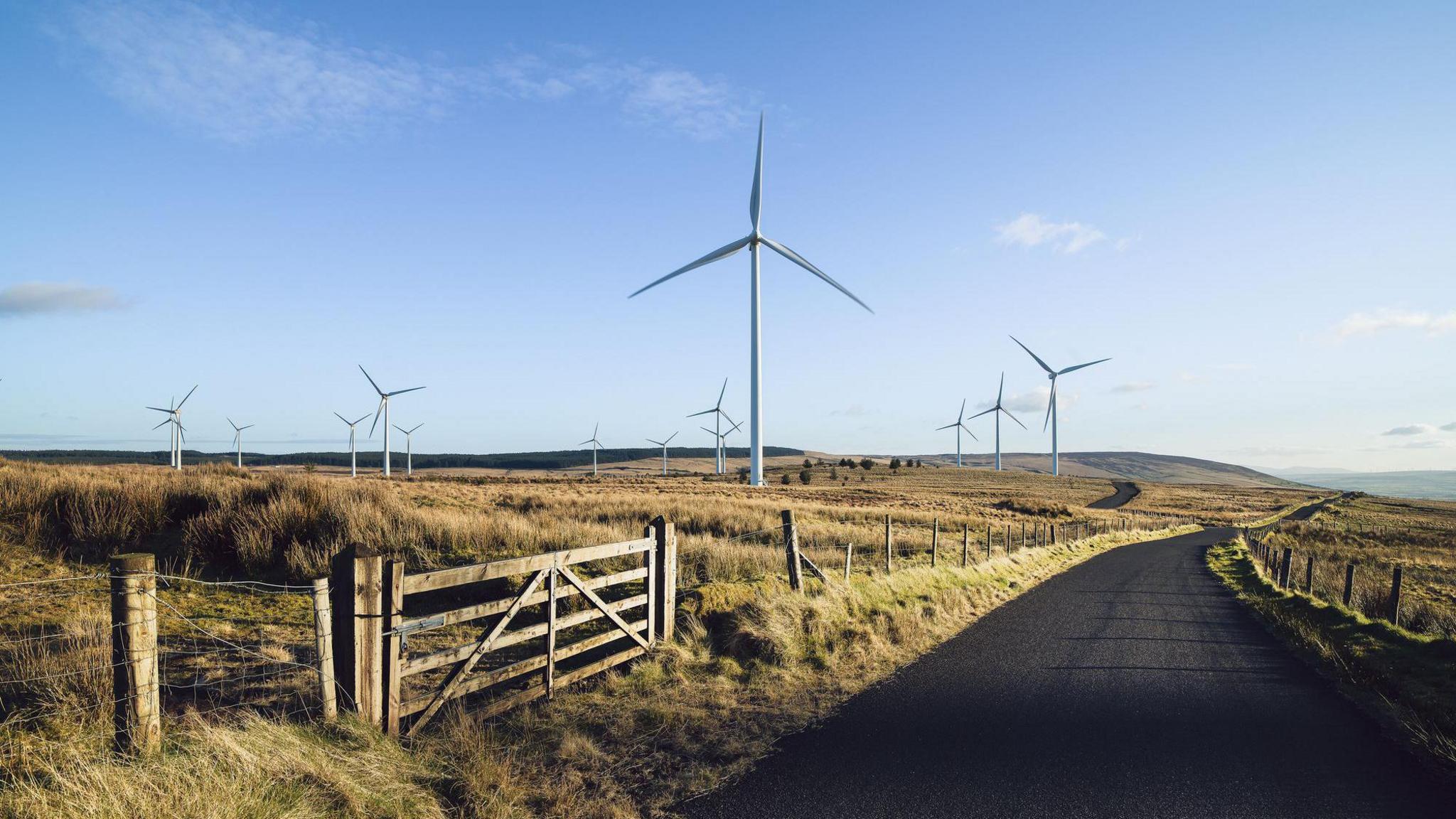
The Northern Ireland Assembly passed the second stage of the Renewable Electricity Generation Bill on Tuesday in a cross-party vote that marks the most significant legislative step forward for the region's green energy sector in nearly a decade, with Economy Minister Caoimhe Archibald describing the legislation as a foundation for long-term energy security and a mechanism to protect households and businesses from the price volatility that has characterised global energy markets in recent years.
Background
Northern Ireland's renewable energy sector has been in a state of effective stagnation since the closure of the Northern Ireland Renewables Obligation in 2017. That scheme, which provided financial incentives for renewable electricity generation, was wound down without a successor mechanism in place — leaving the region without a coherent framework for incentivising new investment in wind, solar, and other clean energy technologies. The gap was compounded by the political fallout from the Renewable Heat Incentive scandal, which poisoned the well for energy policy at Stormont for several years and made ministers reluctant to introduce new support schemes.
The consequences have been significant. While the 2022 Climate Change Act set a statutory target of 80% renewable electricity consumption by 2030, Northern Ireland is currently generating approximately 47% of its gross electricity consumption from renewable sources — a figure that has barely moved in recent years. Without new investment in generation capacity, the 2030 target is widely regarded as unachievable. The Renewable Electricity Generation Bill, introduced by Economy Minister Archibald in June 2026, is designed to address this gap by establishing the legal basis for a Renewable Electricity Price Guarantee scheme — a competitive auction mechanism that would provide long-term price certainty for renewable energy developers and, in turn, unlock the private investment needed to build new capacity.
The bill's passage through its second stage on Tuesday represents a significant milestone, though it remains subject to further scrutiny by the Economy Committee before proceeding to its final stages.
Key Developments
Tuesday's Assembly debate saw contributions from members across the political spectrum, with all parties expressing support for the bill's objectives, though some voiced frustration at the time taken to reach this point. Sinn Féin MLA Pádraig Delargy highlighted the bill's potential to reduce energy costs for households and to facilitate cross-border collaboration on renewable energy — a reference to the significant potential for North-South electricity market integration. SDLP MLA Sinéad McLaughlin characterised the bill's passage as "a beginning rather than an end," noting that the legislative framework alone will not deliver the investment needed without sustained political commitment and effective implementation.
Minister Archibald said the legislation would "deliver positive outcomes for our economy and our citizens," adding that the price guarantee mechanism would provide the long-term certainty that renewable energy developers require before committing to major capital investment. She acknowledged that Northern Ireland has fallen behind where it should be on renewable energy and said the bill represented a determination to make up lost ground.
The formal closure of the Renewable Heat Incentive scheme in May 2026 — the so-called "Cash for Ash" scandal that brought down the previous Executive — removed a significant political obstacle to new energy legislation, allowing the Assembly to approach the subject with less of the institutional wariness that had characterised the intervening years.
Why It Matters
The Renewable Electricity Generation Bill matters for several interconnected reasons. At the most immediate level, it creates the legal architecture for a scheme that could unlock hundreds of millions of pounds of private investment in wind and solar generation across Northern Ireland. That investment would create jobs, generate tax revenue, and reduce the region's dependence on imported fossil fuels — a dependence that has been painfully exposed by the energy price shocks of recent years. At a broader level, the bill represents Northern Ireland's most serious attempt to align its energy policy with its statutory climate commitments. The 2030 target of 80% renewable electricity is ambitious, and meeting it will require a step-change in the pace of new capacity development. The price guarantee mechanism, if designed and implemented effectively, could provide the catalyst for that step-change. There is also a cross-border dimension: closer integration of the Northern Ireland and Republic of Ireland electricity markets — which already operate under a single wholesale market framework — could deliver significant efficiency gains and support the development of offshore wind resources in the Irish Sea.
Local Impact
The bill's most immediate practical impact will be felt in rural areas of Northern Ireland, where the majority of the region's wind energy potential is located. Counties Antrim, Down, Tyrone, and Fermanagh have significant onshore wind resources, and communities in these areas stand to benefit both from the economic activity associated with new development and from the community benefit funds that the price guarantee scheme is expected to require developers to establish. In urban areas, the bill's impact will be felt primarily through its effect on electricity prices — the scheme is designed to provide long-term price stability, which would benefit both households and businesses across Belfast, Derry, Newry, and Armagh.
What's Next
The bill will now proceed to the Economy Committee for detailed scrutiny, a process expected to take several months. The committee will examine the bill's provisions in detail, take evidence from stakeholders including energy developers, consumer groups, and environmental organisations, and may propose amendments before the bill returns to the full Assembly for its final stages. The Department for the Economy has indicated that it hopes to have the legislation on the statute book by early 2027, allowing the first competitive auction under the new scheme to be launched before the end of that year.