Stormont Budget Deadlock Widens into Institutional Reform Debate as Alliance and SDLP Push for Power-Sharing Overhaul
Northern Ireland's persistent budget crisis has expanded into a fundamental debate about the future of the Stormont institutions, with Alliance and the SDLP pushing for structural reforms to prevent future collapses of the power-sharing executive, and Sinn Féin proposing changes to the nomination process for First Minister and deputy First Minister that would reduce the ability of the largest parties to bring down the institutions.
Background
The Northern Ireland Assembly has operated under severe financial pressure throughout 2026, with the Executive unable to agree a budget for the current financial year and relying on a temporary legal workaround that permits officials to utilise up to 95% of the previous year's funding. The situation has created significant uncertainty for public services, with health trusts, schools, and local councils all operating without the certainty of a confirmed budget.
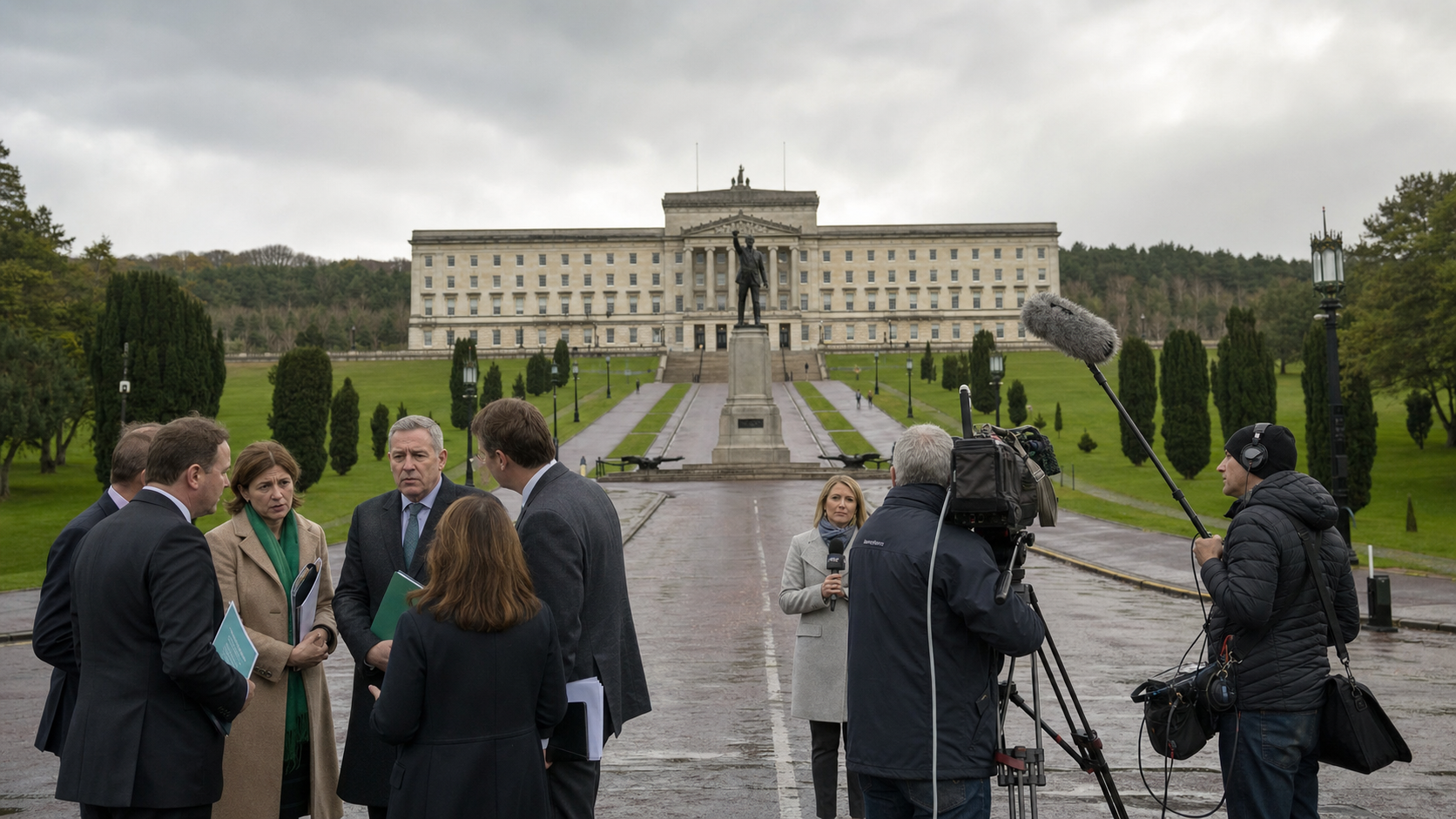
Secretary of State Sir Chris Bryant arrived at Stormont earlier this week to mediate the deadlock, in what was described as a new phase of negotiations that extends beyond the immediate financial figures to include the potential reform of Northern Ireland's governing institutions. His visit followed the rejection by local political parties of a £350 million per year offer from the UK government, which parties said fell £100 million short of the £450 million needed to address mounting pressures in health and education.
The budget crisis has its roots in a structural underfunding of Northern Ireland's public services that predates the current Assembly term, compounded by the inflationary pressures of recent years and the particular challenges facing the health service, which accounts for the largest share of the Executive's budget. The failure to agree a budget has prevented the Executive from making the long-term investment decisions needed to address waiting lists, school maintenance backlogs, and infrastructure deficits.
Key Developments
Alliance and the SDLP have used the current crisis to advance proposals for structural reforms to the power-sharing institutions that would make future collapses less likely. Both parties have argued that the current system, which allows the largest unionist or nationalist party to bring down the Executive by refusing to nominate ministers, creates an inherent instability that undermines effective governance and deters investment.
Sinn Féin has proposed a specific modification to the current power-sharing dynamics: if the largest parties within the nationalist or unionist blocs decline to nominate individuals for the roles of First Minister or deputy First Minister, the opportunity should pass to other parties within those blocs to ensure institutional continuity. The proposal is designed to prevent a repeat of the three-year collapse of the institutions between 2017 and 2020.
The DUP has acknowledged the necessity of long-term funding adjustments but has maintained that financial injections alone are insufficient to resolve underlying public service issues. The party has resisted proposals for institutional reform that it believes would reduce the leverage of the unionist community within the power-sharing framework.
The SDLP leader Claire Hanna has emphasised that both the Executive and Westminster must shift their approaches to break the cycle of political paralysis, arguing that the current crisis demonstrates the need for a more robust institutional framework that can function effectively even when political relationships are strained.
Why It Matters
The widening of the budget debate into institutional reform territory is significant because it suggests that the current crisis may produce lasting changes to the way Northern Ireland is governed, rather than simply being resolved through a financial settlement. The proposals being advanced by Alliance, the SDLP, and Sinn Féin reflect a growing consensus among non-unionist parties that the current institutional framework is too fragile to deliver effective government.
The question of institutional reform is, however, deeply contested. Any changes to the fundamental architecture of the Good Friday Agreement institutions would require the consent of both the British and Irish governments and would need to command broad cross-community support within Northern Ireland. The DUP's resistance to proposals that reduce unionist leverage makes agreement on significant structural changes difficult in the short term.
For context, the Northern Ireland institutions have collapsed three times since their establishment in 1998 — in 2002, 2017, and briefly in 2022 — with each collapse resulting in a period of direct rule or caretaker government that left public services without effective political oversight. The cumulative cost of these collapses, in terms of delayed decisions and deferred investment, has been substantial.
Local Impact
For public sector workers across Northern Ireland — in the health service, education, and local government — the budget uncertainty has created significant anxiety about job security and service delivery. Health trusts in Belfast, the Western Trust area, and the Southern Trust have all indicated that they are operating at the limits of their financial capacity, with waiting lists continuing to grow and capital investment programmes on hold.
In communities across Northern Ireland, the failure to agree a budget has had tangible effects on services ranging from road maintenance to youth provision. Local councils, which receive a significant proportion of their funding from the Executive, have been forced to defer capital projects and in some cases to reduce service levels.
What's Next
Secretary of State Bryant is expected to continue his engagement with the Executive parties over the coming weeks, with a further round of talks scheduled for late September. The UK government has indicated that it is willing to consider additional funding beyond the £350 million already offered, but has set conditions around the Executive's commitment to a credible budget management plan. A resolution before the end of October is considered necessary to allow the Executive to set a budget for the 2026-27 financial year.