Stormont Budget Deadlock: SDLP's Claire Hanna Warns of 'Lost Years' Without Institutional Reform Before 2027 Election
SDLP leader Claire Hanna has issued a stark warning that Northern Ireland risks further "lost years" of political paralysis if the Stormont Executive fails to implement meaningful institutional reforms before the May 2027 Assembly election, as the budget deadlock between the Executive and the UK government deepens around a £100 million annual funding gap that all parties agree must be closed but none can agree how to bridge.
Background
Northern Ireland's budget crisis has been building for several years, rooted in a structural underfunding of public services that predates the current Executive and reflects the accumulated consequences of austerity, demographic change, and the particular pressures of running a devolved administration with a mandatory coalition structure. The current impasse centres on the UK government's offer of approximately £1.1 billion over three years — roughly £367 million per year — which the Executive parties have unanimously rejected as falling short of the estimated £450 million annually required to address existing service pressures.
The gap of approximately £100 million per year may appear manageable in the context of a multi-billion-pound budget, but in practice it represents the difference between a functioning public sector and one that is forced to make cuts to schools, hospitals, and social services that are already operating under severe strain. Northern Ireland's health service has waiting lists that are among the longest in the United Kingdom. Its schools are dealing with a surge in special educational needs demand that has pushed special schools to capacity. Its roads and infrastructure are deteriorating for want of maintenance funding.
The SDLP, which sits in opposition at Stormont rather than in the Executive, has used the budget crisis as an opportunity to press its longstanding argument that the power-sharing institutions need structural reform to prevent the cycle of collapse and stagnation that has characterised Northern Ireland's political history since the Good Friday Agreement.
Key Developments
Following the UK government's September 7 offer of £1.1 billion over three years, the Executive parties entered what First Minister Michelle O'Neill described as "substantive negotiations" with Northern Ireland Secretary Chris Bryant. O'Neill has insisted that the UK government must "fix the baseline" — meaning a permanent increase in the block grant — rather than offering one-off payments that push the problem into future years. DUP leader Gavin Robinson has described the offer as falling "well short" of what is needed for even a single department.
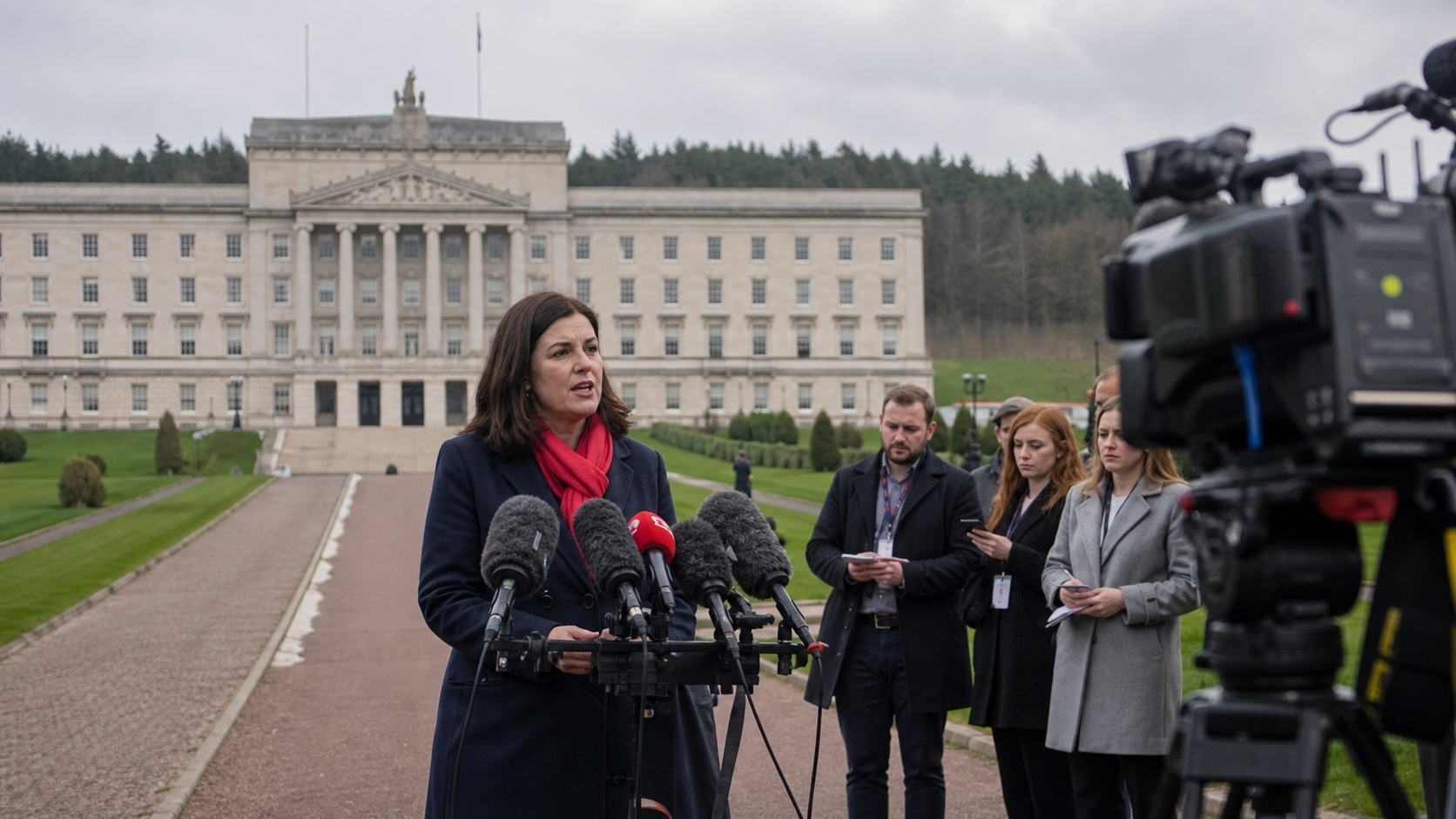
Claire Hanna has urged the government and Executive parties to move away from prolonged diagnosis and toward immediate action, warning that failing to implement institutional reform mechanisms before the next Assembly election in May 2027 could lead to further political instability. The SDLP's reform agenda focuses on removing the veto powers that allow the largest parties to collapse the institutions, a mechanism that has been used repeatedly to bring down the Executive and Assembly over the past two decades.
Finance Minister John O'Dowd's proposed multi-year budget has been described by the SDLP as an "unambitious ghost budget" lacking a clear vision for service transformation, adding to the sense that the Executive is managing decline rather than planning for recovery.
Why It Matters
The budget deadlock is not merely a technical financial dispute — it is a test of whether the Stormont institutions can function as a genuine government rather than a permanent negotiating forum. Northern Ireland has spent more time without a functioning Executive in the years since the Good Friday Agreement than it has with one. Each period of collapse has left a legacy of deferred decisions, deteriorating services, and eroded public confidence in devolution as a model of governance.
The Alliance Party shares the SDLP's view that institutional reform is essential, though the two parties differ on the precise mechanisms required. Sinn Féin has proposed allowing other parties to nominate ministers if the largest blocs refuse to participate, a change that would reduce the leverage of the DUP and other parties to collapse the institutions by withdrawing from the Executive. The DUP has resisted such changes, arguing that the current structures are necessary to protect unionist interests.
Local Impact
The consequences of the budget deadlock are felt most acutely in the communities that depend most heavily on public services. In west Belfast, north Belfast, and the Bogside in Derry/Londonderry, where deprivation levels are highest, cuts to health, education, and social care services have a disproportionate impact. The Southern Health and Social Care Trust, which covers Armagh, Down, and Newry, has been among the most vocal about the pressures it faces. Schools in rural Tyrone and Fermanagh, already dealing with falling rolls and transport challenges, face additional uncertainty about their funding for the coming year.
What's Next
Negotiations between the Executive and the UK government are expected to continue through September and October, with a resolution needed before the Executive can finalise its budget for 2027/28. The Assembly election must be held by May 6, 2027, creating a political deadline that concentrates minds on both sides of the negotiating table. Claire Hanna has indicated that the SDLP will continue to press for institutional reform as a condition of any sustainable settlement, arguing that financial fixes without structural change will simply delay the next crisis rather than prevent it.