Stormont Budget Deadlock Deepens as Executive Parties Fail to Agree Spending Plan for 2026-27
The Northern Ireland Executive has entered the new political term without an agreed budget for the current financial year, with cross-party disagreements over Finance Minister John O'Dowd's draft multi-year spending plan leaving departments unable to make the long-term investment decisions needed to address chronic pressures in health, education, and infrastructure.
Background
Budgetary politics at Stormont has always been complicated by the unique structure of the Executive, in which parties from opposing political traditions share ministerial responsibility without the discipline of a formal coalition agreement. Unlike Westminster, where a government with a majority can pass a budget through the Commons, Stormont's mandatory coalition model means that budget decisions require a degree of cross-party consensus that can be extraordinarily difficult to achieve when parties hold fundamentally different views about spending priorities and revenue-raising measures.
The financial situation facing the Executive in 2026 is particularly acute. Northern Ireland's public finances have been under severe pressure for several years, driven by a combination of factors: the legacy of austerity-era cuts to the block grant, the rising cost of public services — particularly health — and the structural inefficiencies of a system that funds two separate education sectors and a range of duplicated public services. The UK Treasury provided a £400 million one-off reserve claim in February 2026 to help departments balance their books, but this was structured as a repayable loan, adding to the Executive's long-term financial obligations.
Finance Minister John O'Dowd published a draft multi-year budget in January 2026 covering the period from 2026 to 2030, which was intended to provide departments with the planning certainty they need to make strategic decisions. The draft proposed increasing the regional rate for households by 5% and for businesses by 3% annually, and included specific allocations for health waiting lists, social housing, and water infrastructure.
Key Developments
The draft budget has failed to secure the cross-party support needed for passage. The DUP described it as "deeply flawed", arguing that the proposed revenue-raising measures would place an unfair burden on households and businesses already struggling with the cost of living. The SDLP labelled it an "unambitious ghost budget" that lacked a coherent vision for transforming public services. The Alliance Party expressed concern about its ability to meet statutory obligations under the proposed constraints, while Ulster Unionist representatives questioned whether the allocations for key departments were adequate.
The Department of Health has been among the most vocal in expressing concern about the consequences of the budget impasse. With a projected overspend running into hundreds of millions of pounds and waiting lists that remain among the longest in the United Kingdom, the department has warned that without a settled budget it cannot make the investment decisions needed to begin addressing the backlog. The Belfast Health and Social Care Trust, the largest in Northern Ireland, has flagged particular pressures in emergency care, mental health services, and elective surgery.
Why It Matters
The budget deadlock is not an abstract political dispute — it has direct, tangible consequences for people across Northern Ireland. When departments cannot plan with certainty, they default to short-term decision-making: deferring capital projects, freezing recruitment, and managing services on a month-to-month basis rather than investing in the structural changes needed to improve outcomes. The health service, in particular, has been caught in this cycle for years, with the result that waiting lists have grown to a point where Northern Ireland now has the longest waits for elective treatment anywhere in the United Kingdom.
The education system faces similar pressures. Education Minister Paul Givan has warned that without adequate budget provision, the department may be forced to consider staff redundancies — a prospect that would be deeply damaging to a sector already struggling with teacher recruitment and retention. The Special Educational Needs system, which is already under severe strain, would be particularly vulnerable to any further cuts.
Local Impact
Across Northern Ireland, the consequences of the budget impasse are being felt in communities from Belfast to Enniskillen. In the Western Health and Social Care Trust area, which covers Derry, Omagh, and Enniskillen, waiting times for outpatient appointments in some specialties now exceed two years. In the Southern Trust area, covering Armagh, Newry, and Banbridge, the pressure on community mental health services has reached a point where some patients are waiting months for an initial assessment. The Translink network, which provides bus and rail services across Northern Ireland, has also flagged concerns about its ability to maintain service levels without a settled capital budget for fleet replacement and infrastructure maintenance.
What's Next
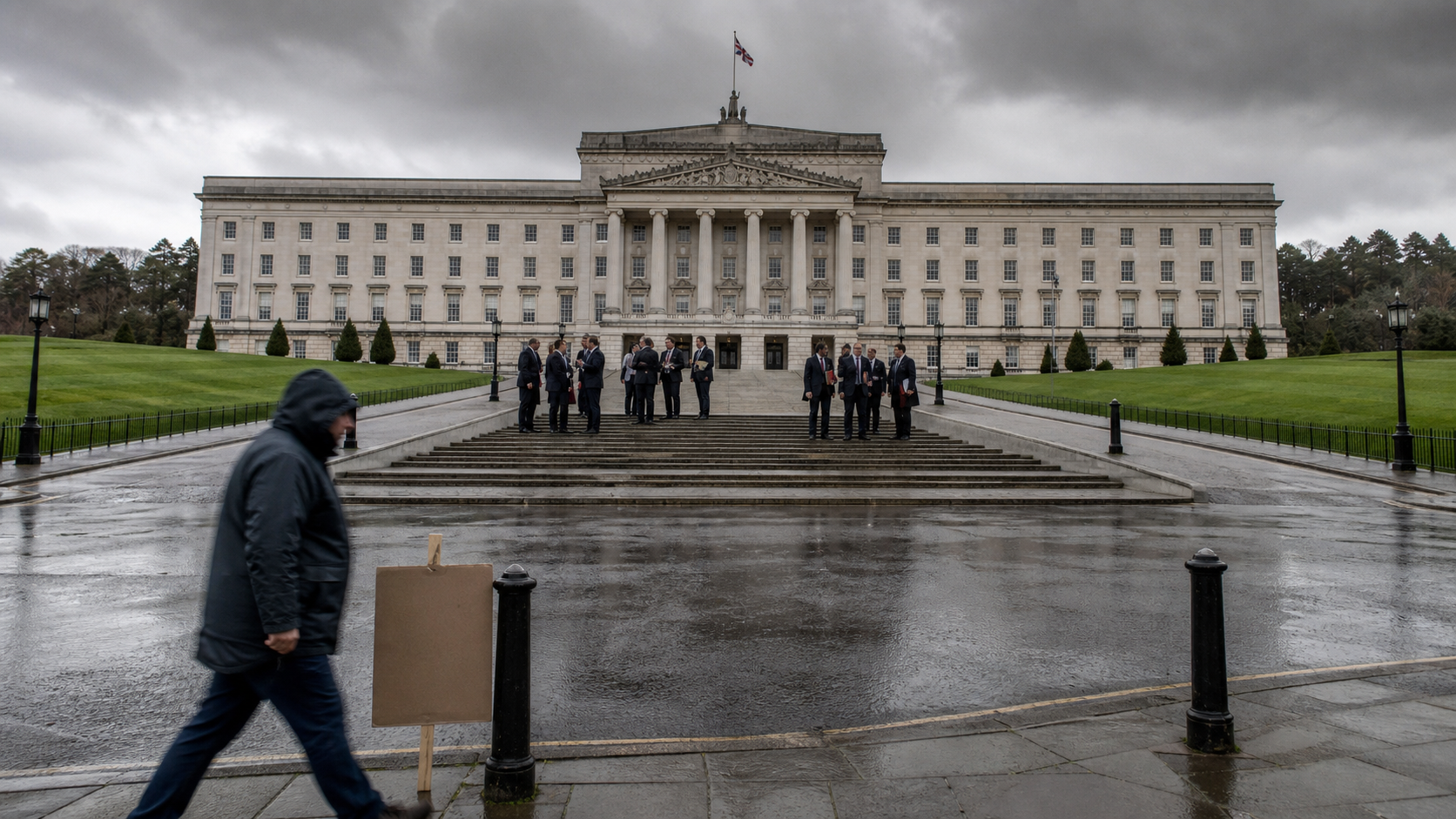
The Stormont Assembly returns from summer recess in September, at which point the budget will move back to the top of the political agenda. Finance Minister O'Dowd has indicated that he will bring a revised proposal to the Executive in the coming weeks, though the prospects for cross-party agreement remain uncertain. The UK Treasury has been monitoring the situation closely, and there is speculation that further emergency funding may be required if the Executive cannot reach agreement before the end of the financial year. For the people of Northern Ireland, the hope is that the parties can find a way through — but the history of Stormont budgetary politics offers limited grounds for optimism.