Stormont Budget Deadlock Deepens as DUP Rejects Finance Minister's Draft Plan
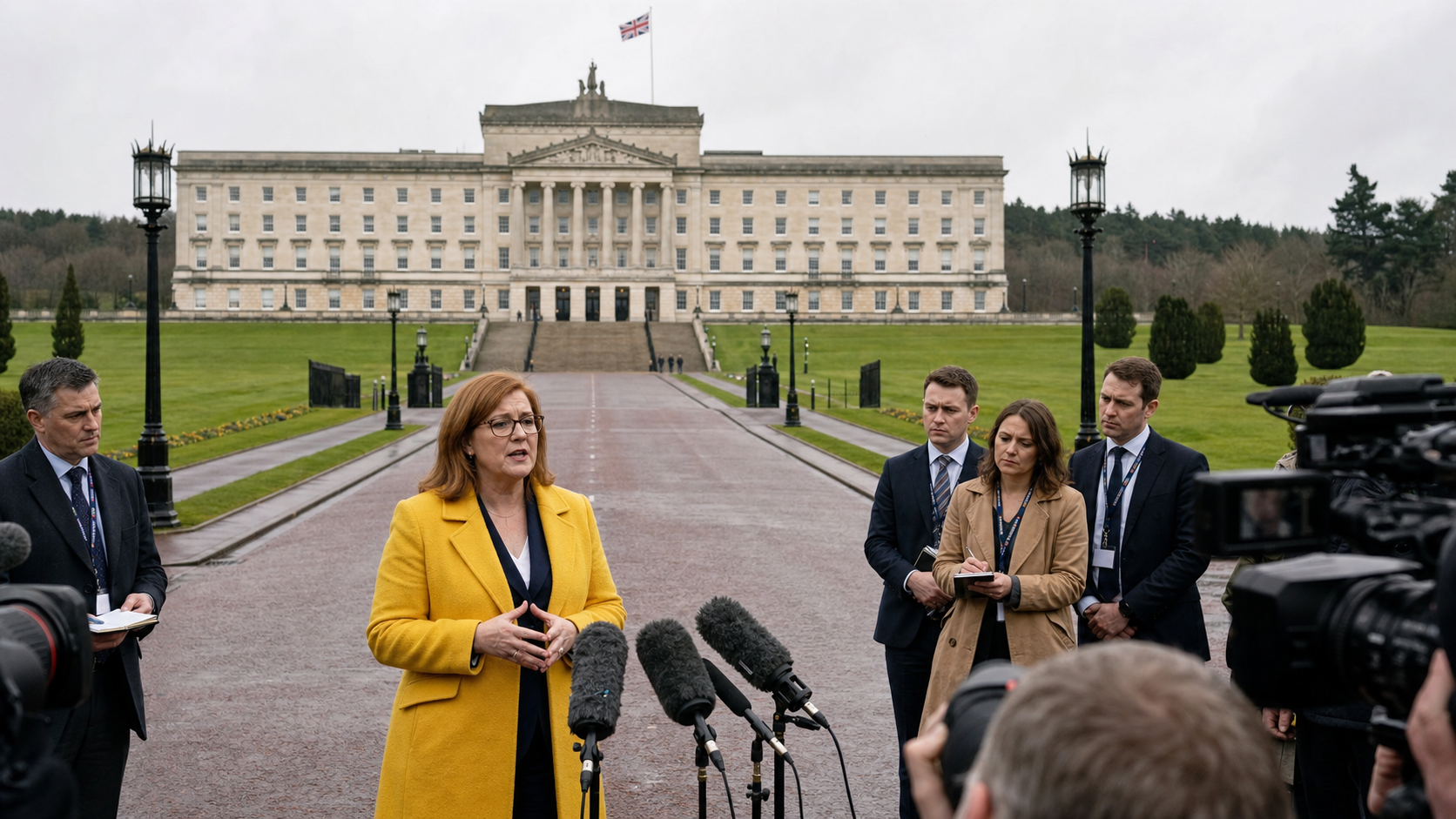
The Stormont Executive has failed to agree on a multi-year budget after the DUP rejected Finance Minister John O'Dowd's draft plan as 'deeply flawed', with the SDLP warning that the continuing impasse could lead to severe cuts affecting hundreds of nurses, teachers, and police officers across Northern Ireland — and the Alliance Party threatening to withdraw from the Executive if institutional reforms are not implemented.
Background
Northern Ireland's public finances have been in a state of managed crisis for several years. The province's block grant from Westminster has not kept pace with the rising cost of delivering public services, and the Stormont Executive has been unable to agree on a multi-year budget that would allow departments to plan effectively. The absence of a settled budget has forced departments to operate on a series of short-term allocations, making it impossible to undertake the kind of long-term investment in infrastructure and workforce that the public services desperately need.
The budget problem has been compounded by the political dynamics of the power-sharing Executive. Under the d'Hondt system used to allocate ministerial portfolios, the Finance Ministry is currently held by Sinn Féin's John O'Dowd, while the DUP holds several other key portfolios. The requirement for cross-community consent on major decisions means that the DUP effectively has a veto over the budget, and the party has been using that veto to press for changes to the overall funding settlement from Westminster rather than accepting the current allocation.
The UK government's position has been that the Stormont Executive must demonstrate it can manage its existing resources effectively before additional funding will be considered. This has created a circular dynamic in which the Executive cannot agree a budget because the funding is insufficient, and the UK government will not provide additional funding until the Executive agrees a budget.
Key Developments
Finance Minister O'Dowd presented his draft multi-year budget to the Executive last week, proposing a framework for allocating resources across departments over the next three years. The plan included significant cuts to some departmental budgets, reflecting the reality of the funding constraint, but also proposed new investment in health and education as priority areas.
The DUP rejected the plan, with party leader Gavin Robinson describing it as "deeply flawed" and arguing that it failed to adequately protect frontline services. The party has called for the UK government to provide additional funding before any budget is agreed, and has indicated it will not support a plan that requires cuts to health or education services.
SDLP leader Matthew O'Toole described the DUP's rejection as "toxic" and warned that the continuing deadlock would have severe consequences for public services. "We are talking about hundreds of nurses, teachers, and police officers whose jobs are at risk if this Executive cannot agree a budget," he said. "The people of Northern Ireland deserve better than this."
Alliance Party leader Naomi Long went further, threatening to withdraw her party from the Executive if reforms to the governing structures are not implemented to prevent individual parties from collapsing the institutions. Long has argued that the current system, which allows any party to bring down the Executive by withdrawing from it, creates perverse incentives for political brinkmanship.
Why It Matters
The budget deadlock is not merely a political dispute — it has direct and serious consequences for the delivery of public services in Northern Ireland. Without a settled multi-year budget, the Department of Health cannot plan the workforce expansion it needs to address waiting lists, the Department of Education cannot commit to the school building programme that is needed to address the backlog of dilapidated school buildings, and the Department of Justice cannot plan the recruitment of additional police officers.
The situation is qualitatively different from budget disputes in the Republic of Ireland or in Great Britain, where governments can ultimately impose a budget even in the face of opposition. In Northern Ireland, the power-sharing requirement means that no budget can be agreed without cross-community support, giving individual parties a structural veto that can be used for political leverage.
The Alliance Party's threat to withdraw from the Executive is significant. Alliance has positioned itself as the party of stable, effective government, and its willingness to contemplate withdrawal reflects the depth of its frustration with the current situation. If Alliance were to withdraw, it would trigger a crisis in the Executive that could ultimately lead to another suspension of the institutions — the fourth in the history of devolution.
Local Impact
The practical consequences of the budget deadlock are already being felt across Northern Ireland. The Department of Health has been unable to commit to the recruitment of additional nurses and doctors needed to address the waiting list crisis, with vacancies remaining unfilled because departments cannot guarantee funding beyond the current financial year. Schools in areas including North Belfast, West Belfast, and Derry have been unable to proceed with planned building projects because capital funding has not been confirmed.
In rural areas, the uncertainty about budget allocations has affected the delivery of agricultural support schemes and rural development programmes, with farmers and community organisations unable to plan ahead. The Department of Agriculture, Environment and Rural Affairs has been operating on a series of short-term allocations that make it impossible to commit to multi-year funding agreements with the farming sector.
What's Next
The Executive is expected to hold emergency talks on the budget in the coming weeks, with the UK government's Northern Ireland Office also involved in discussions about the overall funding settlement. The SDLP has called for an independent review of Northern Ireland's public finances, to be conducted by the Institute for Fiscal Studies, to provide an objective assessment of the funding gap. The Alliance Party has set a deadline of the end of July for progress on institutional reform, after which it will review its position on continued participation in the Executive.