Bryant Issues 'Final Offer' of £1.5bn as Stormont Budget Crisis Threatens Westminster Intervention
Northern Ireland Secretary Sir Chris Bryant has issued what he described as a "final offer" of £1.5 billion over three years to the Northern Ireland Executive, warning that he will be forced to set the Stormont budget directly if the parties cannot reach agreement — a threat of Westminster intervention that has not been deployed since the darkest days of the power-sharing institutions' troubled history. Executive parties have criticised the package as inadequate, with Finance Minister John O'Dowd noting that identified financial pressures across Stormont departments amount to approximately £1.6 billion.
Background
Northern Ireland's budget crisis has been building for the better part of a year. The Northern Ireland Executive, which requires cross-community agreement to pass a budget, has been unable to reach consensus on spending priorities for the 2026/27 financial year. With approximately six months of the financial year already elapsed, departments have been operating under contingency arrangements that allow spending of up to 95% of the previous year's allocation — a situation that has forced cuts across health, education, and infrastructure.
The roots of the crisis lie in a combination of factors: the legacy of years of underfunding relative to need, the particular pressures of Northern Ireland's health service — which has the longest waiting lists in the United Kingdom — and the political dynamics of a power-sharing executive in which parties with fundamentally different visions of Northern Ireland's future must agree on how to allocate scarce resources. The DUP and Sinn Féin, the two largest parties, have struggled to find common ground on spending priorities, with each accusing the other of prioritising political positioning over practical governance.
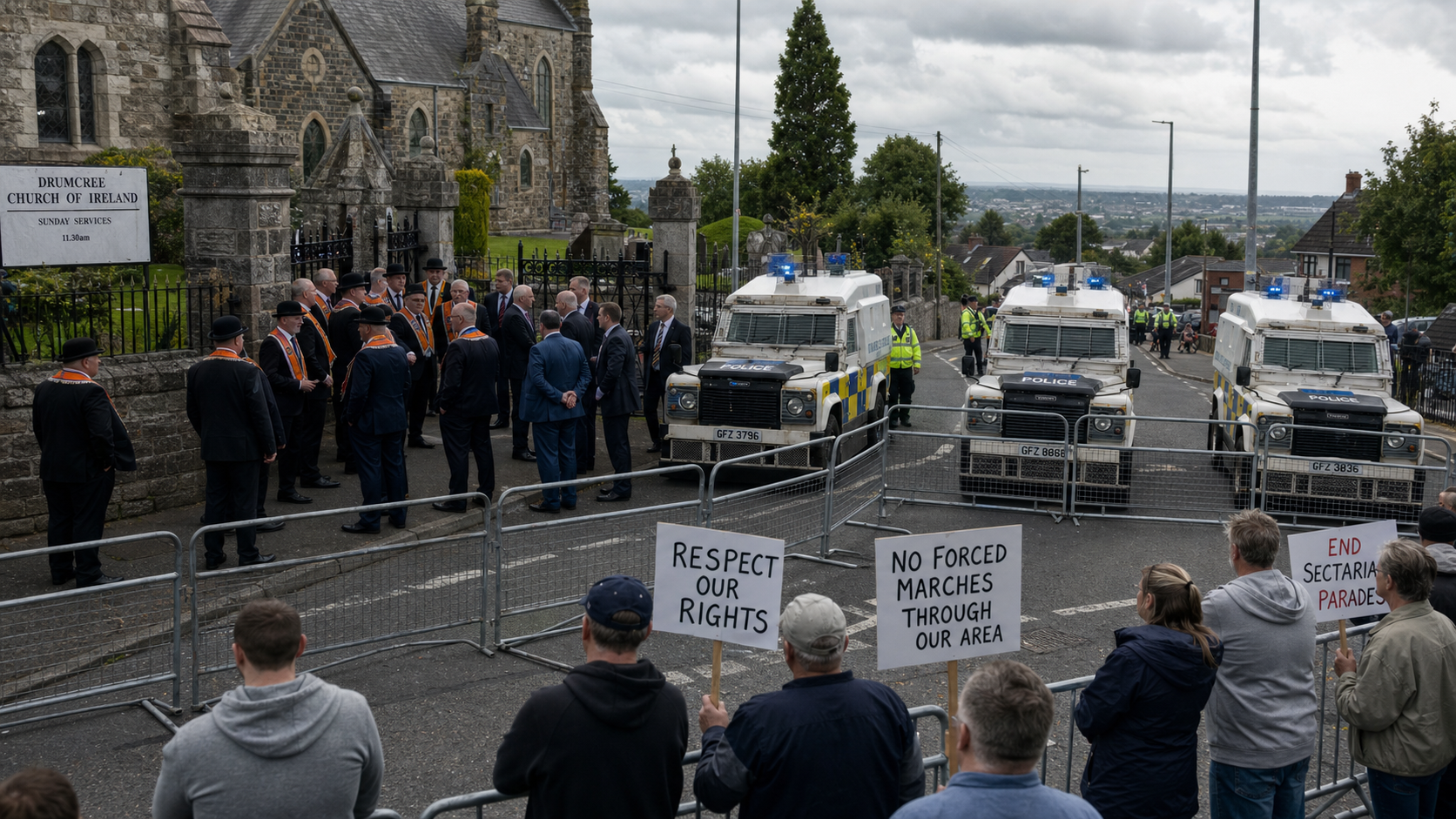
Bryant's engagement with the budget crisis has been complicated by the Drumcree dispute, which has dominated the political agenda in Northern Ireland over the past week. The Secretary of State has been attempting to manage two simultaneous crises — the parade standoff and the budget deadlock — while also navigating the broader question of whether the Stormont institutions can survive the political fallout from both.
Key Developments
Bryant's "final offer" of £1.5 billion over three years represents a significant increase from the initial proposal of £1.1 billion that was rejected by the Executive in August. The package includes £450 million for day-to-day pressures in the current financial year, with £400 million allocated for each of the following two years. Bryant has stated that there is "no more money" available, citing the tight financial situation of the UK government.
Finance Minister John O'Dowd rejected the package as insufficient, noting that identified pressures across Stormont departments amount to approximately £1.6 billion — meaning the government's offer would not even cover the current year's shortfall, let alone provide a sustainable baseline for future years. DUP MLA Diane Dodds characterised Bryant's deadline as "reckless" and "unrealistic," questioning whether the UK government was prepared to oversee the "decimation" of public services. UUP leader Steve Aiken acknowledged that the government had moved from its opening position but maintained that the offer would barely cover pressures in the health sector alone.
Bryant has set a deadline for the Executive to respond, warning that if no agreement is reached, "somebody else will have to do it for them" — a clear signal that he is prepared to use his powers under the Northern Ireland Act to set the budget directly from Westminster.
Why It Matters
Westminster intervention in the Stormont budget would be a significant and symbolically damaging development for the power-sharing institutions. It would represent an admission that the Executive is incapable of performing one of its most basic functions — agreeing how to spend public money — and would hand political ammunition to those who argue that devolution in Northern Ireland is not working. The Alliance Party and the SDLP have both called for structural reforms to prevent future budget collapses, arguing that the current system gives individual parties too much leverage to block agreement.
The budget crisis also has immediate and concrete consequences for public services. Health waiting lists in Northern Ireland are already the longest in the UK, with over 540,000 patients waiting for a first consultant-led outpatient appointment. Education, infrastructure, and social care are all under severe pressure. Every week that passes without a budget agreement is a week in which those pressures intensify.
Local Impact
Across Northern Ireland — from the Western Health and Social Care Trust in Derry and Fermanagh to the South Eastern Trust in Down and Lisburn — health managers are making contingency plans for a winter without adequate funding. Schools in Belfast, Antrim, and Armagh are facing difficult decisions about staffing and programmes. The further education sector, as the Belfast Met situation illustrates, is already implementing cuts that will affect thousands of learners. The human cost of the budget deadlock is not abstract — it is being felt in waiting rooms, classrooms, and community centres across the six counties.
What's Next
Bryant has set a deadline of Thursday for the Executive to respond to his "final offer." If no agreement is reached, he has indicated that he will consider "every eventuality," including direct intervention. The Stormont Executive is expected to meet this week, with the budget crisis and the Drumcree fallout both on the agenda. Political analysts suggest that the two crises may interact in unpredictable ways, with the Drumcree dispute making it harder for the DUP and Sinn Féin to engage constructively on the budget.