Starmer Joins European Push for Strait of Hormuz Naval Presence as Iran Crisis Hits UK Economy
Prime Minister Keir Starmer has thrown Britain's weight behind a European plan to establish a naval reassurance presence in the Strait of Hormuz, as the ongoing conflict between the United States and Iran continues to disrupt global shipping lanes and push UK inflation projections sharply higher.
Background
The Strait of Hormuz, the narrow waterway between Iran and Oman through which roughly 20% of the world's oil supply passes, has become the focal point of a dangerous military standoff since Iran launched coordinated drone and missile attacks in the strait on 4 May 2026. The conflict has its roots in a broader deterioration of US-Iran relations that accelerated following the resumption of maximum pressure sanctions under the Trump administration earlier this year.
Britain has significant strategic and economic interests in keeping the strait open. The UK imports substantial quantities of liquefied natural gas from Gulf producers, and disruption to shipping routes has already contributed to rising energy prices. The Bank of England has been monitoring the situation closely, and economists have revised UK inflation forecasts upward in response to the energy shock.
Starmer was attending the European Political Community summit in Yerevan, Armenia, when the latest Iranian strikes occurred — a gathering that brought together leaders from across the continent to discuss security, energy resilience, and the war in Ukraine. The timing gave the summit an added urgency, with the Hormuz crisis dominating discussions.
Key Developments
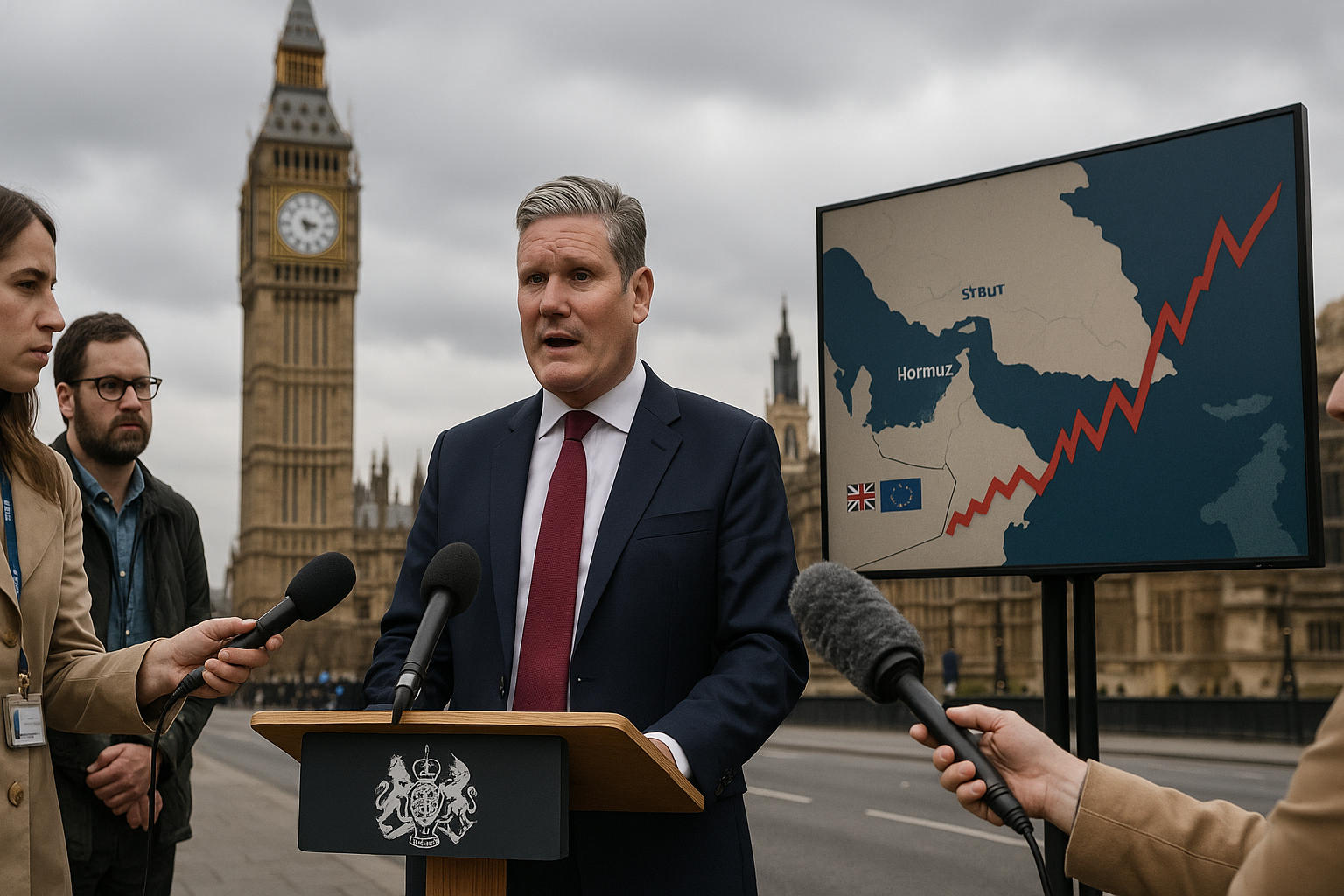
Speaking at the EPC summit, Starmer indicated that European countries were giving a great deal of attention to a plan for a naval reassurance presence in the Strait of Hormuz, an initiative being pushed primarily by the UK and France. The proposal aims to keep the strait open for commercial shipping following the Iranian military action, which the US has denied struck any American warship despite Iranian claims to the contrary.
Separately, Starmer announced that the UK was opening talks with the EU on joining its €90 billion loan scheme for Ukraine, stating that the benefit outweighs the cost. He also confirmed that the UK would open talks on joining the EU's deep tech innovation fund, a significant step in post-Brexit economic cooperation with Brussels. Polish Prime Minister Donald Tusk announced that he and Starmer had agreed to sign a UK-Poland defence treaty on 27 May.
On the domestic economic front, analysis reported by NewsNow indicates that UK inflation is now projected to peak between 3.5% and 4% as a result of the energy shock from the Hormuz disruption. The Bank of England has held its base interest rate at 3.75%, and GDP growth projections for 2026 have been revised down to 1.1%.
Why It Matters
The Hormuz crisis represents the most serious test of British foreign and economic policy since the early months of Starmer's premiership. The UK's decision to align with France in pushing for a European naval presence — rather than simply deferring to Washington — signals a subtle but significant shift in how London is positioning itself between the US and the EU in the post-Brexit era.
For context, the UK average household energy bill has already risen significantly over the past year, and a further inflationary spike driven by global oil and gas disruption would land on families already stretched by the cost-of-living crisis. Unlike the 2022 energy shock triggered by Russia's invasion of Ukraine, this disruption comes at a moment when the Bank of England has less room to manoeuvre, having only recently begun cutting rates from their post-pandemic highs.
The decision to open talks on the EU Ukraine loan scheme and the deep tech fund also matters domestically. Both moves will face scrutiny from those who argue they represent a creeping re-alignment with Brussels, while others will welcome the pragmatic approach to post-Brexit cooperation.
Local Impact
The economic consequences of the Hormuz crisis are already being felt across the UK and Ireland. Rising energy prices affect household bills from Belfast to Bristol, and businesses dependent on fuel — from hauliers in County Antrim to fishing fleets in Cornwall — face increased operating costs. In Northern Ireland, where energy costs have historically been higher than the GB average due to the region's reliance on imported gas, the inflationary pressure is particularly acute. Irish consumers are similarly exposed, with the Taoiseach welcoming the US plan to reopen the strait as a matter of economic urgency for the island.
What's Next
The proposed UK-Poland defence treaty is scheduled for signing on 27 May. Talks on the EU Ukraine loan scheme and the deep tech innovation fund are expected to begin in the coming weeks. The Bank of England's next Monetary Policy Committee meeting will be watched closely for any revision to the interest rate outlook in light of the inflationary pressure. The situation in the Strait of Hormuz remains volatile, with US destroyers entering the Gulf as part of a ship escort mission and Iran maintaining its military posture.
Sources: The Guardian — UK Politics Live; BBC News — Starmer and Labour