Starmer Faces Resignation Calls as Mandelson Vetting Scandal Deepens
Prime Minister Keir Starmer is battling the most profound crisis of his premiership following revelations that his hand-picked UK ambassador to the United States, Lord Peter Mandelson, failed to secure essential security vetting. The scandal has ignited a political firestorm, with a Labour backbencher breaking ranks to call for the Prime Minister's resignation and an urgent inquiry now underway to determine who knew what, and when.Background
The convention of collective cabinet responsibility, a cornerstone of the British political system, dictates that ministers are jointly responsible for government policy and actions. A critical element underpinning this is the assurance that all senior appointees, particularly those in sensitive diplomatic and security roles, undergo and pass rigorous security vetting conducted by the intelligence services. The process is designed to ensure that individuals in positions of power are not vulnerable to blackmail or other external pressures. For a Prime Minister to appoint an individual to a role as sensitive as Ambassador to the United States—a post central to the UK's most important intelligence and security alliance—without full vetting clearance is almost unprecedented. The situation is further complicated by Lord Mandelson's own complex political history. A towering figure in the New Labour era, he served as a cabinet minister under Tony Blair and Gordon Brown, but his career was also marked by two resignations from cabinet, making him a divisive and high-profile figure. His selection was seen by many as a bold move by Starmer to signal a return to a more centrist, pro-business Labour party, but it was a gamble that now appears to have backfired spectacularly.
The current crisis also shines a harsh light on the internal workings of Starmer's Downing Street and the lines of communication between the Prime Minister's Office, the Cabinet Office, and the Foreign, Commonwealth & Development Office (FCDO). Historically, the Prime Minister is expected to be kept informed of all significant developments, especially those with national security implications. A failure in this chain of command represents a serious breakdown in the machinery of government. The suggestion that crucial information about a top ambassador's security status was withheld from the Prime Minister raises grave questions about competence and control at the very heart of his administration.
The affair has placed considerable pressure on the administration, with key figures such as the Prime Minister's former chief of staff, Morgan McSweeney, and other Foreign Office officials now set to be questioned by MPs over the handling of the process. This sustained controversy continues to dominate the political news agenda, raising serious questions about the Prime Minister's judgment and the operational integrity of his government.
Key Developments
The crisis erupted when it emerged that Lord Mandelson, appointed as the UK's envoy in Washington, had failed to pass the stringent Developed Vetting (DV) process required for the role. Facing a barrage of questions in the House of Commons, a visibly shaken Prime Minister Starmer insisted he had not been informed of the vetting failure. He told MPs that it "beggars belief" that such critical information was not communicated to him directly, and immediately ordered a formal inquiry into the breakdown, to be led by the Cabinet Secretary.
The political damage escalated sharply when Jonathan Brash, a Labour MP, publicly called for Starmer to resign. In a statement reported by The Guardian, Brash stated that a resignation was necessary to end the "psychodrama" and allow the party and the country to move forward. This public dissent from his own backbenches is a significant blow to Starmer's authority. Key figures now face intense scrutiny, with the Prime Minister's chief of staff, Morgan McSweeney, and senior FCDO officials scheduled to be questioned by a parliamentary select committee in the coming days. The opposition has seized on the affair, labelling it a catastrophic failure of judgment and leadership. As noted by The Irish Times, the affair has dominated the political agenda in Westminster and beyond.
Why It Matters
This scandal strikes at the very heart of Keir Starmer's core political brand: competence, integrity, and a return to serious, responsible government after years of Conservative turmoil. The image of a Prime Minister seemingly unaware of a major national security issue involving his own appointee is devastating. It creates a narrative of a leader either not in control of his own government or, more damagingly, being deliberately kept in the dark by his own senior officials. For a leader who has staked his reputation on being a details-oriented former Director of Public Prosecutions, the admission of being blindsided is particularly harmful.
Comparisons are inevitably being drawn to previous scandals that have rocked governments, but the national security dimension makes this affair particularly toxic. It is not merely a case of political embarrassment or cronyism; it concerns the integrity of the UK's diplomatic and intelligence relationship with its closest ally. The United States government will undoubtedly have serious questions about the judgment and internal security protocols of its British partner. For the electorate, it reinforces a sense of chaos and incompetence, undermining the very stability Starmer promised. The affair provides a powerful weapon for opposition parties, who can now paint the Labour government as being just as prone to internal dysfunction as its predecessors. This is the third major political crisis to engulf the administration in its first year, suggesting a pattern of poor judgment that is becoming increasingly difficult to dismiss as bad luck.
Local Impact
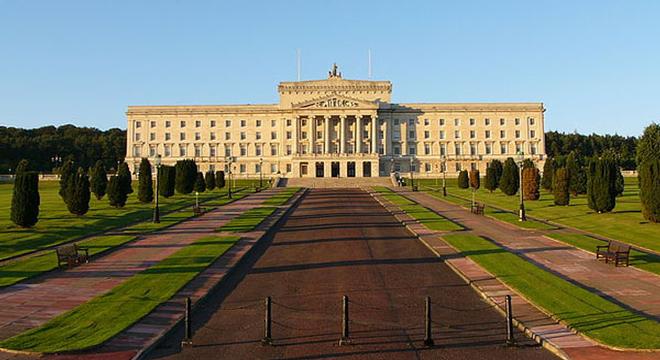
In Northern Ireland, the scandal is viewed with a mixture of concern and weary familiarity with political instability. The role of the UK ambassador to the US is critically important for Irish and Northern Irish interests, acting as a key conduit to the influential Irish-American lobby and the US administration on issues related to the Good Friday Agreement and post-Brexit arrangements. A crisis that paralyses the UK's diplomatic presence in Washington is therefore a direct blow to local interests. There is concern that a distracted and weakened Prime Minister will have less capacity to manage the delicate political balance in Northern Ireland, potentially emboldening those who seek to undermine the current political settlement. Across the rest of the UK, voters in Scotland, Wales, and England will be watching the unfolding drama with growing disillusionment.
What's Next
The political timeline for the coming weeks is dominated by this crisis. The immediate focus will be on the evidence given by Morgan McSweeney and Foreign Office officials to the Public Administration and Constitutional Affairs Committee. The Cabinet Secretary's internal inquiry is expected to deliver its initial findings within a fortnight, which will be a moment of maximum danger for the Prime Minister. Depending on its conclusions, Starmer could face further resignations from senior officials or renewed calls for his own. The fate of Lord Mandelson's appointment is now sealed, and a new ambassador will need to be nominated, a process that will itself be fraught with political risk. The local elections on 7 May will provide the first electoral verdict on the government's performance.