Reform UK Poised for Historic Local Election Gains as Labour Braces for 'Difficult' Results
Reform UK is on course to achieve a political earthquake in next week's local elections, with projections indicating the party could seize control of several councils from both the Conservatives and Labour. As Prime Minister Keir Starmer braces for what he has already conceded will be a "difficult" set of results, Nigel Farage is predicting a "cataclysmic" night for the government, potentially reshaping the political landscape of England.Background
The rise of Reform UK is the latest chapter in the long story of populist, right-wing insurgency in British politics. The party, which began life as the Brexit Party, has successfully channelled discontent over issues such as immigration, the cost of living, and a general sense of disillusionment with the two main parties. Under the leadership of Nigel Farage, Reform has positioned itself as the inheritor of the UKIP mantle, arguing that the Conservative party has betrayed the spirit of Brexit and that Labour is out of touch with the concerns of working-class voters. The party's platform combines fiscal conservatism with social conservatism, calling for lower taxes, a freeze on non-essential immigration, and an end to what it terms "woke" policies.
The upcoming local elections on 7 May 2026 are the first major electoral test for Keir Starmer's Labour government since it came to power. Historically, mid-term local elections are challenging for the party in government, as voters often use them to register a protest vote. However, the scale of the predicted swing away from Labour towards a third party is alarming for Downing Street. The Conservative Party, still reeling from its own electoral wipeout, has been unable to capitalise on Labour's struggles, leaving a vacuum that Reform UK has been more than willing to fill. The elections are being contested across much of England, providing a comprehensive snapshot of the national mood.
A notable by-election in Gorton and Denton in 2026 saw the Green candidate win, with Reform UK coming second and the incumbent Labour Party falling to third place, a result that sent shockwaves through the party and foreshadowed the difficulties ahead.
Key Developments
Final polling data ahead of the 7 May elections suggests a dramatic realignment of council control. According to a major YouGov MRP poll, Reform UK is projected to gain over 1,300 council seats, a historic surge for a party that held only a handful just a few years ago. The analysis, detailed in The Independent, indicates Reform is on track to take majority control of traditional Conservative heartlands like Essex, Norfolk, and Suffolk. More worryingly for the government, the party is also making deep inroads into Labour's post-industrial northern heartlands, with councils such as Sunderland, Wakefield, and Thurrock predicted to fall to Reform.
Prime Minister Keir Starmer, speaking during a campaign visit, acknowledged the challenge, telling reporters his party was facing a "difficult set of elections." In the West Midlands, a key battleground, polling shows Reform leading in 11 of the 13 councils being contested. Nigel Farage has been a constant presence on the campaign trail, predicting "cataclysmic" losses for Labour. Information on candidates and polling locations has been compiled by organisations like the Democracy Club, highlighting the scale of Reform's electoral challenge across 136 local authorities.
Why It Matters
A strong showing for Reform UK would shatter the two-party consensus that has dominated English politics for a century. It would demonstrate that the political realignment triggered by the 2016 Brexit referendum is not only ongoing but accelerating. For the Labour government, losing councils in its so-called "Red Wall" to a right-wing populist party would be a devastating psychological and political blow. It would suggest that their core electoral strategy is failing and that their hold on power is far more fragile than their parliamentary majority suggests. It would force a painful internal debate on whether the party needs to shift rightwards on cultural and social issues to win back these voters, a move that would alienate its more progressive, urban base.
For the Conservative Party, the results could be equally catastrophic, signalling an existential threat. If Reform can successfully replace the Tories as the primary party of the right in local government across entire counties, it raises the prospect of the Conservatives being permanently eclipsed. Unlike Scotland, where the SNP's dominance has been a long-established feature of the political landscape, this would represent a sudden and dramatic collapse of a party that has governed Britain for much of the past century. The results will be seen as a verdict on the post-Johnson, post-Truss era and could trigger yet another leadership crisis.
Local Impact
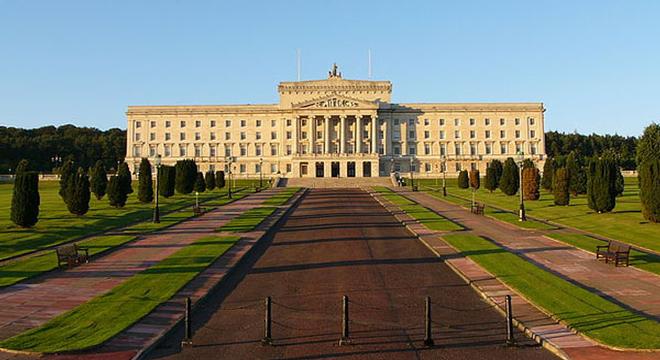
While these elections are confined to England, the political shockwaves will be felt keenly in Northern Ireland. The performance of Reform UK will be watched closely by the Democratic Unionist Party (DUP) and Traditional Unionist Voice (TUV). Reform's brand of muscular, English-nationalist unionism and its hard-line stance on the Northern Ireland Protocol resonates with many unionist voters. A successful election for Reform could embolden the more hard-line elements within unionism, making a return to stable power-sharing at Stormont more difficult. It would also put pressure on the UK government's relationship with Dublin and Brussels, as a Labour party spooked by Reform's rise might be tempted to adopt a more confrontational stance on EU-related issues to shore up its domestic flank.
What's Next
All eyes will be on the evening of Thursday, 7 May, as the first results begin to declare. Key councils to watch in the early hours include Sunderland and Thurrock, which could provide the first concrete evidence of a Labour-to-Reform swing. By Friday lunchtime, the full picture will emerge. In the immediate aftermath, expect a flurry of analysis and recrimination from all parties. Keir Starmer will likely have to conduct a cabinet reshuffle to reset his government's agenda, while the Conservative leader will face intense pressure to outline a strategy to counter the Reform threat.