Stardust Survivor Wins High Court Leave to Challenge Government's Flat-Fee €20,000 Compensation Scheme
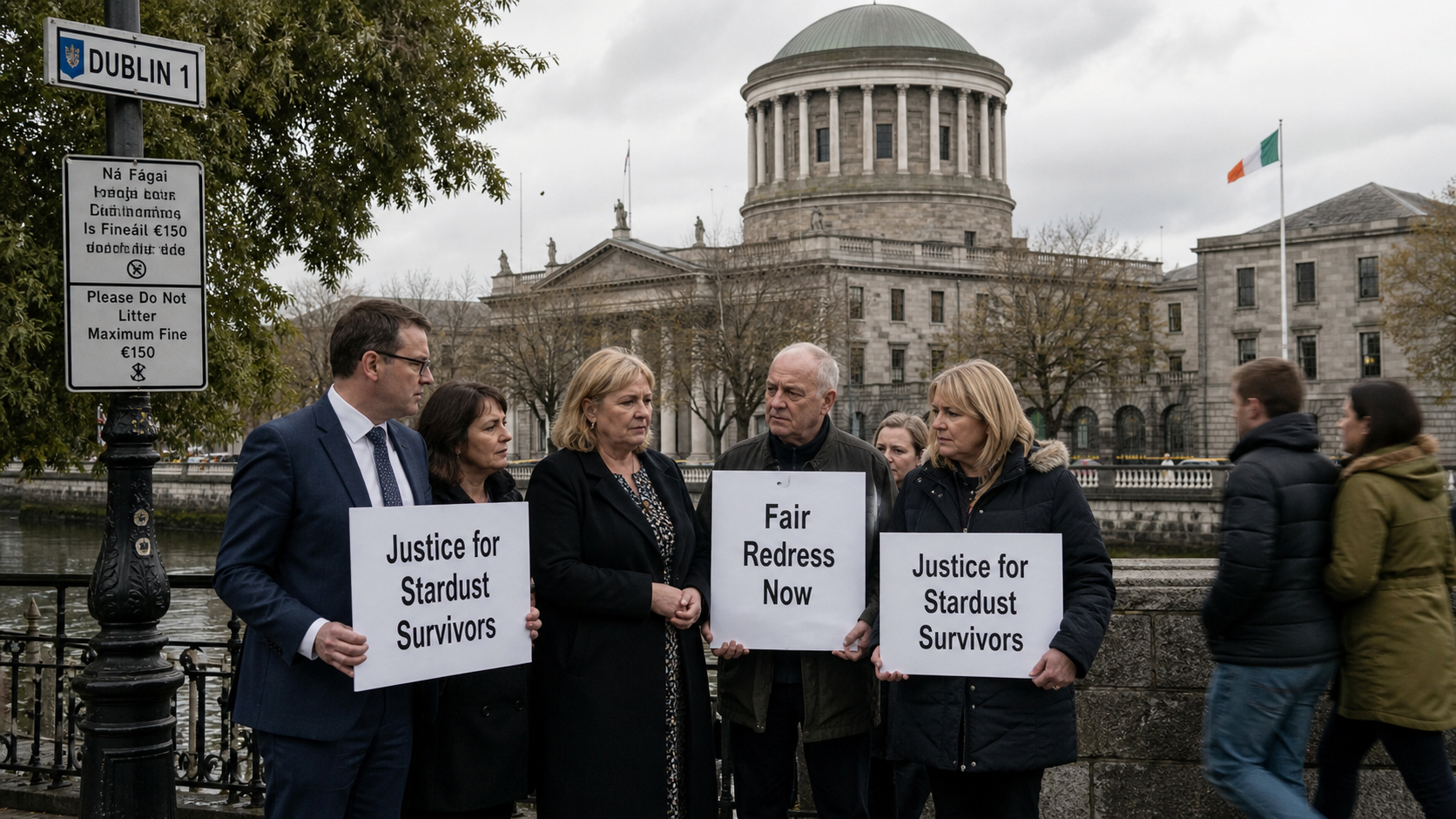
A survivor of the 1981 Stardust nightclub fire has been granted leave by the High Court to seek a judicial review of the government's €20,000 flat-fee redress scheme for survivors, with the legal challenge contending that the scheme was implemented without meaningful engagement or consultation with those it was supposed to serve. Jimmy Fitzpatrick, who sustained catastrophic third-degree burns in the fire that killed 48 young people in Artane, Dublin, has described the scheme as a "fiasco" and a breach of the State's earlier commitments to a tailored, multi-tiered approach to compensation.
Background
The Stardust fire of 14 February 1981 remains one of the darkest nights in the history of the Irish State. Forty-eight young people died when fire broke out at the Stardust nightclub in Artane, north Dublin, during a Valentine's Day disco. Hundreds more were injured, many of them severely, and the trauma of that night has shaped the lives of survivors and bereaved families for more than four decades.
The road to justice for the Stardust families has been extraordinarily long and painful. The original inquest returned verdicts of accidental death, a finding that the families always disputed and that was eventually overturned following a sustained campaign that lasted decades. A new inquest, which concluded in 2023, returned verdicts of unlawful killing — a landmark moment that vindicated the families' long struggle for truth and accountability.
The government subsequently committed to a comprehensive programme of redress for both the bereaved families and the survivors of the fire. The first phase of that programme, which provided compensation to the families of the 48 who died, was completed with a €24 million package. The second phase, which was supposed to address the needs of survivors, was the subject of the government's February 2026 announcement of a flat-fee payment of €20,000 to individuals who had participated in the original 1985 Stardust Victims Compensation Tribunal.
That announcement was met with immediate and fierce criticism from survivors and their legal representatives, who argued that the government had reneged on its promise to provide a tailored, multi-tiered approach that would take account of the specific, long-term injuries suffered by individuals. For someone like Jimmy Fitzpatrick, who has lived with the consequences of catastrophic third-degree burns for more than 40 years, a flat fee of €20,000 is not compensation — it is an insult.
Key Developments
Ms Justice Mary Rose Gearty granted leave for the judicial review challenge on 27 July 2026, following an application by legal counsel for Jimmy Fitzpatrick. The legal action is directed against the Minister for Justice and the Attorney General, and seeks a declaration that the implementation of the second phase of the redress scheme without survivor engagement is unlawful, violates fair procedures, and breaches the Constitution.
The challenge also seeks an order requiring the Minister to reconsider the scheme through meaningful consultation with survivors, including the publication of a framework and parameters for "exceptionality" in compensation — a mechanism that would allow for higher payments to those who suffered the most severe and lasting injuries.
The Department of Justice has maintained that the scheme is intended to recognise the "delays in providing truth and justice" rather than acting as direct compensation for injuries, which was the scope of the 1985 tribunal. As of March 2026, more than 300 applications had been submitted, and the Department stated that the maximum potential cost for the 823 eligible individuals is approximately €16.4 million.
Phoenix Law, which represents a number of Stardust survivors, has been vocal in its criticism of the scheme, arguing that the government's approach has been driven by a desire to minimise cost rather than to deliver genuine justice. The firm has indicated that further legal challenges may follow if the judicial review is successful.
Why It Matters
The Stardust case matters because it is a test of whether the Irish State is capable of delivering genuine justice to those it has failed most grievously. The families and survivors of the Stardust fire have waited more than 40 years for truth and accountability, and the government's commitment to a tailored, multi-tiered approach to compensation was a recognition of the inadequacy of everything that had gone before. The decision to replace that commitment with a flat-fee payment of €20,000 — without consultation, without explanation, and without any mechanism for recognising the specific suffering of individuals — is a betrayal of that commitment. The High Court challenge is not just about money; it is about whether the State takes seriously its obligations to those it has wronged. The adjourning of the case to November 2026 means that the survivors will have to wait yet again for a resolution that has already been delayed for far too long.
Local Impact
The Stardust fire was a north Dublin tragedy, and its impact has been felt most deeply in the communities of Artane, Coolock, Raheny, and the surrounding areas of Dublin's northside. Many of the survivors and bereaved families still live in these communities, and the case has never been far from the surface of local life. The High Court challenge will be closely followed in these communities, and its outcome will be seen as a measure of whether the State is capable of treating the people of north Dublin with the respect and dignity they deserve. The case is also being watched by survivors' advocacy groups across Ireland, who see it as a test case for the State's approach to historical injustices more broadly.
What's Next
The High Court has adjourned the judicial review challenge to November 2026, when the substantive hearing is expected to take place. The Department of Justice will have the opportunity to respond to the legal challenge in the intervening period. If the challenge is successful, the Minister for Justice will be required to reconsider the scheme through a process of meaningful consultation with survivors. The outcome of the case is likely to have implications for the broader programme of redress for historical injustices in Ireland, and it will be closely watched by legal practitioners, survivors' advocates, and politicians across the country.