Stage-Four Cancer Survivors Hail 'Game-Changer' Cork Rehabilitation Trial as Irish Cancer Society Names It Project of the Year
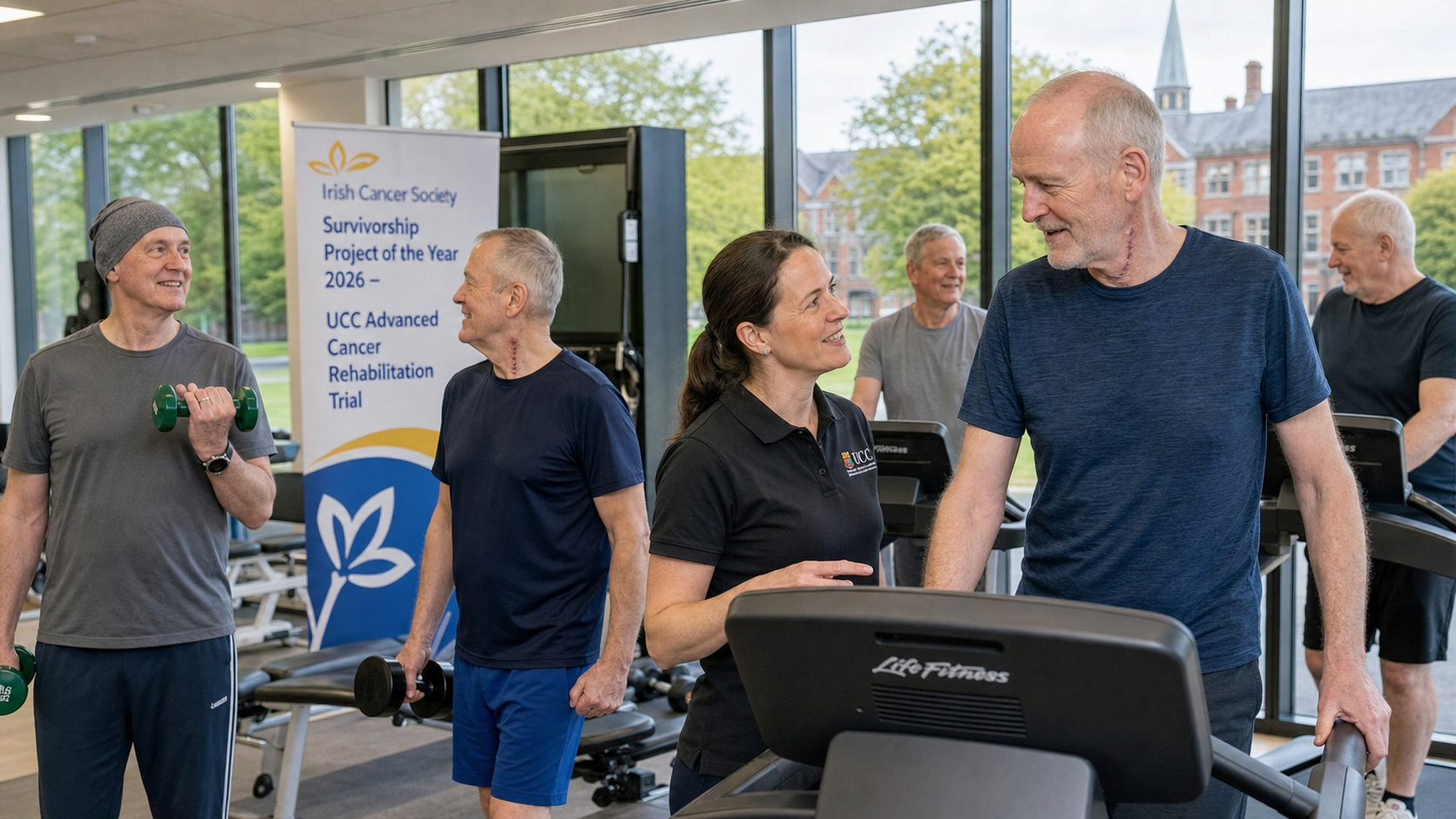
A pioneering rehabilitation programme for men living with advanced prostate, bladder, and kidney cancers, developed by researchers at University College Cork, has been named the Irish Cancer Society's Survivorship Project of the Year 2026, with participants describing the 12-week intervention as a 'game-changer' that gave them back a quality of life they feared was gone forever — and with fresh funding now secured to bring the model into mainstream HSE care.
Background
The LIAM Mc trial — an acronym for Linking In with Advice and supports for Men with Metastatic Cancer — was developed by Cancer Research at University College Cork to address a significant gap in the care of men living with stage-four cancers. While primary treatments such as radiotherapy and chemotherapy have become increasingly effective at extending life, the aftercare available to patients once those treatments conclude has historically been limited, leaving many men feeling isolated, physically depleted, and without guidance on how to manage their condition.
The programme was launched in 2022 with a specific focus on men with metastatic prostate, bladder, and kidney cancers — a cohort that faces particular challenges in terms of physical deconditioning, psychological distress, and social isolation. The research team, led by Associate Professor Jack Gleeson and Dr Brendan Noonan at Cork University Hospital, designed a 12-week regimen that combined specialist physiotherapy, nursing care, dietetic advice, and psychological support, delivered in small group settings to encourage peer connection.
The trial enrolled 56 participants from a pool of 124 men approached, a participation rate that researchers described as encouraging given the physical and emotional demands of the programme. The results, presented to the Irish Cancer Society earlier this year, demonstrated significant improvements in muscle mass, physical strength, and mental health across the cohort.
Key Developments
The Irish Cancer Society has awarded the LIAM Mc trial its Survivorship Project of the Year 2026 award, recognising it as the most impactful cancer aftercare initiative in the country. The award comes with an additional €100,000 in funding, supplemented by a contribution from pharmaceutical company Pfizer, to support deeper analysis of the trial's findings and to facilitate long-term follow-up with participants.
Crucially, the research team is now working with the National Cancer Control Programme, the HSE, and Cork University Hospital to explore how the LIAM Mc model can be integrated into routine cancer care for patients across Ireland. The ambition is to move beyond the trial phase and establish the programme as a standard component of the care pathway for men with advanced cancers — a development that could benefit thousands of patients annually.
Participants in the trial have spoken movingly about its impact. One man's wife described getting her husband back — a man who had retreated into himself following his diagnosis and who emerged from the programme with renewed energy and purpose. Such testimonies have been central to the case for mainstreaming the model.
Why It Matters
Ireland's cancer care system has made enormous strides in recent decades, with survival rates improving significantly across most cancer types. However, the focus has overwhelmingly been on treatment rather than rehabilitation, leaving a substantial cohort of patients — particularly those with advanced or metastatic disease — without structured support once the acute phase of their care concludes. The LIAM Mc trial demonstrates that this gap can be addressed effectively and at relatively modest cost. The €100,000 in additional funding secured represents a fraction of what the programme could save in terms of reduced hospital admissions, improved mental health outcomes, and sustained quality of life for participants. For context, the HSE spends approximately €1.2 billion annually on cancer services, yet rehabilitation programmes of this kind remain the exception rather than the rule. The Irish Cancer Society's recognition of the trial as its project of the year sends a clear signal that survivorship must become a central pillar of cancer policy.
Local Impact
The LIAM Mc trial was delivered at Cork University Hospital, drawing participants from across the Munster region. For men in Cork city and county, as well as those travelling from Kerry, Limerick, and Tipperary, the programme offered something that the HSE's South/South West Hospital Group has not previously been able to provide: a structured, evidence-based pathway for living well with advanced cancer. The research team has indicated that if the model is adopted nationally, it could be delivered through cancer centres in Dublin, Galway, Limerick, and Waterford, as well as Cork, ensuring that men across the country have access to the same quality of support. Community cancer support organisations in Cork have already expressed interest in partnering with the research team to extend the programme's reach.
What's Next
The research team will spend the next two years conducting a comprehensive analysis of the trial data and gathering long-term follow-up information from participants. Simultaneously, negotiations with the National Cancer Control Programme and the HSE will continue, with the goal of securing a formal commitment to integrate the LIAM Mc model into the national cancer care pathway. A decision on whether to proceed with a larger, multi-site trial — which would be necessary to generate the evidence base required for full national rollout — is expected by the end of 2026. The Irish Cancer Society has indicated it will continue to advocate for survivorship programmes to receive dedicated funding in the next HSE National Service Plan.