Sod Turned on Ireland's New National Cricket Centre as €30m Facility Promises to Transform the Game
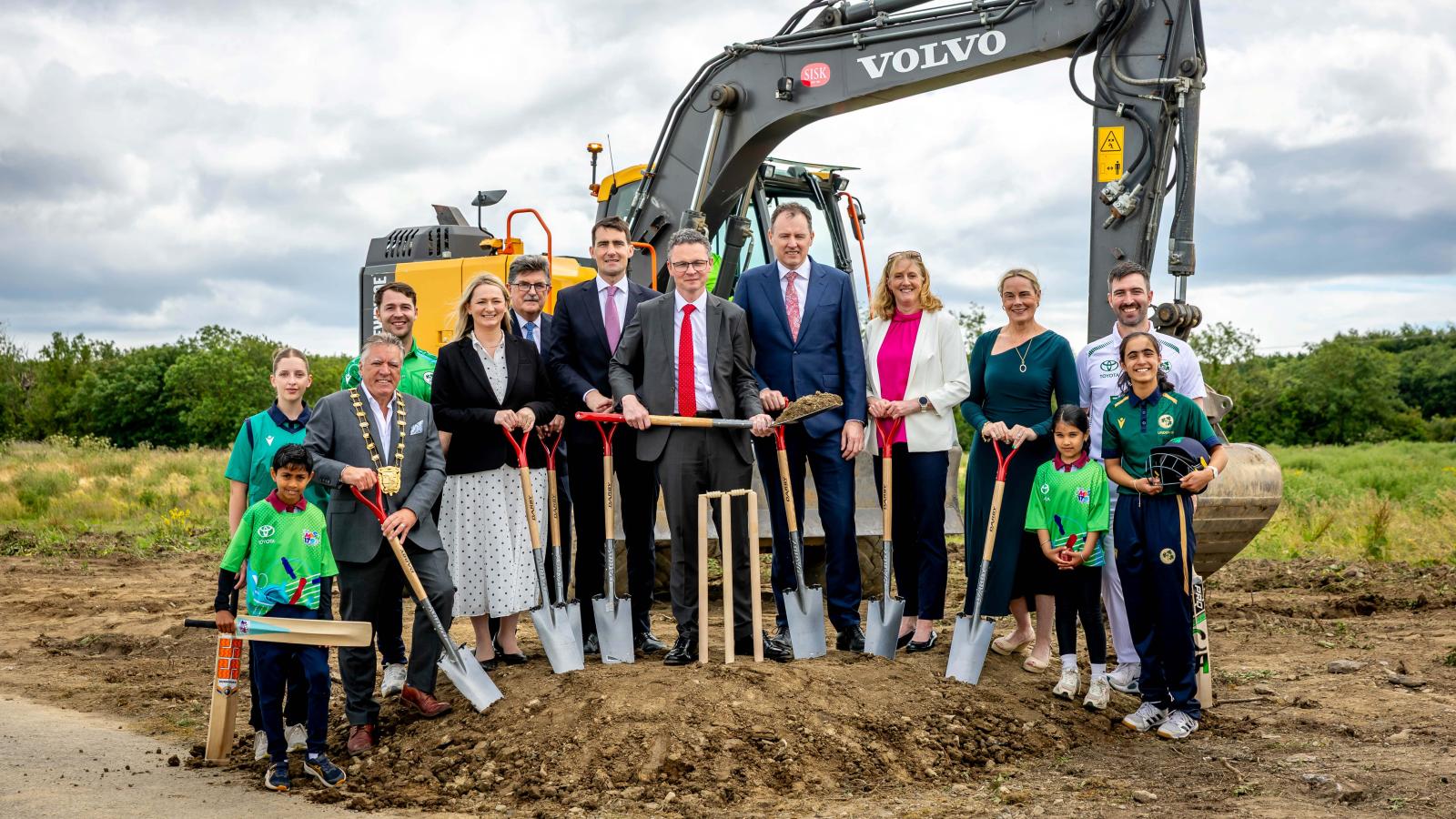
In a moment that Cricket Ireland has been working towards for the better part of a decade, a sod-turning ceremony at the Sport Ireland Campus in Blanchardstown on Monday marked the official start of construction on the new National Cricket Centre — a permanent home for the sport that will seat 4,240 spectators, house a world-class high-performance facility, and position Ireland as a credible co-host for the 2030 Men's T20 World Cup.
Background
Irish cricket has long operated without a permanent, purpose-built home. The national team has played its home internationals at a variety of venues — Malahide Cricket Club in north County Dublin, the Civil Service Cricket Club in Stormont, and the Clontarf Cricket Club ground — relying on temporary infrastructure, hired marquees, and borrowed facilities to host Test matches and white-ball internationals. While these venues have served the sport admirably, the lack of a dedicated national stadium has been a persistent constraint on Cricket Ireland's ability to grow the game, attract investment, and compete for major hosting rights.
The Sport Ireland Campus in Blanchardstown, which already houses the National Aquatic Centre, the National Indoor Arena, and a range of other elite sporting facilities, was identified as the ideal location for the new cricket centre. The campus's existing infrastructure, transport links, and proximity to Dublin's population centre made it a natural fit. Planning permission was secured after a lengthy process, and the project has been in detailed design for the past two years.
The timing of the groundbreaking is significant. Ireland is confirmed as a co-host of the 2030 Men's T20 World Cup alongside England, Scotland, and the Netherlands. Having a permanent, high-capacity venue operational in time for test events in 2029 is not merely desirable — it is a contractual requirement of the hosting agreement with the International Cricket Council (ICC).
Key Developments
The sod-turning ceremony on 16 June 2026 was attended by Ministers Patrick O'Donovan, Charlie McConalogue, and Jack Chambers, alongside Sport Ireland chief executive Anna Marie Kennedy and Cricket Ireland CEO Sarah Keane. The presence of three cabinet ministers underscored the government's commitment to the project and its recognition of cricket's growing profile in Irish sporting life.
Phase one of the development will deliver the main oval with 4,240 permanent seats, a high-performance centre with indoor nets, analysis suites, and athlete welfare facilities, and supporting infrastructure including media facilities and public amenities. The ground will have the capacity to expand to 12,000 spectators through the use of temporary stands for major events such as T20 World Cup fixtures.
Sarah Keane described the project as a "game-changer" for Irish cricket. "This is a permanent home for our sport," she said. "It gives us the infrastructure to develop players from grassroots to international level under one roof, and it gives us the credibility to host world-class events. We are on track, and we plan to use the facility for test events in 2029 ahead of the T20 World Cup."
Why It Matters
The National Cricket Centre is more than a stadium — it is a statement of intent about where Irish cricket is headed. The sport has grown significantly since Ireland achieved Full Member status with the ICC in 2017, gaining the right to play Test cricket. The men's team has recorded memorable victories over Pakistan, England, and Afghanistan in recent years, while the women's team has established itself as a competitive force in the global game. But without a permanent home, the sport has struggled to build the kind of sustained public profile that would attract the sponsorship and broadcast deals needed to fund further growth.
The comparison with other small-nation cricket programmes is instructive. Scotland, Afghanistan, and Zimbabwe have all invested in dedicated cricket infrastructure in recent years, and the correlation between permanent facilities and improved international performance is well established. Ireland's reliance on temporary venues has also meant higher operational costs for each home series, eating into budgets that could otherwise be directed at player development and coaching.
The 2030 T20 World Cup co-hosting rights represent a once-in-a-generation opportunity to showcase Irish cricket to a global audience. With the ICC's T20 World Cup now one of the most-watched sporting events on the planet, the prospect of international teams and their supporters descending on Dublin for group-stage fixtures could transform the sport's visibility in Ireland in a way that no domestic campaign could achieve.
Local Impact
The Sport Ireland Campus in Blanchardstown is already one of the busiest sporting hubs in the country, drawing athletes, school groups, and recreational users from across Dublin and the surrounding counties. The addition of a cricket centre will bring a new dimension to the campus, with the potential to attract cricket academies, school programmes, and community clubs from across Leinster. The Blanchardstown area, which has a large and diverse population including significant South Asian communities for whom cricket is a central cultural activity, stands to benefit particularly from improved access to high-quality cricket facilities. Construction is expected to create several hundred jobs in the building phase, with permanent employment in facility management and coaching to follow.
What's Next
Construction is now under way, with the project expected to be completed in time for test events in 2029. Cricket Ireland will use those events to fine-tune operations ahead of the 2030 T20 World Cup. The ICC is expected to confirm Ireland's specific hosting schedule for the tournament in late 2027. In the meantime, the national team will continue to play home internationals at Malahide and other existing venues while the new facility takes shape. Cricket Ireland has indicated that a community engagement programme will be launched later in 2026 to involve local clubs and schools in the development of the new centre.