Lakeland Dairies' £24.5m Ballyrashane Creamery Expansion Secures Future for Coleraine Farming Community
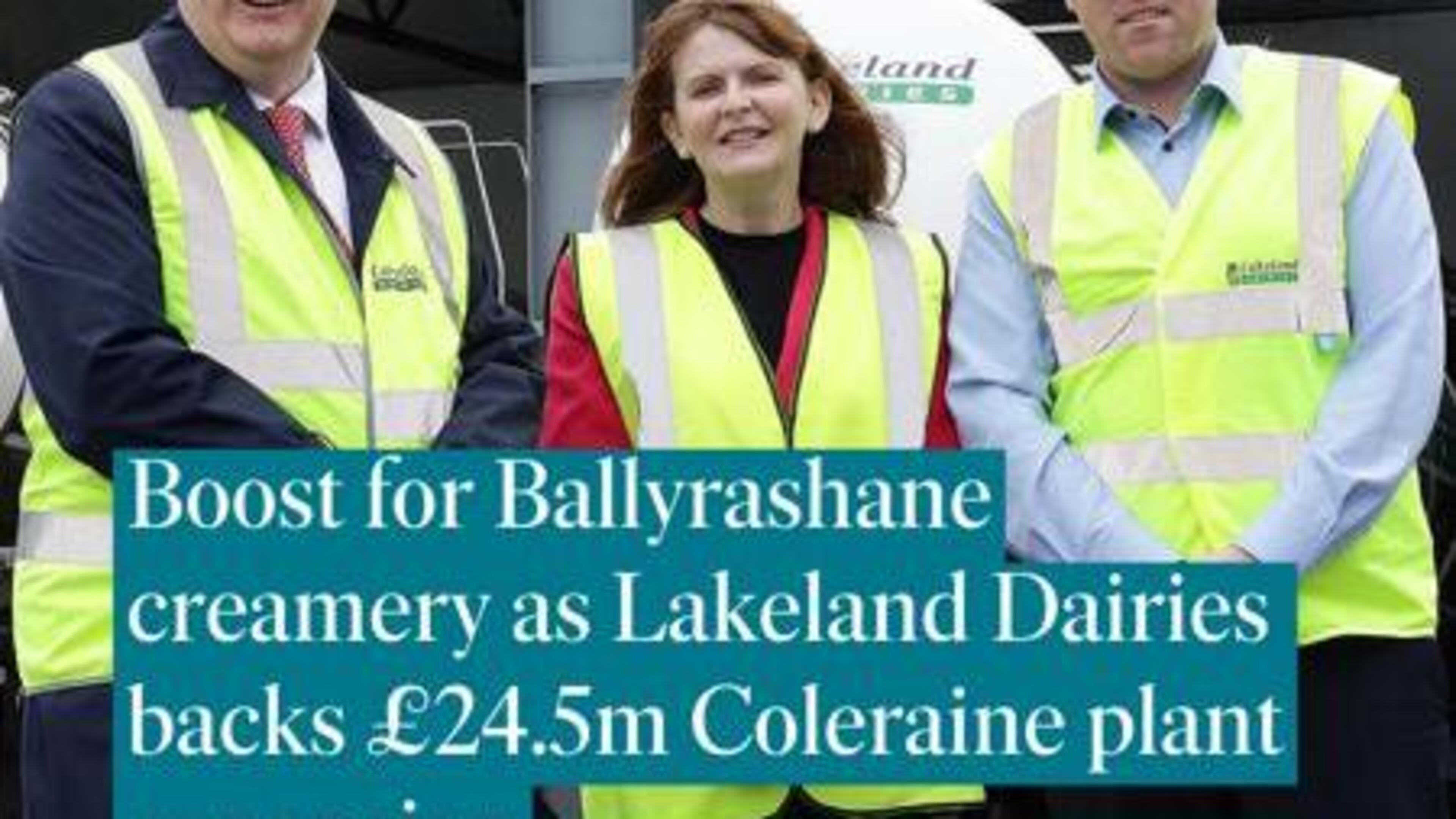
Lakeland Dairies has committed £24.5 million to a major expansion of the Ballyrashane Creamery near Coleraine, breathing new life into a facility that has served the north Antrim farming community for 130 years and delivering one of the most significant agri-food investments in the Causeway Coast area in recent memory.
Background
The Ballyrashane Creamery has been a cornerstone of dairy farming in north Antrim since the late Victorian era, processing milk from hundreds of family farms across the Causeway Coast and Glens area. The facility sits at the heart of one of Northern Ireland's most productive agricultural belts, where the fertile land between the Bann valley and the north coast has sustained dairy farming for generations.
Lakeland Dairies, the Irish-owned dairy co-operative headquartered in Bailieborough, County Cavan, has grown steadily over the past two decades through a series of strategic acquisitions and investments on both sides of the border. The company processes milk from approximately 3,200 farm families across Ireland and Northern Ireland, making it one of the largest dairy processors on the island. Its cross-border model has long been cited as a practical example of all-island economic cooperation working quietly and effectively.
The Ballyrashane site had been operating at near-capacity for several years, with local farmers and industry observers noting that without significant capital investment, the creamery risked falling behind more modern processing facilities elsewhere. The announcement of the £24.5 million expansion has therefore been welcomed not merely as a business decision but as a vote of confidence in the long-term viability of dairy farming in the north Antrim hinterland.
Key Developments
The investment will fund a comprehensive upgrade of the Ballyrashane facility, including new processing lines, enhanced cold storage infrastructure, and improved efficiencies across the site's milk intake and separation operations. The expansion is expected to significantly increase the volume of milk the creamery can handle daily, allowing Lakeland Dairies to take on additional supply from farms in the surrounding area that had previously been constrained by capacity limits.
Local farmers who supply the creamery have responded with considerable enthusiasm. The investment provides a degree of certainty that has been absent in recent years, particularly given the volatility in global dairy commodity markets and the ongoing pressures of input cost inflation. For many family farms in the Coleraine hinterland, the Ballyrashane Creamery is not merely a business partner but the economic anchor around which their entire operation is built.
The project is expected to create a number of new permanent positions at the site, adding to the existing workforce and providing skilled employment in an area where manufacturing and processing jobs are highly valued. Construction work is anticipated to begin in the coming months, with the upgraded facility expected to be fully operational within two years.
Why It Matters
This investment carries significance well beyond the immediate economic numbers. The agri-food sector is Northern Ireland's largest indigenous industry, generating over £5 billion annually and employing more than 100,000 people across the supply chain. Dairy processing sits at the heart of that sector, and the health of facilities like Ballyrashane is a direct indicator of the sector's overall confidence.
The timing is particularly meaningful. Northern Ireland's dairy farmers have faced a difficult period, navigating post-Brexit trade adjustments, rising feed and energy costs, and the ongoing challenge of meeting increasingly stringent environmental standards around nitrates and water quality. An investment of this scale from a major processor sends a clear signal that the long-term outlook for the sector remains positive, provided the right infrastructure is in place.
Unlike the Republic, where dairy expansion has been constrained by EU nitrates regulations and planning pressures, Northern Ireland has retained somewhat more flexibility in its agricultural policy framework. The Ballyrashane expansion is a practical demonstration of that advantage being put to productive use. It also reinforces the cross-border dimension of the island's agri-food economy — Lakeland Dairies' willingness to invest heavily in a Northern Ireland facility underscores how deeply integrated the two jurisdictions' food sectors have become since the Good Friday Agreement.
Local Impact
For the farming families of north Antrim and the Causeway Coast, the Ballyrashane expansion is tangible good news at a time when rural communities have faced considerable uncertainty. The creamery draws its milk supply from farms stretching from the outskirts of Coleraine through Ballymoney and into the Glens of Antrim, covering some of the most scenic and productive agricultural land in Northern Ireland.
The new processing capacity will allow farmers in the catchment area to expand their herds with confidence, knowing that the infrastructure exists to handle increased volumes. For younger farmers considering whether to invest in the next generation of their family enterprise, the Lakeland commitment provides exactly the kind of long-term signal they need. Local agricultural suppliers, hauliers, and ancillary businesses in the Coleraine area will also benefit from the increased activity the expanded facility will generate.
What's Next
Planning applications for the construction phase are expected to be lodged with Causeway Coast and Glens Borough Council in the coming weeks. Subject to planning approval, groundwork is anticipated to begin before the end of 2026, with the full expansion programme running through 2027 and into early 2028. Lakeland Dairies has indicated it will engage directly with its farmer suppliers in the Ballyrashane catchment area throughout the process, holding information sessions to outline the timeline and the implications for milk collection schedules during the construction period.