Galway Survivor of Mother-and-Baby Home Awarded PhD at 77 in Triumph of Resilience and Scholarship
A 77-year-old woman who spent time in one of Ireland's mother-and-baby homes as a young woman has been awarded a doctorate by NUI Galway, completing an extraordinary academic journey that stands as one of the most moving stories of personal transformation and intellectual determination to emerge from Ireland's reckoning with its institutional past.
Background
Ireland's mother-and-baby homes were institutions operated primarily by religious orders between the 1920s and 1990s, where unmarried mothers and their children were housed, often in conditions of considerable hardship and social stigma. The 2021 Commission of Investigation report into these institutions documented widespread suffering, high infant mortality rates, and the forced separation of mothers from their children through adoption — frequently without the mothers' meaningful consent.
The State's formal apology, delivered by Taoiseach Micheál Martin in January 2021, acknowledged the profound harm done to the women and children who passed through these institutions. The subsequent redress scheme, while welcomed by some survivors, has been criticised by advocacy groups as inadequate in scope and slow in delivery. For many survivors, now in their seventies and eighties, the question of recognition and acknowledgement has taken on increasing urgency.
Against this backdrop, the story of a 77-year-old woman completing a doctorate at NUI Galway carries a resonance that extends far beyond the personal. It speaks to the extraordinary capacity of individuals to reclaim agency and intellectual identity after experiences that sought to deny them both. The university's Galway campus, situated on the banks of the Corrib in the heart of the city, has become a place of genuine transformation for mature students in recent decades, with its access programmes drawing learners from across the west of Ireland.
Key Developments
The woman, who has chosen to maintain a degree of privacy around the specific details of her institutional experience, completed her doctoral research over several years of part-time study, combining her academic work with ongoing advocacy for survivors of the mother-and-baby home system. Her thesis, which draws on both personal testimony and archival research, has been described by her supervisors as a significant contribution to the growing body of scholarship on Ireland's institutional history.
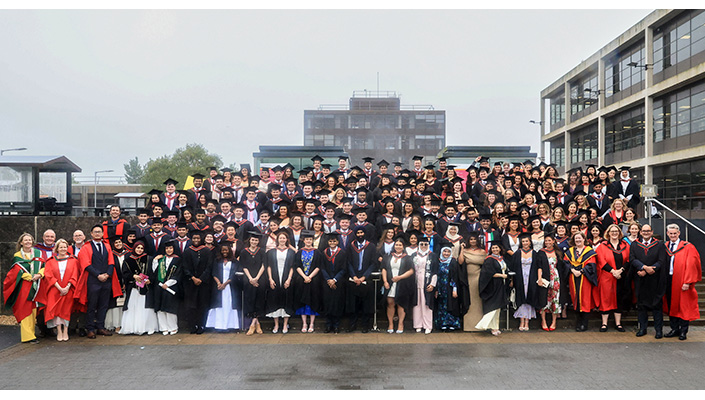
The conferral ceremony at NUI Galway was attended by family members and fellow survivors, several of whom travelled from across Ireland to mark the occasion. The moment was described by those present as deeply emotional — a gathering that carried the weight of decades of silence, shame, and ultimately, hard-won dignity. The university's president offered warm words of congratulation, acknowledging the particular significance of the achievement given the circumstances of the graduate's life.
Survivor advocacy groups have highlighted the story as an example of the resilience that characterises so many of those who passed through Ireland's institutional system. The Clann Project, which has worked extensively with survivors and their families, noted that the achievement demonstrates the intellectual potential that was systematically suppressed in women who were denied educational opportunities at critical points in their lives.
Why It Matters
The conferral of a doctorate on a 77-year-old mother-and-baby home survivor is not merely a heartwarming individual story — it is a pointed commentary on what was taken from these women and what they have had to fight to reclaim. The women who entered Ireland's mother-and-baby homes were overwhelmingly young, often teenagers, whose educational trajectories were permanently disrupted by their institutionalisation. Many left with no qualifications, limited employment prospects, and the additional burden of grief and shame that the system deliberately imposed.
That a woman from this cohort has now achieved the highest academic qualification available in the Irish university system is a rebuke to every assumption that was made about her and her peers. It is also a reminder that the redress process, however important, cannot fully address the educational and professional opportunities that were denied to an entire generation of women. Unlike the financial compensation schemes that have dominated public discussion, this story speaks to a different kind of reckoning — one measured in intellectual achievement and personal dignity rather than monetary settlement.
The achievement also carries a message for Irish society more broadly about the value of lifelong learning and the importance of maintaining educational pathways for people of all ages and backgrounds. Ireland's universities have made significant progress in recent years in widening access to higher education, but the story of this 77-year-old graduate is a reminder of how much further there is to go.
Local Impact
In Galway, the story has been received with particular warmth. The city has a strong tradition of mature student participation at NUI Galway, and the university's access and lifelong learning programmes have long been a point of civic pride. The conferral has prompted renewed discussion in the city about the importance of maintaining and expanding these pathways for older learners, particularly those whose earlier educational opportunities were curtailed by circumstance.
Local survivor support groups in the west of Ireland have used the occasion to call for greater investment in educational supports for survivors who wish to pursue formal qualifications. Several have noted that the redress scheme, while providing financial support, does not include provisions for educational bursaries or academic mentoring — a gap that advocates argue should be addressed in any future review of the scheme's scope.
What's Next
The graduate has indicated her intention to continue her advocacy work, using her doctoral research as a platform for engagement with policymakers and the broader public. She is expected to present her findings at a survivor-focused conference later this year, and there is interest from academic publishers in the possibility of adapting her thesis for a wider readership. NUI Galway has expressed its commitment to supporting her ongoing work and to maintaining its access programmes for mature students from all backgrounds.