Six Killed in Kyiv Mass Shooting as Zelensky Announces Interior Ministry Shake-Up
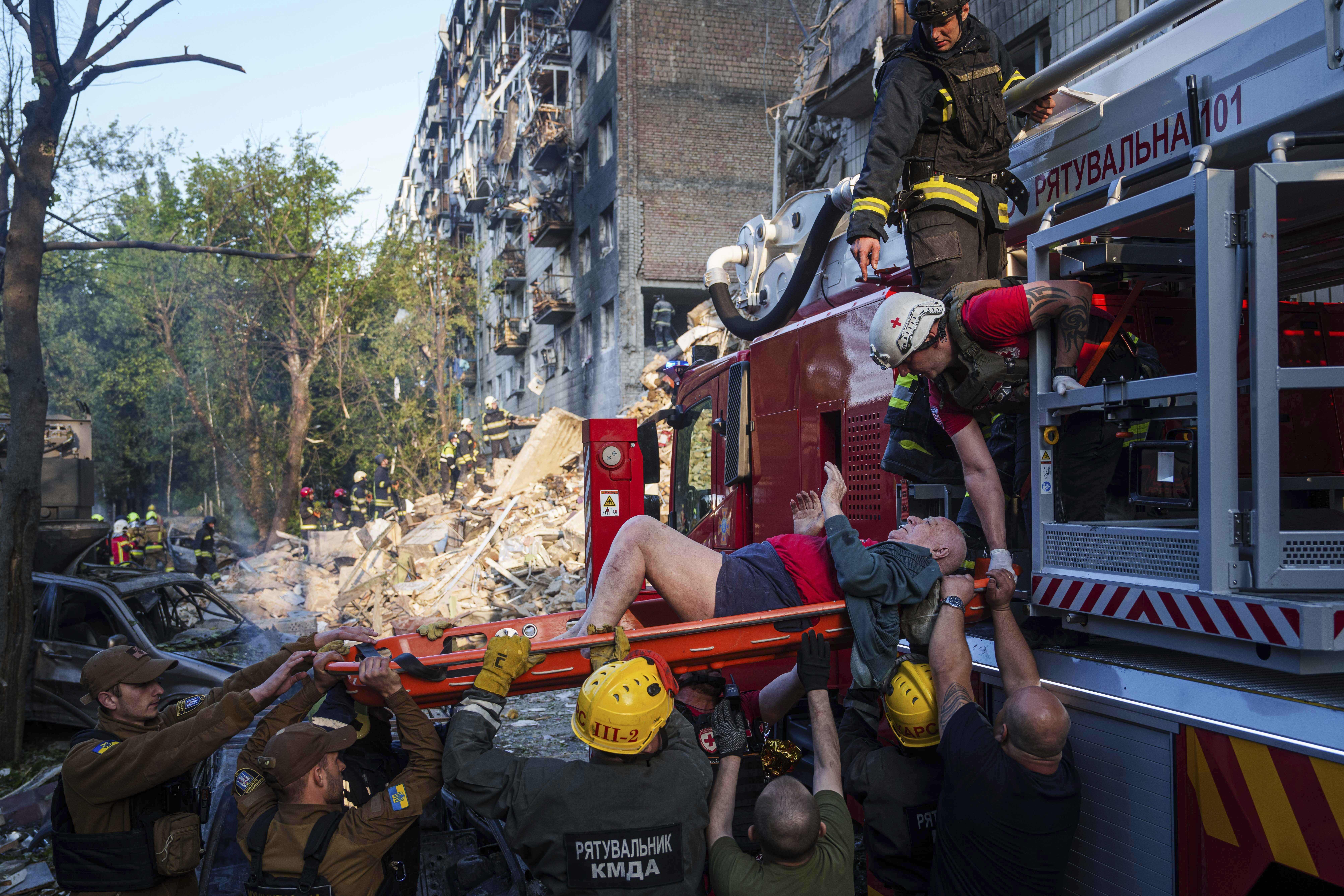
At least six people were killed in a mass shooting in the Ukrainian capital Kyiv on Saturday, with the suspected gunman shot dead by police after taking hostages in a supermarket, prompting President Volodymyr Zelensky to announce sweeping personnel changes within the Interior Ministry following criticism of the initial police response.
The attack, which occurred in the Demiivka neighbourhood of Kyiv's Holosiivskyi District, began at 4:32pm when police received a call about a neighbour dispute. The gunman, identified as 57-year-old Dmytro Vasylchenkov, a former major in the Armed Forces of Ukraine, escalated rapidly from a rubber bullet pistol to a legally registered 9mm semi-automatic carbine, shooting several people in his apartment building before setting his flat on fire and moving to a nearby Velmart supermarket where he took hostages.
Background
Ukraine has been at war with Russia since the full-scale invasion in February 2022, and Kyiv has been subjected to repeated Russian missile and drone attacks throughout the conflict. The city's residents have shown remarkable resilience in the face of these external threats, but the mass shooting added a deeply unsettling internal dimension to the dangers facing the capital's population. The attack occurred against the backdrop of a highly volatile security situation, with Russia occupying approximately 20% of Ukrainian territory and making incremental advances in the east and southeast of the country.
The shooting resulted in the deaths of eight people in total, including the gunman himself. Thirteen others were injured, among them a 12-year-old child and a four-month-old infant who suffered carbon monoxide poisoning from the fire set by Vasylchenkov. Among the deceased was Igor Savchenko, a guitarist for the rock band Druhe Sontse, whose death added a particular poignancy to the tragedy and drew an outpouring of grief from Ukraine's music community.
Key Developments
Police negotiators communicated with Vasylchenkov for approximately 40 minutes while he was barricaded inside the supermarket with hostages. When negotiations failed, the elite Rapid Operational Response Unit (KORD) stormed the building, killing the gunman and rescuing four hostages. However, the initial police response came under severe criticism after two patrol officers who first arrived at the scene were captured on video fleeing rather than confronting the shooter — footage that caused widespread outrage across Ukraine and prompted immediate calls for accountability.
President Zelensky responded swiftly and decisively. The two officers who fled were suspended and later charged with official negligence. The head of Ukraine's Patrol Police, Yevhen Zhukov, resigned from his post. Zelensky called for sweeping personnel changes across the Interior Ministry and a reform of personnel training and emergency response protocols. The Security Service of Ukraine is also investigating the attack as a possible act of terrorism, citing the shooter's history of anti-Ukrainian statements and his background as a former military officer.
Why It Matters
The Kyiv shooting is a stark reminder that Ukraine faces multiple security challenges simultaneously — not only the existential external threat from Russia but also internal security issues that require effective law enforcement. Zelensky's decision to announce personnel changes in the Interior Ministry signals that he views the response to the shooting as inadequate and that accountability within the security services remains a priority even as the country fights for its survival on the eastern front. The willingness to hold officers to account publicly, even in the midst of a war, speaks to a commitment to the rule of law that is itself a form of resistance against the authoritarianism that Russia represents.
The incident also highlights the psychological toll of prolonged conflict on a society. Vasylchenkov's background as a former military officer raises difficult questions about the support systems available to veterans and the potential for trauma to manifest in catastrophic ways. These are questions that Ukraine, and indeed the international community supporting it, will need to grapple with as the war continues and the number of veterans requiring mental health support grows. The Ukrainian government has acknowledged the scale of the challenge but resources remain stretched across every sector of public life.
Local Impact
From a UK perspective, the Kyiv shooting underscores the complexity of the situation in Ukraine and the importance of continued support for a country fighting on multiple fronts. British military and financial assistance to Ukraine remains a cornerstone of UK foreign policy, and events like this serve as a reminder that the conflict's human cost extends far beyond the battlefield. The UK government has consistently backed Zelensky's administration, and the Interior Ministry shake-up will be seen in London as evidence of a government determined to maintain standards and accountability even under the most extreme pressure.
What's Next
The investigation into the Kyiv shooting is ongoing. Zelensky's personnel changes in the Interior Ministry are expected to be announced in the coming days. For more, see Wikipedia — 2026 Kyiv Shooting and NPR.