Collision Course on Unity: Sinn Féin Tables Constitutional Change Bill as Fine Gael Plots Rival Blueprint
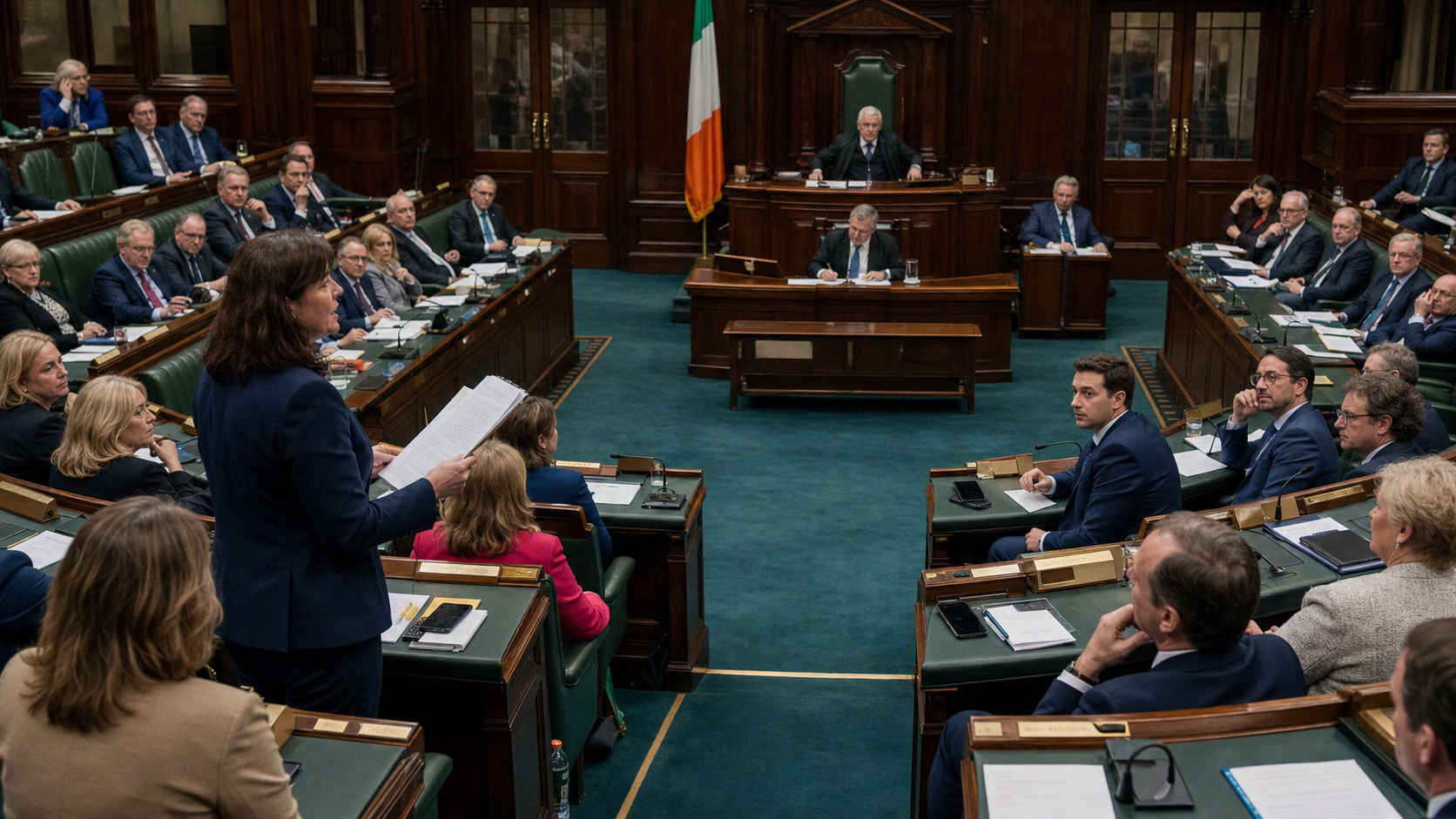
The political debate on Irish unity has intensified sharply on Saturday 12 July as Sinn Féin introduced its "Planning for Constitutional Change Bill" in the Dáil, a measure that would compel the government to produce a Green Paper on reunification and establish an all-island Citizens' Assembly on the issue. The government has confirmed it will oppose the bill, arguing that "artificial legislative deadlines" are counterproductive to the patient work of building consent for constitutional change. Fine Gael, meanwhile, has announced its own plan to develop a "blueprint for a unified island" by November 2026, setting up a complex three-way dynamic on one of Irish politics' most fundamental questions.
Background
The question of Irish unity has moved from the margins to the mainstream of political debate in both jurisdictions over the past decade, driven by the demographic changes in Northern Ireland, the impact of Brexit, and the growing electoral strength of Sinn Féin on both sides of the border. The Good Friday Agreement provides a mechanism for a border poll — a referendum on Irish unity — to be called by the Secretary of State for Northern Ireland if it appears likely that a majority would vote in favour. But the conditions under which such a poll should be called, and the process by which the Irish state should prepare for it, remain deeply contested.
Sinn Féin has consistently argued that the Irish government has a responsibility to plan actively for Irish unity, rather than waiting passively for a border poll to be called. The party's "Planning for Constitutional Change Bill" is the legislative expression of that argument, seeking to compel the government to take concrete preparatory steps rather than leaving the issue to evolve at its own pace.
Fine Gael's position has been more cautious. The party has historically been associated with a gradualist approach to unity, emphasising the importance of building consent across both communities in Northern Ireland before any referendum is held. But the party's announcement of a "blueprint for a unified island" suggests a recognition that it cannot afford to cede the unity agenda entirely to Sinn Féin.
Key Developments
The Sinn Féin bill, introduced in the Dáil on Saturday, would require the government to publish a Green Paper on Irish unity within twelve months of the bill's enactment, setting out the government's analysis of the constitutional, legal, economic, and social implications of reunification. It would also require the establishment of an all-island Citizens' Assembly to deliberate on the issue and make recommendations to the Oireachtas.
The government's response was swift and unequivocal. A government spokesperson stated that the bill would not receive government support, arguing that "this is a matter for patient politics and partnership, not prescriptive legislation." The spokesperson emphasised that constitutional change requires "patience, partnership and enduring consent" — a formulation that reflects the government's view that the pace of progress towards unity must be determined by the development of genuine cross-community support in Northern Ireland, not by legislative deadlines in Dublin.
Fine Gael's announcement of a "blueprint for a unified island" by November 2026 represents a different approach — not a legislative mandate, but a policy document that would set out the party's vision for how unity might be achieved and what a united Ireland might look like. The announcement is clearly designed to demonstrate that Fine Gael is engaged with the unity question without committing to the Sinn Féin approach of legislative compulsion.
Why It Matters
The debate over the Planning for Constitutional Change Bill matters because it reflects a fundamental disagreement about the appropriate role of the Irish state in preparing for potential constitutional change. Sinn Féin's position — that the state has an active responsibility to plan for unity — is coherent and has significant public support. The government's position — that such planning should be driven by the development of genuine consent rather than legislative deadlines — is also coherent, but it risks being seen as passive or evasive.
The Fine Gael "blueprint" announcement adds a further dimension. If Fine Gael produces a serious, detailed document on Irish unity by November, it will change the terms of the debate — demonstrating that the party is engaged with the issue while maintaining its distinctive emphasis on consent and gradualism. If the document is vague or aspirational, it will be dismissed as a political manoeuvre designed to neutralise Sinn Féin's advantage on the issue.
For Northern Ireland, the debate in Dublin is watched with a mixture of interest and anxiety. Unionist parties will be alarmed by any suggestion that the Irish state is actively planning for unity without their involvement, while nationalist and republican parties will welcome the increased attention to the issue. The Alliance Party, which has positioned itself as a cross-community voice, will be watching carefully to ensure that the debate does not become polarising.
Local Impact
The political debate on unity has practical implications for communities on both sides of the border. In Northern Ireland, the prospect of a border poll — however distant — affects investment decisions, community relations, and the political calculations of every party. In the Republic, the debate touches on fundamental questions about national identity, the capacity of the state to absorb a united Ireland, and the willingness of southern taxpayers to fund the transition.
What's Next
The Sinn Féin bill is expected to be debated in the Dáil in the coming weeks, with the government's opposition likely to ensure its defeat. Fine Gael has indicated that its "blueprint for a unified island" will be published before the end of November 2026, with a consultation process to follow. The Shared Island Unit in the Department of the Taoiseach is expected to play a central role in developing the government's own approach to the unity question, and its work is likely to be referenced in the coming debates.