Government Defeats Hare Coursing Ban by 125 to 24 as Opposition Slams "Guillotined" Debate and Hidden Report
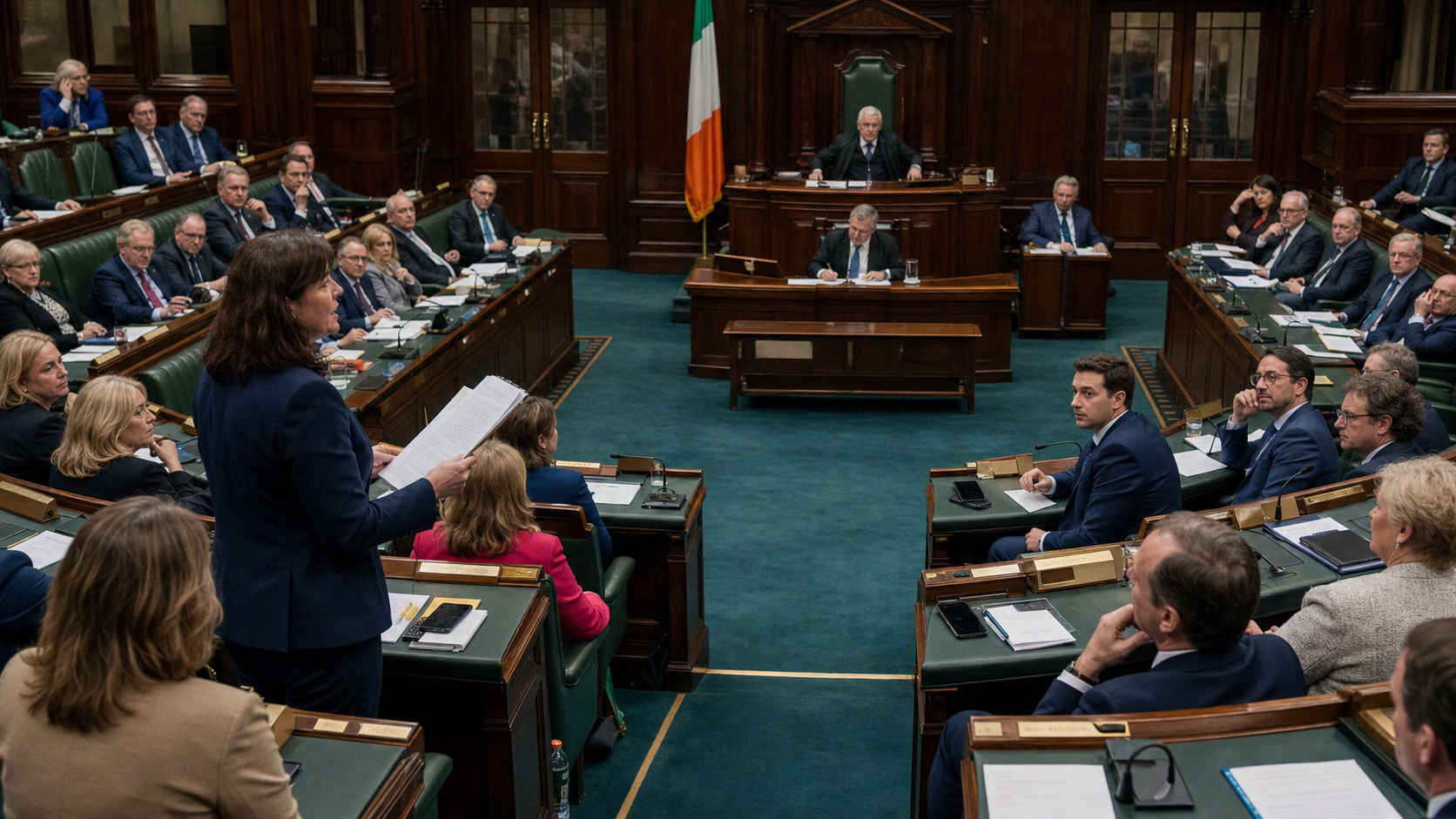
The government has defeated a Private Members' Bill seeking to ban hare coursing in Ireland by a decisive vote of 125 to 24, following a debate that opposition TDs and animal welfare advocates have condemned as "guillotined" — cut short by a strict party whip that prevented meaningful discussion of the issues at stake. The vote has generated further controversy over a government-cited report on the economic contribution of hare coursing to rural communities, which was used to justify the government's opposition to the ban but has not been published, prompting demands for transparency from opposition parties.
Background
Hare coursing — the practice of using greyhounds to chase live hares in an enclosed field — has been a source of controversy in Ireland for many years. Supporters of the practice argue that it is a traditional rural sport with deep cultural roots, that it provides significant economic benefits to rural communities, and that it is conducted under strict welfare regulations that minimise harm to the hares involved. Opponents argue that it is inherently cruel, that the welfare regulations are inadequate, and that the practice has no place in a modern, humane society.
The Private Members' Bill that was defeated on Saturday was introduced by opposition TDs who have been campaigning for a ban for several years. The bill had significant public support — opinion polls have consistently shown majority support for a ban on hare coursing — but faced opposition from the government, which has historically been reluctant to move against a practice that has strong support in rural constituencies.
The government's opposition to the bill was partly justified by reference to a report on the economic contribution of hare coursing, which was commissioned by the Department of Agriculture. The report's findings were cited in the Dáil debate as evidence that a ban would have significant negative consequences for rural communities. However, the report itself has not been published, making it impossible for TDs or the public to assess the validity of the claims made on its basis.
Key Developments
The bill was defeated by 125 votes to 24 on Saturday 11 July, with government TDs voting against it under a strict party whip. The margin of defeat reflects the government's comfortable majority in the Dáil, but the scale of the opposition to the bill — just 24 TDs voted in favour — also reflects the limited cross-party support it attracted.
The debate itself was described by opposition TDs as "guillotined" — a parliamentary term for a debate that is cut short by a time limit, preventing full discussion of the issues. The use of a strict party whip on what many TDs regard as a matter of conscience — the treatment of animals — drew particular criticism, with one opposition TD stating that "to guillotine debate on an issue of public conscience and then hide the very report used to justify the decision is an affront to democracy."
The unpublished report on the economic contribution of hare coursing has become a focal point for the controversy. Opposition TDs have demanded its immediate publication, arguing that the public has a right to see the evidence on which the government based its decision. The Department of Agriculture has not given a clear timeline for publication.
Why It Matters
The hare coursing vote matters for several reasons. It is a test of the government's willingness to act on animal welfare issues in the face of opposition from rural interest groups. It raises questions about the use of unpublished reports to justify policy decisions. And it illustrates the tension between the government's stated commitment to transparency and its actual practice when politically sensitive decisions are involved.
The animal welfare dimension is significant in its own right. Ireland has made significant progress on animal welfare legislation in recent years, but hare coursing remains a notable exception — a practice that would be illegal in most other EU member states but continues in Ireland under a licensing regime. The defeat of the ban bill means that this situation will continue for the foreseeable future.
The transparency issue is also important. If the government is going to cite an unpublished report as justification for a policy decision, it has an obligation to publish that report so that its findings can be scrutinised. The failure to do so undermines public confidence in the decision-making process and gives credence to the suggestion that the report's findings may not support the government's position as strongly as claimed.
Local Impact
Hare coursing is concentrated in a relatively small number of counties, primarily in the midlands and south of Ireland, where the sport has its strongest traditional base. The defeat of the ban bill will be welcomed by coursing clubs and their supporters in those areas, who have argued that the sport is an important part of rural culture and provides economic benefits to local communities. For animal welfare organisations, the defeat is a setback, but they have indicated that they will continue to campaign for a ban and will seek to build broader political support for the measure.
What's Next
Opposition TDs have indicated that they will continue to press for the publication of the economic report on hare coursing and will raise the matter through parliamentary questions and committee hearings. Animal welfare organisations have announced that they will intensify their public campaign for a ban, including through legal challenges to the licensing regime. The issue is likely to return to the Dáil in some form before the end of the current Oireachtas term.