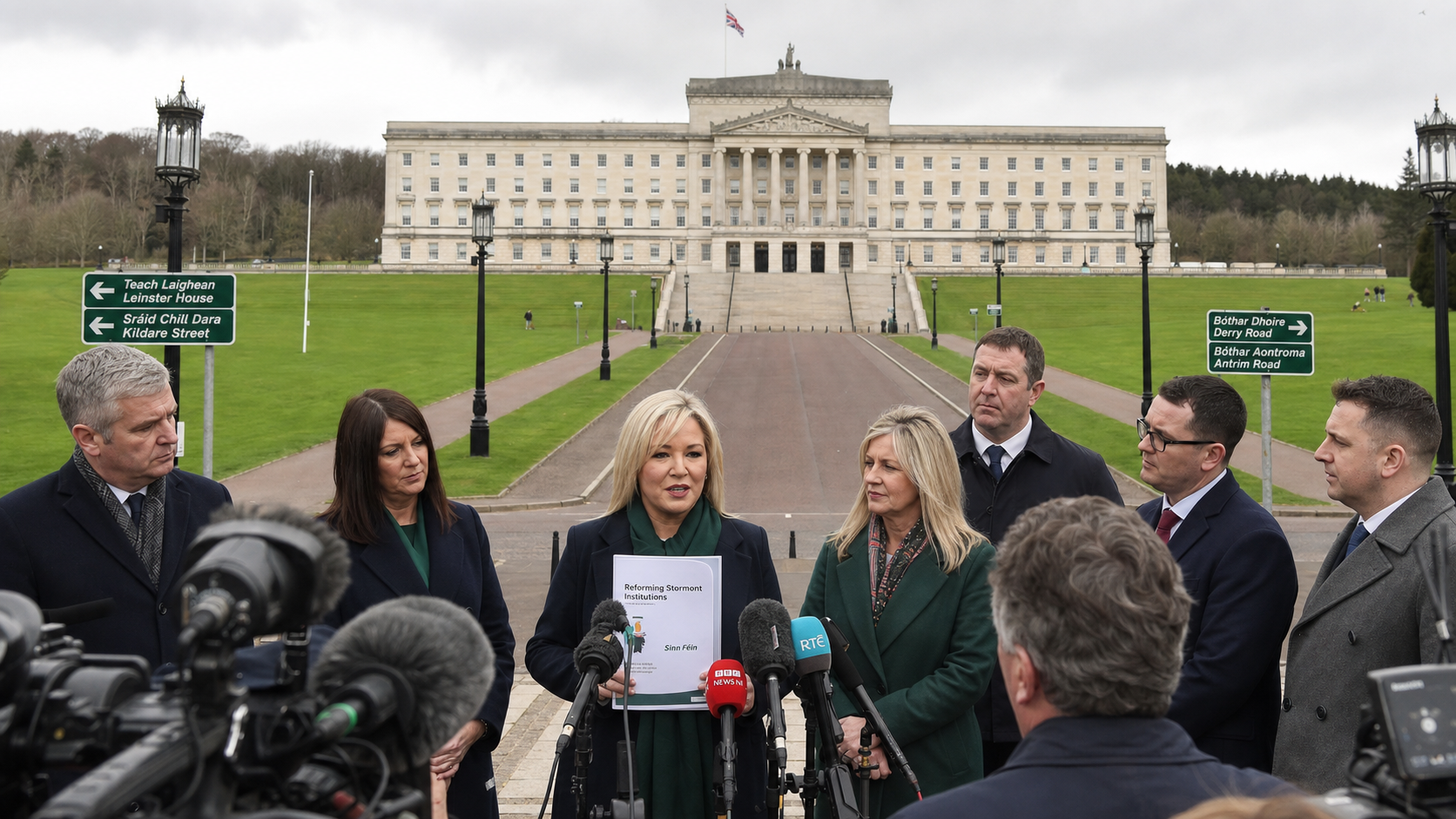
Sinn Féin Publishes Formal Plan to End Party Vetoes and Prevent Future Stormont Collapse
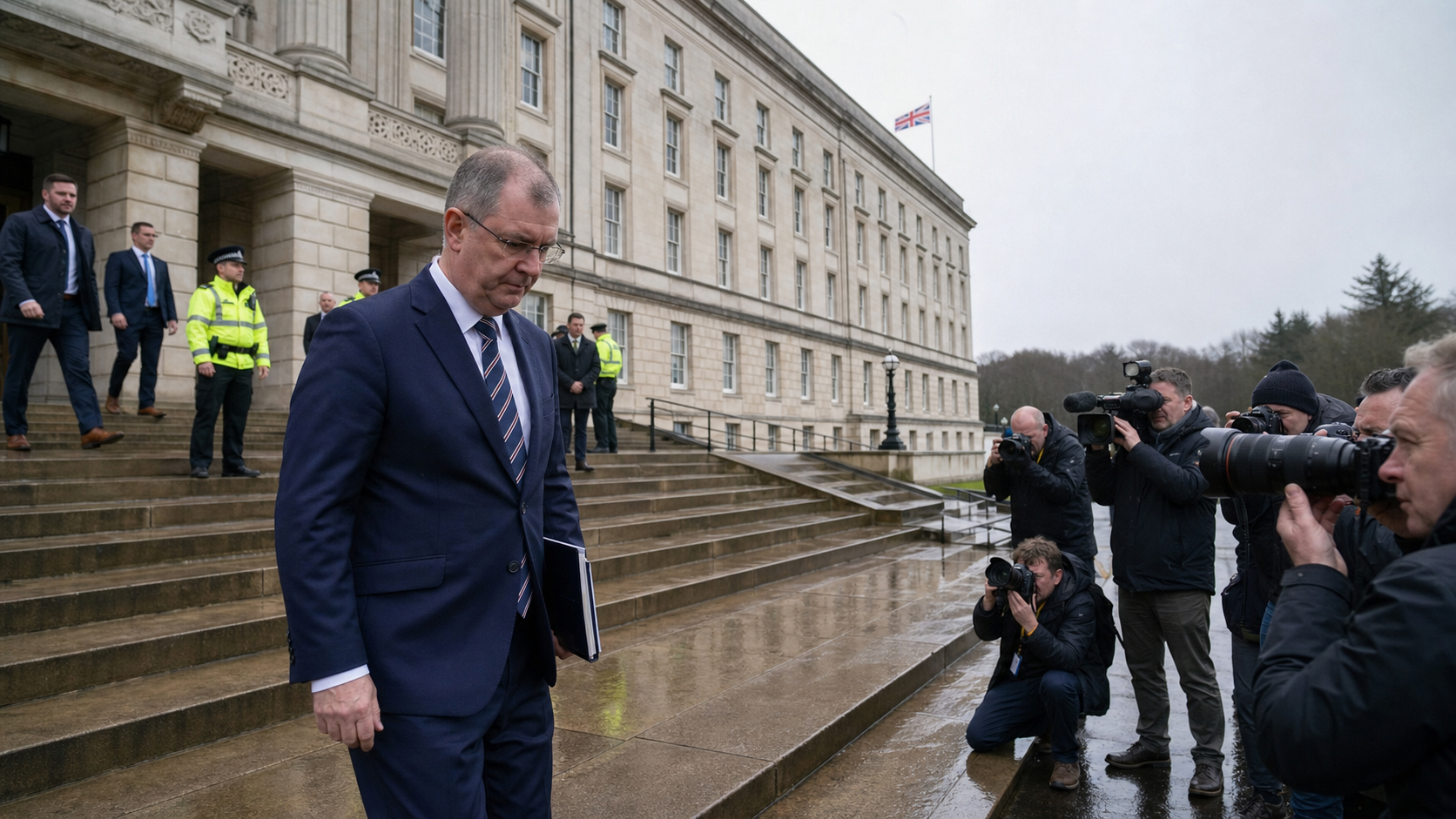
Sinn Féin has published a comprehensive set of formal proposals to overhaul the Stormont institutions, seeking to remove the ability of a single party to collapse the power-sharing executive by ending the veto mechanism on the appointment of a First or Deputy First Minister — a move that has attracted support from the SDLP and Alliance Party but a cautious response from the DUP, and which has reignited fundamental questions about the future of the Good Friday Agreement's power-sharing architecture.
Background
The Good Friday Agreement of 1998 established a system of mandatory power-sharing at Stormont that was designed to ensure both unionist and nationalist communities had a meaningful stake in the governance of Northern Ireland. The system requires the largest unionist and largest nationalist parties to nominate a First Minister and Deputy First Minister respectively, and it gives each of those parties an effective veto over the formation of the executive by withholding their nomination.
This veto mechanism has been used on multiple occasions to collapse the Stormont institutions. The DUP withdrew from the executive in 2002, triggering a period of direct rule that lasted until 2007. The institutions collapsed again in 2017 following the RHI scandal, and were not restored until 2020. Most recently, the DUP's withdrawal in protest at the Northern Ireland Protocol led to a two-year collapse between 2022 and 2024. In total, Stormont has been suspended or non-functional for more than a decade of its 26-year existence.
The pattern of collapse and restoration has been enormously damaging to public services, to investor confidence, and to the credibility of devolution as a model of governance. Each collapse has left Northern Ireland without a functioning executive at precisely the moments when political leadership is most needed, and the cumulative cost — in delayed decisions, stalled projects, and lost investment — is incalculable.
Key Developments
Sinn Féin's proposals, published this weekend, would fundamentally alter the mechanism by which the First Minister and Deputy First Minister are appointed. Under the current system, if the largest unionist or nationalist party refuses to nominate, the executive cannot be formed. Under Sinn Féin's proposed reform, the opportunity to nominate would pass to the next largest party in the relevant designation if the largest party declines, preventing any single party from holding the institutions to ransom.
First Minister Michelle O'Neill set out the rationale for the proposals in direct terms. "The public are fed up with stop-start government," she said. "The days of one party holding the rest of society to ransom must be brought to an end." The SDLP and Alliance Party have both indicated support for the principle of reform, with Alliance leader Naomi Long describing the current veto system as "fundamentally incompatible with stable, accountable government."
The DUP's response has been notably cautious. The party has not rejected the proposals outright but has argued that procedural reform is less important than a "reform of the heart" among politicians — a phrase that some observers have interpreted as a signal that the DUP is not yet ready to relinquish the leverage that the current system provides. Some unionist commentators have expressed concern that the reforms are designed to "tilt the constitutional balance" in ways that go beyond the original intent of the Good Friday Agreement.
Why It Matters
The Sinn Féin proposals represent the most significant challenge to the architecture of the Good Friday Agreement since the agreement itself was negotiated. The power-sharing system was designed with the specific political context of 1998 in mind — a context in which the primary division was between unionism and nationalism, and in which ensuring both communities had a veto was seen as essential to building trust. Nearly three decades later, the political landscape has changed dramatically, with the Alliance Party now the third largest party and a significant portion of the electorate identifying as neither unionist nor nationalist.
The case for reform is strong. A system that has been used to collapse the institutions on multiple occasions, causing enormous damage to public services and to the credibility of devolution, is not serving the people of Northern Ireland well. The question is whether reform can be achieved in a way that maintains the confidence of the unionist community — which has historically been the most sceptical of changes to the Agreement's architecture — while delivering the stability that the majority of people in Northern Ireland clearly want.
The Irish and British governments will need to play a central role in any reform process, as changes to the Agreement's institutions require the consent of both governments. The Taoiseach has indicated that Dublin is open to discussions about institutional reform, while the UK government has been more cautious, mindful of unionist sensitivities.
Local Impact
For people across Northern Ireland, the prospect of a more stable Stormont is not an abstract political aspiration — it is a practical necessity. Every collapse of the institutions has meant delayed decisions on health, education, and infrastructure. The two-year collapse between 2022 and 2024 left Northern Ireland without a functioning executive during a period of intense economic pressure, with decisions on public sector pay, hospital capacity, and school funding all deferred. In communities across Belfast, Derry, Newry, and Armagh, the consequences of political dysfunction are felt in longer waiting lists, deteriorating school buildings, and inadequate road maintenance.
What's Next
Sinn Féin has called on the Irish and British governments to convene formal talks on institutional reform before the end of the year. The SDLP has supported this call, while Alliance has indicated it would participate in any such process. The DUP has not yet indicated whether it would engage with formal reform talks. The Secretary of State for Northern Ireland is expected to respond to the proposals in the coming weeks, and the issue is likely to feature prominently in the autumn political season at Stormont.