Ireland and UK Governments Commit to Enhanced Cross-Border Security Cooperation in Wake of Belfast Riots
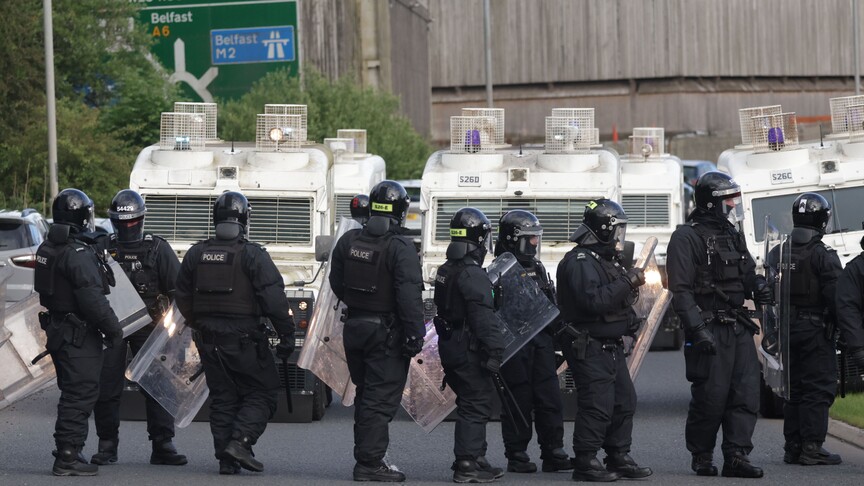
The Irish and British governments have committed to a significant strengthening of cross-border security cooperation in the aftermath of the violent disorder that swept Northern Ireland in mid-June, with Tánaiste Simon Harris confirming enhanced data sharing between An Garda Síochána and the PSNI and plans for increased intelligence-led operations along Common Travel Area routes through 2029 — moves that reflect the growing political pressure on both governments to demonstrate control of the security environment.
Background
The Common Travel Area (CTA) between Ireland and the United Kingdom is one of the oldest and most significant bilateral arrangements between the two countries, predating both the Good Friday Agreement and Ireland's membership of the European Union. It allows citizens of both countries to move freely between Ireland, Northern Ireland, Great Britain, the Isle of Man, and the Channel Islands without passport controls, and it has been a cornerstone of the practical relationship between the two islands for over a century.
The CTA has come under increasing political scrutiny in recent years, particularly in the context of debates about migration and border security. The UK's departure from the European Union created new complexities, as Ireland remained within the EU's common travel area while the UK did not, creating a potential gap in border management that critics have argued could be exploited. The violent disorder in Belfast in mid-June, which was sparked by a knife attack and quickly took on a racially motivated character, has intensified these concerns and created political pressure on both governments to act.
Ireland's implementation of the new EU Migration Pact, which came into effect earlier this year, has added another layer of complexity to the bilateral relationship. The pact introduces new obligations on EU member states in relation to asylum processing and returns, and its interaction with the CTA has raised questions about the consistency of migration management across the island of Ireland.
Key Developments
Tánaiste Simon Harris addressed the cross-border security situation directly this weekend, confirming that the two governments have agreed to enhance the sharing of immigration data and police intelligence between An Garda Síochána and the PSNI. "The gardaí and the PSNI — they're working together every single day," Harris said. "We will do more in terms of data sharing and in terms of co-operation."
British authorities have announced plans for increased intelligence-led operations along CTA routes through 2029, targeting individuals who may be seeking to exploit the open border arrangements. The operations will be conducted in a manner designed to minimise disruption to the vast majority of legitimate travellers, but they represent a significant intensification of border security activity compared to recent years.
The Irish government has also faced calls from some quarters for more robust bilateral returns agreements with the UK — arrangements that would allow for the faster return of individuals who have entered Ireland without authorisation via Northern Ireland. The government has indicated it is open to discussions on this issue, though it has emphasised that any arrangements must be consistent with Ireland's obligations under EU law and the European Convention on Human Rights.
Why It Matters
The cross-border security cooperation announced this weekend is significant for several reasons. It represents a practical response to a genuine security challenge, but it also carries important symbolic weight — demonstrating that the Irish and British governments can work together effectively on sensitive issues even in a complex political environment. The relationship between Dublin and London has been strained at various points since Brexit, and the willingness of both governments to cooperate on security matters is a positive signal.
The focus on data sharing and intelligence cooperation is particularly important. The disorder in Belfast was amplified significantly by social media activity, with inflammatory content spreading rapidly across platforms and inciting further violence. Enhanced intelligence sharing between the two police services will help to identify and disrupt networks that seek to exploit social media for criminal purposes, and it will improve the capacity of both forces to respond to emerging threats.
However, the enhanced security measures also raise civil liberties concerns that deserve careful attention. Any expansion of data sharing between police forces must be subject to robust oversight and must comply with data protection law on both sides of the border. The Irish Council for Civil Liberties has indicated it will be monitoring the implementation of the new arrangements closely.
Local Impact
For communities along the border — in counties Donegal, Cavan, Monaghan, Louth, and Leitrim on the southern side, and in Fermanagh, Tyrone, Armagh, and Down on the northern side — the enhanced security cooperation will be felt primarily through an increased Garda and PSNI presence in border areas. The vast majority of people who cross the border daily for work, shopping, and family visits will not be affected, but those with irregular immigration status may face greater scrutiny. Community organisations in border areas have called for the enhanced measures to be implemented sensitively and without creating a climate of suspicion in communities that have worked hard to build cross-border relationships.
What's Next
A formal review of the enhanced security cooperation arrangements is planned for early 2027, at which point both governments will assess the effectiveness of the measures and decide whether to extend, modify, or discontinue them. The Irish government is also expected to publish a revised migration management strategy in the autumn, which will set out its approach to the interaction between the EU Migration Pact and the CTA. The Oireachtas Joint Committee on Justice has indicated it will hold hearings on the cross-border security arrangements before the end of the year.