Sinn Féin Confirms John Finucane Will Not Represent Daniel Kinahan as Crime Boss Faces Special Criminal Court
Sinn Féin has confirmed that party MP and solicitor John Finucane will not represent Daniel Kinahan in his upcoming trial at the Special Criminal Court, following reports that Finucane had visited the alleged crime boss at Portlaoise Prison — a development that has drawn intense scrutiny of the relationship between the Belfast MP and one of the most wanted men in Irish criminal history.
Background
Daniel Kinahan's extradition to Ireland from Dubai, where he had been living for years, was one of the most significant developments in Irish organised crime in recent memory. Kinahan, who is alleged to be a senior figure in the Kinahan Organised Crime Group — a transnational criminal organisation involved in drug trafficking, money laundering, and murder — had been the subject of international law enforcement attention for years. His extradition followed sustained diplomatic and legal pressure, and his arrival in Ireland to face charges was widely seen as a landmark moment in the State's efforts to hold senior organised crime figures accountable.
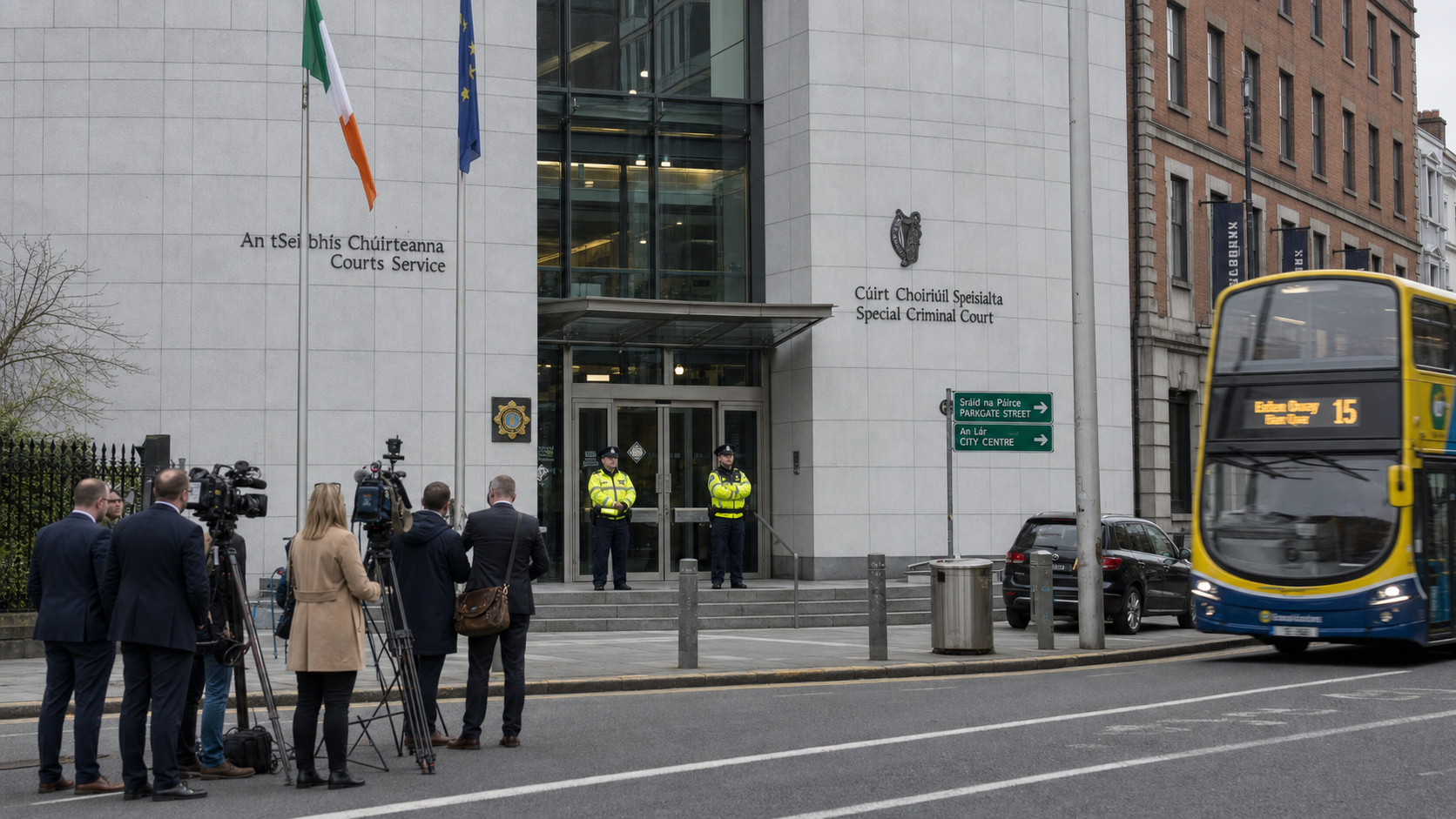
Kinahan appeared before the Special Criminal Court in Dublin on August 9, charged with directing the activities of a criminal organisation between October 18, 2015, and April 6, 2017. The Special Criminal Court is a non-jury institution established under the Offences Against the State Act 1939 to handle cases involving organised crime and terrorism — cases where the ordinary jury system is considered inadequate to ensure a fair trial, either because of the risk of jury intimidation or because of the particular complexity of the evidence involved.
At his initial appearance, Kinahan told the court he had not yet had time to arrange legal representation and was remanded in custody to Portlaoise Prison. He is scheduled to reappear before the court on October 5 for the service of the book of evidence.
Key Developments
Reports emerged in mid-August that John Finucane, the Sinn Féin MP for North Belfast and a practising solicitor with the firm Finucane Toner, had visited Kinahan at Portlaoise Prison. It is a matter of public record that Finucane previously performed legal work for Kinahan, including sending legal letters on his behalf in 2020. The reports of a prison visit prompted immediate questions about whether Finucane was considering representing Kinahan in the upcoming trial.
A Sinn Féin spokesperson confirmed on August 19 that Finucane would not be representing Kinahan in the trial. Senior party figures, including TD Matt Carthy, stated they were unaware of reports regarding potential representation or meetings between the MP and the defendant. The party's response was measured but clearly designed to distance Sinn Féin from any association with Kinahan's legal defence.
The episode has nonetheless generated significant political controversy. Opposition parties have questioned the appropriateness of any contact between a Sinn Féin MP and a man facing charges of directing a criminal organisation, regardless of the professional context in which that contact occurred. Sinn Féin has maintained that Finucane, as a practising solicitor, is entitled to visit clients in prison and that the visit was a matter of professional rather than political significance.
Why It Matters
The Kinahan case is one of the most significant criminal prosecutions in the history of the State. The Kinahan Organised Crime Group has been linked to dozens of murders in Ireland and abroad, and its operations have caused immeasurable harm to communities across the country. The prospect of a senior figure in the organisation facing trial in Ireland — rather than remaining beyond the reach of Irish law — is a significant development that has been welcomed by law enforcement, victims' families, and the broader public.
The political dimension of the case — specifically, the connection between a Sinn Féin MP and the accused — is sensitive for a party that has worked hard to distance itself from its historical associations with paramilitarism and organised crime. Sinn Féin's rapid confirmation that Finucane will not represent Kinahan reflects an awareness of the political risks involved and a desire to manage the story before it develops further momentum.
The case also raises broader questions about the relationship between the legal profession and organised crime. Solicitors are entitled to represent any client, regardless of the nature of the charges they face — that is a fundamental principle of the rule of law. But the public interest in the Kinahan case is such that any association between a prominent political figure and the accused will inevitably attract scrutiny.
Local Impact
In communities across Dublin, Cork, and Limerick that have been affected by the violence associated with the Kinahan Organised Crime Group, the progress of the trial will be followed closely. Families of murder victims linked to the organisation have long sought accountability for the crimes committed in its name, and the prospect of a senior figure facing justice in an Irish court is a source of cautious hope.
For the Special Criminal Court, the Kinahan trial will be one of the most complex and high-profile cases in its recent history. The court has experience of handling major organised crime prosecutions, but the international dimensions of the Kinahan case — the evidence gathered across multiple jurisdictions, the involvement of law enforcement agencies from several countries — will present particular challenges.
What's Next
Kinahan is scheduled to reappear before the Special Criminal Court on October 5 for the service of the book of evidence. He will need to have legal representation in place by that date. The trial itself is unlikely to begin before 2027, given the complexity of the case and the volume of evidence involved. The Garda National Drugs and Organised Crime Bureau, which has been central to the investigation, is expected to continue gathering evidence in the interim.