Sinn Féin Co-Opts Paul Boggs as West Tyrone MLA After Maolíosa McHugh Steps Down Following 15 Years in Public Life
Sinn Féin has co-opted Sperrin councillor Paul Boggs as the new MLA for West Tyrone following the resignation of Maolíosa McHugh, who stepped down on 1 September 2026 after 15 years in public life, choosing to leave frontline politics before the Assembly's final term rather than wait until the May 2027 election.
Background
West Tyrone is one of the most politically significant constituencies in Northern Ireland. Stretching from the Sperrin Mountains in the north to the border with County Monaghan in the south, it encompasses the towns of Strabane, Omagh, Castlederg, and Dungannon, and has been a Sinn Féin stronghold for decades. The constituency's demographics — with a substantial nationalist majority — have made it a reliable source of Sinn Féin seats at both Stormont and Westminster, and the party has consistently returned multiple MLAs from the area.
Maolíosa McHugh's career in public life began with his election to Strabane District Council in 2011, representing the Derg Ward. When local government was reorganised in 2015 and Strabane merged with Derry City to form the new Derry City and Strabane District Council, McHugh continued to serve as a councillor, eventually being elected Mayor of the council for the 2017-18 term — a role that brought him considerable public profile and experience of civic leadership.
His path to the Assembly came through co-option in 2019, when he was selected to replace Michaela Boyle, who had resigned her seat. He was subsequently elected in his own right in the 2022 Assembly election, securing a mandate that reflected his standing in the constituency. Over his years at Stormont, McHugh developed a reputation as a diligent constituency representative with a particular focus on rural issues, Irish language rights, and the needs of border communities.
Key Developments
McHugh announced in April 2026 that he would not seek re-election in the May 2027 Assembly election, citing a desire to step back from frontline politics after 15 years of public service. His decision to resign before the Assembly's final term, rather than serving out his mandate, was driven by a wish to allow his successor time to establish themselves in the role before the election.
In his resignation statement, McHugh expressed gratitude to his family, his office staff, and the volunteers who had supported his work over the years. "It has been the privilege of my life to serve the people of West Tyrone," he said. "I am proud of what we have achieved together — for our communities, for the Irish language, for rural families who too often feel forgotten by those in power. I leave knowing that the work continues, and that it is in good hands."
Sinn Féin selected Paul Boggs, a councillor for the Sperrin area on Derry City and Strabane District Council, to fill the vacancy. Boggs received unanimous endorsement from party members, a reflection of the respect he has earned through his work at council level. He expressed his commitment to serving the West Tyrone constituency and to strengthening public services, particularly within rural communities. "I am honoured to be given this opportunity," he said. "Maolíosa has set a high standard of service, and I am determined to build on his work and to fight for the people of West Tyrone with everything I have."
Why It Matters
The transition from McHugh to Boggs is, in one sense, a routine piece of political housekeeping — the co-option of a new MLA to fill a vacancy created by a resignation. But it is also a moment that illuminates something important about how Sinn Féin manages its political talent pipeline in Northern Ireland. The party has, over the years, developed a sophisticated approach to succession planning, identifying and developing candidates at council level before moving them into Assembly or Westminster roles. Boggs's unanimous endorsement by party members suggests that he has been identified as a future leader within the party's West Tyrone organisation.
The timing of McHugh's resignation — before the Assembly's final term rather than at its conclusion — also reflects a strategic calculation. By stepping down now, McHugh gives Boggs the opportunity to establish himself as an MLA before the 2027 election, building name recognition and a track record that will be valuable when he faces the electorate for the first time. This approach has been used successfully by Sinn Féin in other constituencies, and it reflects the party's long-term thinking about how to maintain and strengthen its electoral position.
For West Tyrone, the change in representation comes at a time when the constituency faces significant challenges. Rural depopulation, inadequate public transport, the ongoing impact of Brexit on border communities, and the slow pace of investment in public services are all issues that the new MLA will need to address. Boggs's background in local government, where he has dealt with many of these issues at a practical level, should serve him well.
Local Impact
In Strabane, Omagh, and the rural communities of West Tyrone, the response to McHugh's departure has been one of genuine warmth and appreciation. His work on behalf of Irish language communities — including his advocacy for the Irish Language Act — has been particularly valued in an area with a strong Gaeltacht tradition. His successor, Paul Boggs, is well known in the Sperrin area and has built a reputation as an accessible and effective councillor who takes a practical approach to the issues facing rural communities.
The transition has been managed smoothly, with McHugh's office staff expected to continue in their roles to support the new MLA as he settles into the position. Boggs has indicated that he will hold a series of constituency clinics in the coming weeks to introduce himself to constituents across West Tyrone and to hear their concerns directly.
What's Next
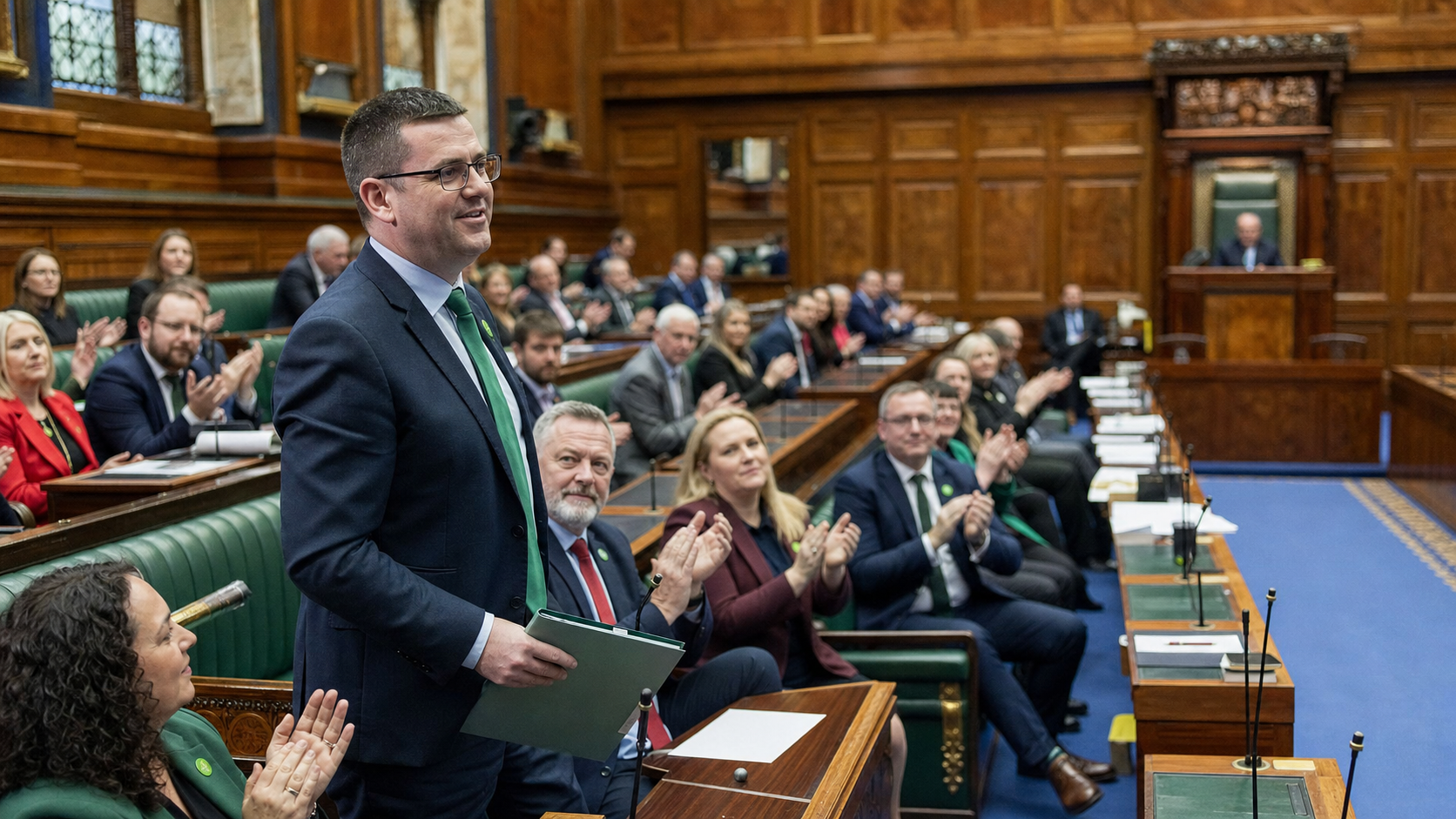
Paul Boggs will take his seat in the Northern Ireland Assembly in the coming days, with his first appearance in the chamber expected to attract considerable attention from colleagues and observers. He will face his first electoral test in the May 2027 Assembly election, when he will seek to secure a mandate in his own right. Sinn Féin is expected to run a strong campaign in West Tyrone, and Boggs's incumbency advantage — however brief — should provide a useful platform for that campaign. McHugh, meanwhile, has indicated that he will remain active in Sinn Féin at a local level, supporting the party's work in the constituency he served for 15 years.