Sinn Féin Ard Fheis Opens in Belfast as Party Eyes Unity Referendum by 2030
Sinn Féin's annual Ard Fheis has opened in Belfast, with delegates gathering at the Waterfront Hall and International Convention Centre to debate 164 motions, as party leader Mary Lou McDonald set out an ambitious agenda centred on the cost-of-living crisis and a united Ireland referendum by 2030 — a goal she described as requiring preparation to begin "now."
John Finucane MP and Deputy Leader Michelle O'Neill opened proceedings, with Finance spokesperson Pearse Doherty delivering the keynote address on the first day. McDonald gave a televised keynote speech on Saturday at 6:30pm on RTÉ One, with the cost-of-living crisis and Irish unity as the dominant themes. The conference marks a new spring schedule for the event, following the cancellation of the 2025 Ard Fheis.
Background
The Sinn Féin Ard Fheis is the party's annual conference, bringing together delegates from across the island of Ireland to debate policy motions and set the party's political direction. The choice of Belfast as the venue carries its own symbolism — a statement of the party's confidence in the city as a political and cultural capital of the island, and a signal of its ambitions for the north in any future united Ireland.
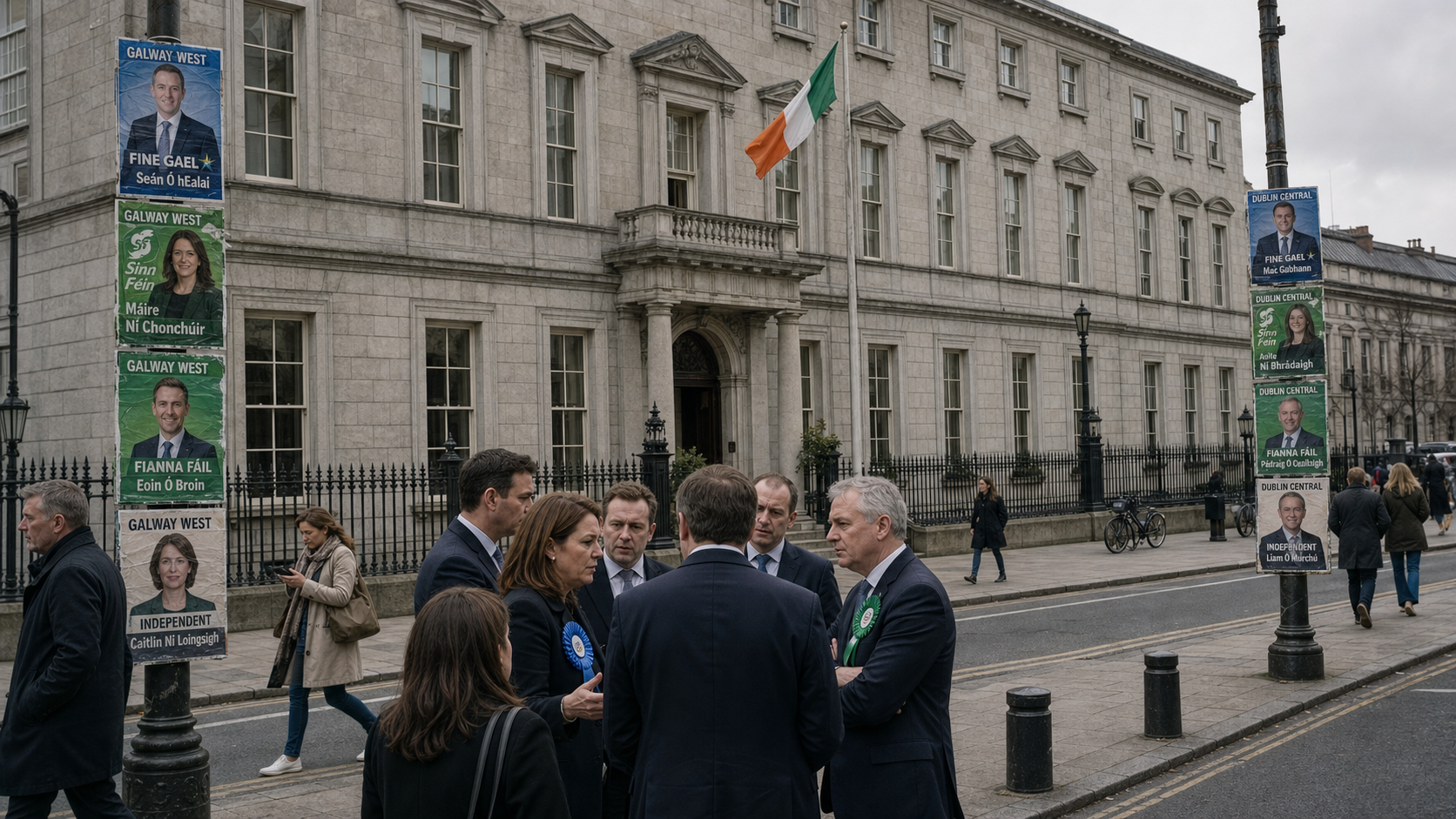
The party currently holds 39 TDs in Dáil Éireann, 27 Assembly seats at Stormont, and seven Westminster MPs who adhere to the party's abstentionist policy. An Ipsos B&A poll in The Irish Times placed Sinn Féin at 26% nationally, making it the most popular party in Ireland, though polls in Northern Ireland indicate a decline ahead of upcoming Stormont Assembly elections. Two by-elections in Galway West and Dublin Central are also on the horizon, providing the party with an opportunity to demonstrate its electoral strength.
The Ard Fheis took place against a backdrop of significant political and economic pressures. The cost-of-living crisis — driven by rising energy costs, food prices, and housing costs — has dominated Irish politics for the past two years, and Sinn Féin has sought to position itself as the party most willing to take radical action to address it. McDonald's proposals included substantial cuts to excise duty on fuel, removal of carbon tax on home heating oil, a €400 electricity credit for households, and a permanent cut to the Universal Social Charge worth €500 to every worker.
Key Developments
The central and most resonant theme of the Ard Fheis was the renewed push for Irish unity. Both McDonald and Michelle O'Neill expressed confidence that a referendum on the issue is "very conceivably" achievable by 2030. McDonald announced that Sinn Féin would introduce legislation before the summer to compel the Irish government to publish a green paper on Irish unity, and plans to convene a series of all-Ireland Citizens' Assemblies to facilitate public discussion and planning for constitutional change.
In a direct appeal to the unionist community, McDonald stressed a message of inclusion: "We respect and value Protestant, unionist, loyalist people — this is your home and we want to build Ireland's future with you." The vision for a new Ireland, she articulated, includes a "dynamic all-island economy, energy independence, climate justice," a fully resourced health service, and affordable childcare. As RTÉ News reported, the speech was received warmly by delegates, with McDonald re-elected as party leader with the full confidence of the membership.
The conference also displayed vigorous internal debate. Two motions on fox hunting were on the agenda, with animal rights activists from the National Animal Rights Association staging protests outside the Waterfront Hall. A motion to ban fox hunting passed after a lengthy and heated discussion that temporarily caused an evacuation of the hall — a moment McDonald framed as evidence of a robust internal democracy where members, not the leadership, set policy. As BBC News reported live from the conference, the fox hunting debate generated more heat than almost any other motion on the agenda.
Why It Matters
The Ard Fheis matters because it sets the political agenda for the most popular party in Ireland at a moment of significant constitutional uncertainty. The question of Irish unity — once a distant aspiration — has moved to the centre of mainstream political debate on both sides of the border, driven by the demographic changes in Northern Ireland, the legacy of Brexit, and the growing confidence of nationalist and republican communities. McDonald's commitment to a 2030 referendum timeline, and her plans to legislate for a government green paper on unity, represent a significant escalation of the political pressure on both Dublin and London to engage seriously with the question.
Local Impact
For Northern Ireland, the Ard Fheis carries particular significance. Michelle O'Neill's role as First Minister at Stormont gives Sinn Féin's unity agenda a new institutional weight — the party is no longer simply arguing for a united Ireland from opposition, but governing in the north while simultaneously campaigning for constitutional change. The party's declining poll numbers in Northern Ireland suggest that the path to a unity referendum is not straightforward, and that winning the argument among the unionist and loyalist communities that McDonald addressed in her speech will require sustained and credible engagement over many years.
What's Next
The Ard Fheis concluded with Mary Lou McDonald's keynote address setting the party's political direction for the year ahead. Sinn Féin will introduce legislation before the summer to compel the Irish government to publish a green paper on Irish unity, and will convene all-Ireland Citizens' Assemblies to facilitate public discussion. The by-elections in Galway West and Dublin Central will provide an early test of the party's electoral standing following the conference. The unity referendum debate is expected to intensify in the months ahead, with the 2030 target now firmly on the political calendar.