Sinn Féin Forces Dáil Vote on Irish Unity Bill as McDonald Demands Citizens' Assembly
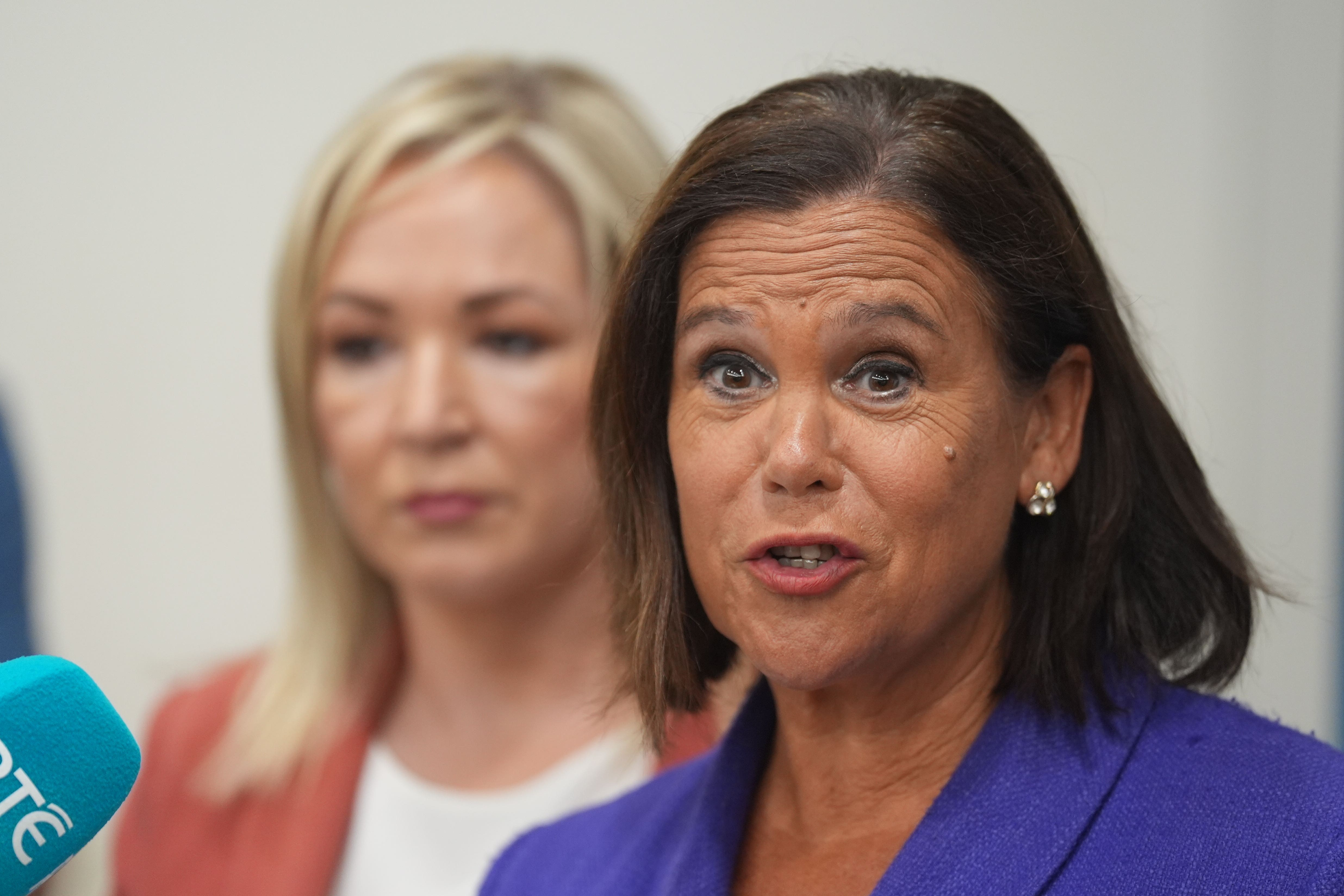
Sinn Féin President Mary Lou McDonald has announced that the Dáil will debate and vote on the party's Irish Unity Bill — legislation that proposes the establishment of a Citizens' Assembly to discuss Irish reunification and mandates the government to prepare a formal Green Paper on the constitutional future of the island — a move that places the question of a united Ireland at the centre of the Oireachtas's legislative agenda for the first time in the history of the state.
Background
The question of Irish unity has occupied a different position in the political landscape of the Republic in recent years than at any point since the foundation of the state. For most of the twentieth century, the aspiration to reunification was treated by successive governments as a rhetorical commitment rather than a practical policy objective — something to be acknowledged in constitutional language and party manifestos but not actively pursued through concrete legislative or diplomatic action.
That posture has shifted significantly in the post-Brexit era. The decision of the United Kingdom to leave the European Union, and the particular complications that Brexit created for Northern Ireland, has reinvigorated the debate about the constitutional future of the island in ways that would have seemed improbable a decade ago. Opinion polls in both jurisdictions have shown a significant increase in support for, or at least openness to, the idea of a united Ireland, and the demographic changes in Northern Ireland — where the Catholic and nationalist community is now approaching parity with the Protestant and unionist community — have made the prospect of a border poll more plausible than at any point since partition.
Sinn Féin, as the largest party in the Dáil and the party of the First Minister in Northern Ireland, has been the primary driver of this shift. The party's position is that the conditions for a border poll are approaching and that the Irish government has an obligation to begin preparing for the possibility of reunification, rather than waiting for a poll to be called before starting the work.
Key Developments
The Irish Unity Bill, as presented by Mary Lou McDonald, has two core elements. The first is the establishment of a Citizens' Assembly specifically tasked with examining the question of Irish unity — its constitutional, economic, social, and cultural dimensions. The Citizens' Assembly model has been used successfully in Ireland to address complex and contested issues, most notably in the processes that led to the referendums on marriage equality and abortion, and Sinn Féin argues that it is the appropriate mechanism for a question of this magnitude.
The second element is a mandate for the government to prepare a Green Paper on Irish unity — a formal policy document that would set out the government's analysis of the issues involved in reunification and the options available for a future constitutional settlement. McDonald argued that the government has an obligation to do this preparatory work regardless of when or whether a border poll is called, and that the failure to do so represents a dereliction of the state's constitutional duty.
The government's response has been cautious. Fine Gael leader and Tánaiste Simon Harris has previously committed to producing a "blueprint" for unity by November 2026, but the government has resisted the specific legislative mechanism proposed by Sinn Féin. Taoiseach Micheál Martin has argued that the Citizens' Assembly model is not the right vehicle for this particular question, without specifying what alternative approach he would prefer.
Why It Matters
The Sinn Féin bill forces a formal Dáil vote on the question of Irish unity preparation — a vote that will require every TD to take a public position on whether the state should begin actively planning for reunification. This is politically significant regardless of the outcome. If the bill passes, it creates a legislative mandate for the government to act. If it fails, the vote will reveal the precise contours of political support for and opposition to unity preparation, information that will shape the debate for years to come.
The timing is also significant. The bill comes as the Northern Ireland Executive is facing its most serious financial crisis since the restoration of devolution, and as public confidence in the capacity of the Stormont institutions to deliver for people in the North is under pressure. Sinn Féin's calculation is that the difficulties of the current arrangements strengthen the case for exploring alternatives.
Local Impact
The debate on the Irish Unity Bill will be closely watched in Northern Ireland, where it will be interpreted through the lens of the ongoing political tensions at Stormont. For nationalist and republican communities in Belfast, Derry, Newry, and across the six counties, the bill represents a tangible expression of political momentum towards reunification. For unionist communities, it will be seen as confirmation of their concerns about the direction of travel in Dublin politics. The Alliance Party, which has positioned itself as neither unionist nor nationalist, will face particular pressure to define its position on the bill.
What's Next
The Dáil debate on the Irish Unity Bill is expected to take place in July 2026. The government has indicated it will oppose the bill in its current form, but has not ruled out bringing forward its own alternative legislation on unity preparation. Fine Gael's commitment to a unity blueprint by November will be tested against the timeline of the Sinn Féin bill. The outcome of the vote will be a significant moment in the ongoing evolution of the Irish unity debate, and its implications will be felt in both Dublin and Belfast.