Short-Term Letting Bill: Ireland's Airbnb Crackdown Targets 28,900 Properties to Ease Rental Crisis
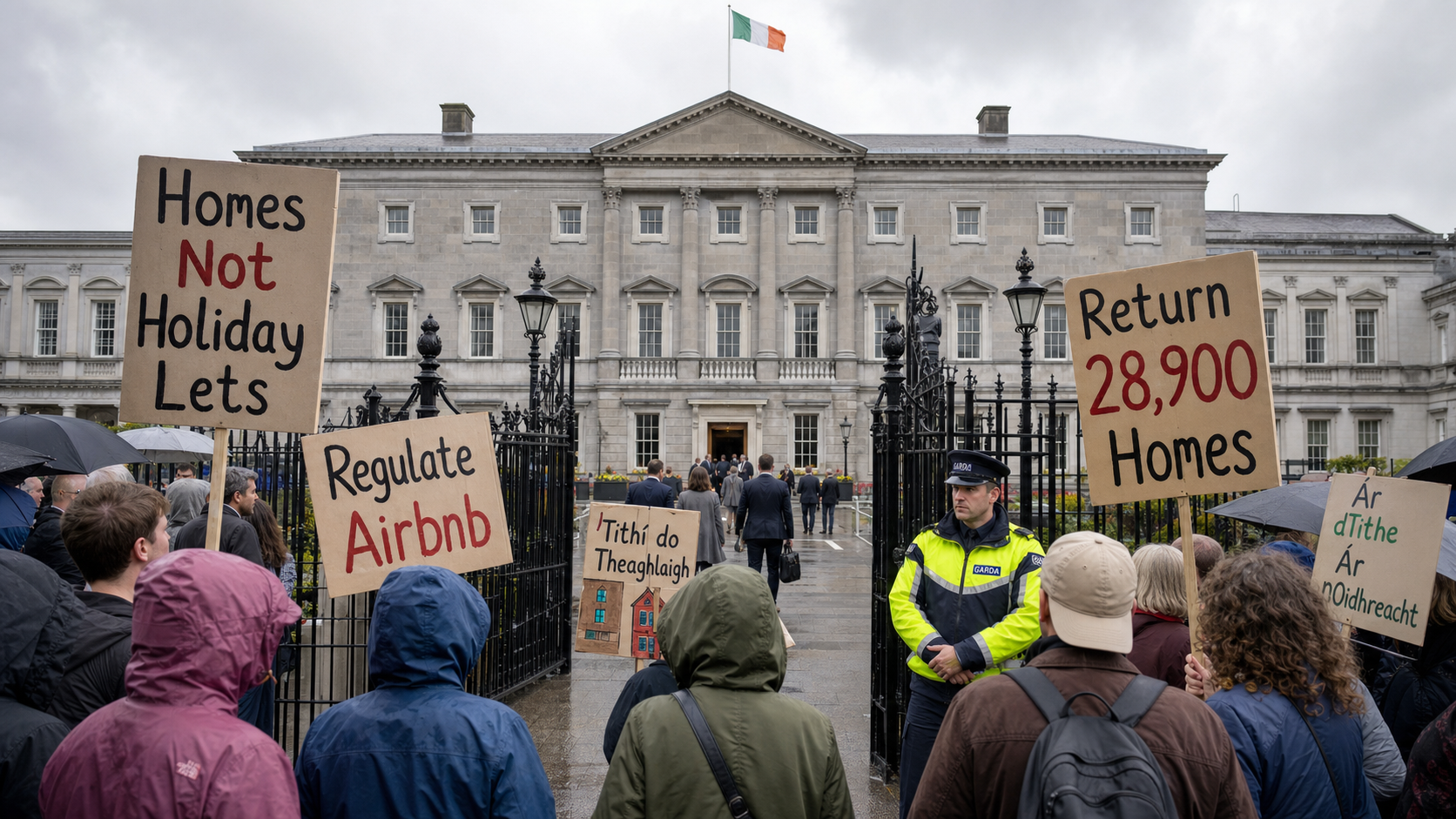
Ireland's Short-Term Letting and Tourism Bill is advancing through the Oireachtas with the potential to fundamentally reshape the country's rental market, as the government moves to regulate the approximately 28,900 properties currently operating as short-term lets — including 9,186 in Dublin alone — and return a significant proportion of them to the long-term rental market. The legislation, introduced by Housing Minister James Browne and described by its proponents as one of the strongest of its kind in Europe, mandates registration with Fáilte Ireland and valid planning permission for all short-term accommodation providers, with platforms facing fines of up to 2% of their annual turnover for advertising non-compliant properties.
Background
The growth of the short-term letting market in Ireland, driven primarily by platforms such as Airbnb and Vrbo, has been a source of intense controversy for over a decade. Critics argue that the conversion of residential properties into short-term tourist accommodation has removed thousands of homes from the long-term rental market, contributing to the severe shortage of rental supply that has driven rents to record levels in Dublin and other major cities. Supporters of the short-term letting sector counter that it provides important income for homeowners, supports the tourism industry, and offers visitors a more authentic experience of Irish cities and towns than conventional hotel accommodation.
Previous attempts to regulate the short-term letting market in Ireland have had limited success. Regulations introduced in 2019 required short-term let operators in Rent Pressure Zones to obtain planning permission, but enforcement was patchy and the regulations were widely circumvented. The Housing Agency's data, which forms the basis for the new legislation, suggests that the number of short-term lets in Ireland has continued to grow despite the existing regulatory framework, reaching approximately 28,900 properties by mid-2026.
The scale of the problem is most acute in Dublin, where the 9,186 short-term lets identified by the Housing Agency represent a significant proportion of the city's total rental stock. In popular tourist areas such as Temple Bar, the Liberties, and the south inner city, the concentration of short-term lets has transformed the character of entire neighbourhoods, reducing the availability of long-term rental accommodation and contributing to the displacement of long-term residents. Similar dynamics are at play in other tourist-heavy areas, including Galway city, Killarney, and the Wild Atlantic Way corridor.
Key Developments
The Short-Term Letting and Tourism Bill, introduced by Minister Browne in mid-June, represents a significantly more robust regulatory approach than anything previously attempted in Ireland. The legislation requires all providers of short-term accommodation — defined as lettings of less than 21 consecutive nights — to register with Fáilte Ireland and to demonstrate that they hold valid planning permission to operate. The registration requirement applies to both individual homeowners and to professional operators managing multiple properties.
The bill's most significant innovation is its approach to platform liability. Under the proposed legislation, platforms such as Airbnb will be required to verify that all properties listed on their sites are registered with Fáilte Ireland and hold valid planning permission before they can be advertised. Platforms that advertise non-compliant properties will face administrative fines of up to 2% of their annual global turnover — a figure that, in Airbnb's case, could amount to hundreds of millions of euros. This approach, modelled on the EU's Digital Services Act, places the compliance burden on the platforms rather than on individual property owners, and is expected to be significantly more effective than the existing regulatory framework.
The Housing Agency estimates that effective enforcement of the new legislation could return between 5,000 and 8,000 properties to the long-term rental market, providing meaningful relief to a rental sector that is currently operating with historically low vacancy rates.
Why It Matters
Ireland's rental crisis is one of the most severe in the European Union. Average rents in Dublin have reached €2,400 per month for a one-bedroom apartment, placing the city among the most expensive rental markets in Europe. The shortage of rental supply is a direct contributor to homelessness, which has reached record levels in Ireland, with over 14,000 people currently in emergency accommodation. The Short-Term Letting Bill is not a silver bullet — the fundamental driver of the rental crisis is a chronic undersupply of housing, which can only be addressed through sustained construction — but it represents a meaningful attempt to address one of the factors that has exacerbated the supply shortage. The bill's approach to platform liability is particularly significant, as it reflects a growing international consensus that digital platforms cannot continue to benefit from the economic activity they facilitate while avoiding responsibility for the regulatory compliance of the services they enable. Portugal, Spain, and several other European countries have adopted similar approaches, and the evidence from those jurisdictions suggests that robust platform liability provisions can be effective in improving compliance rates.
Local Impact
The impact of the legislation will be felt most directly in Dublin's tourist-heavy neighbourhoods, where the concentration of short-term lets has been most acute. In Temple Bar, the Liberties, and Portobello, the return of even a fraction of the current short-term let stock to the long-term rental market would represent a meaningful increase in supply. In Galway city, where the short-term letting market has been particularly active in the areas around Salthill and the city centre, the legislation is expected to have a significant impact on rental availability. In Kerry, where short-term lets are concentrated in Killarney and the Dingle Peninsula, the legislation will need to be carefully calibrated to avoid damaging the tourism sector, which is a major source of employment in the county. Fáilte Ireland has indicated that it will establish a dedicated registration unit to process applications from short-term let operators, with a target of having the registration system fully operational by January 2027.
What's Next
The Short-Term Letting and Tourism Bill is expected to complete its Oireachtas passage by October 2026, with the registration system for short-term let operators going live in January 2027. Fáilte Ireland will begin accepting applications for registration from November 2026, giving operators a two-month window to comply before the legislation comes into full effect. The Housing Agency will publish quarterly data on the number of properties registered and the estimated impact on rental supply, with the first report due in April 2027. The government has indicated that it will review the legislation's effectiveness after 12 months of operation and will consider further measures if the impact on rental supply falls short of projections.