Dublin's Four Courts Dome Emerges from a Decade of Scaffolding After €11 Million Restoration
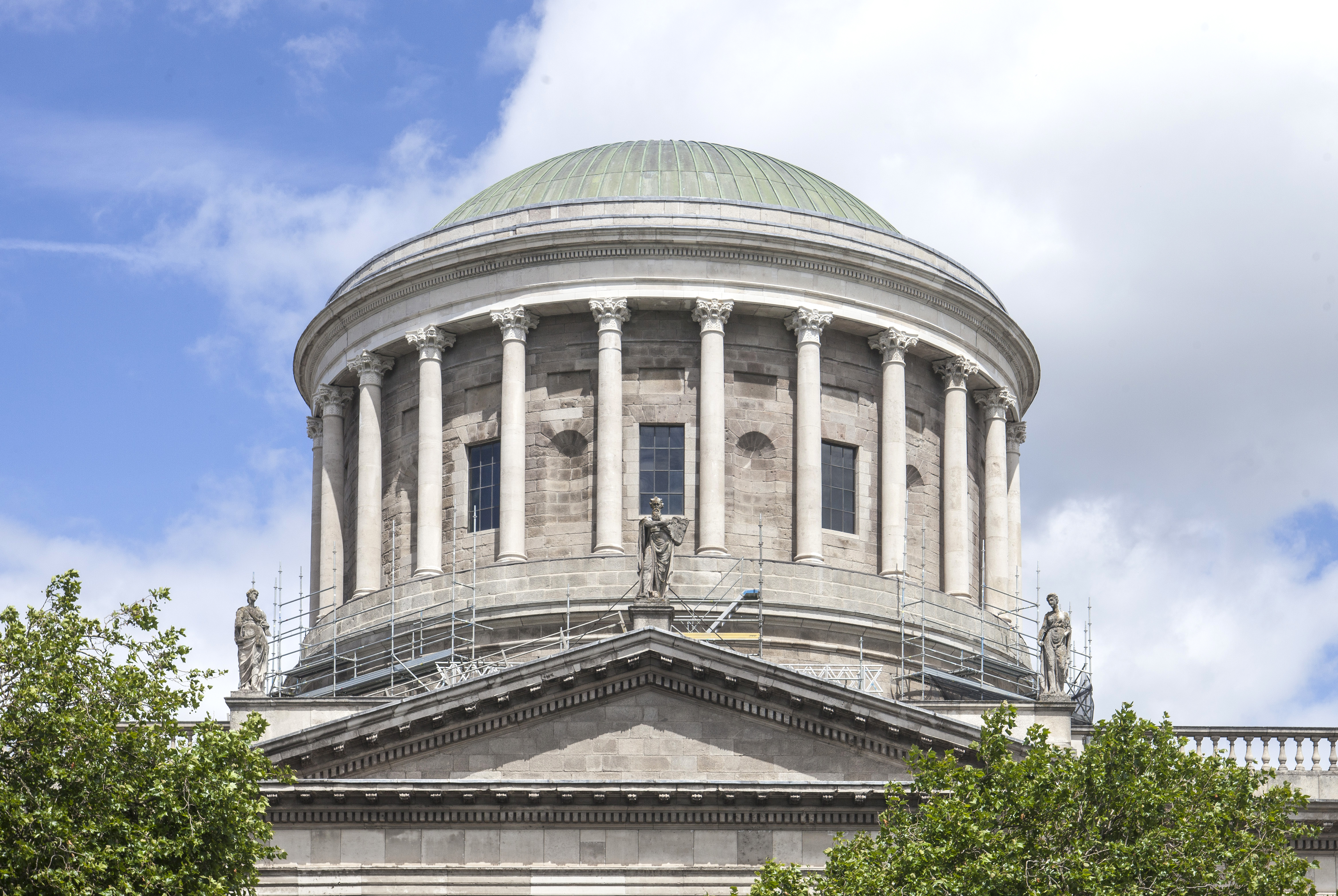
The scaffolding has finally come down on the dome of Dublin's Four Courts, revealing the completed results of a decade-long, €11 million conservation project that has addressed structural damage dating back to the Civil War bombardment of 1922 — returning one of the most recognisable features of the Dublin skyline to something approaching its original neoclassical splendour after years of painstaking work by the Office of Public Works.
Background
The Four Courts, designed by James Gandon and completed in 1802, is one of the finest examples of neoclassical architecture in Ireland and one of the most significant public buildings in Dublin. Its great drum dome, rising above the Liffey quays, has been a defining feature of the city's skyline for more than two centuries, visible from vantage points across the city and instantly recognisable to anyone who has spent time in Dublin.
The building's history is inseparable from the history of the Irish state. In June 1922, the Four Courts was occupied by anti-Treaty IRA forces, and its subsequent bombardment by the Provisional Government's National Army — using artillery borrowed from the British — marked the beginning of the Irish Civil War. The resulting fire and explosion caused catastrophic damage to the building, destroying the Public Record Office and its irreplaceable collection of historical documents, and causing significant structural damage to the dome and surrounding structures.
The building was subsequently rebuilt and restored, but the damage to the dome's stonework — particularly to the large Corinthian capitals that decorate its exterior — was never fully addressed. Over the following century, the capitals deteriorated further, with water ingress, frost damage, and the general effects of weathering compounding the original Civil War damage. By the time the current restoration project began, the structural integrity of several capitals was a matter of serious concern.
Key Developments
The restoration project, which began approximately a decade ago and was completed in June 2026, was one of the most complex conservation projects undertaken by the Office of Public Works in recent years. The work involved a comprehensive survey of the dome's condition, followed by a programme of masonry repair, stone replacement, and structural consolidation.
The most significant element of the project was the replacement of 22 of the dome's 24 large Corinthian capitals. These ornate stone elements, each weighing several tonnes, had deteriorated to the point where they posed a risk to the structural integrity of the dome and to the safety of those below. The replacement capitals were carved from Portland stone by specialist stonemasons, working from historical drawings and photographs to ensure that the new elements matched the originals as closely as possible.
The project also involved extensive repair work to the dome's masonry fabric, including the repointing of joints, the consolidation of cracked stonework, and the installation of new drainage systems to prevent future water ingress. The scaffolding that surrounded the dome for much of the past decade was finally removed in June 2026, allowing Dubliners to see the restored building for the first time.
Why It Matters
The restoration of the Four Courts dome is significant on several levels. As a piece of architectural conservation, it represents a major achievement — the successful repair and restoration of a complex neoclassical structure that had suffered a century of neglect and damage. The project demonstrates the capability of Irish conservation professionals and the commitment of the state to maintaining its built heritage.
The historical dimension is equally important. The Four Courts is not just a beautiful building — it is a place where Irish history was made, and where the consequences of political conflict were written in stone and fire. The restoration of the dome is, in a sense, a completion of the work of rebuilding that began in the aftermath of the Civil War, a final act of repair that closes a chapter of physical damage that has been visible in the Dublin skyline for more than a hundred years.
The project also has practical significance. The Four Courts remains an active working court complex, housing the Supreme Court, the Court of Appeal, and the High Court. The restoration of the dome ensures that this important public building can continue to function safely and effectively for generations to come.
Local Impact
For Dubliners, the removal of the scaffolding from the Four Courts dome is a moment of genuine civic pride. The building sits at the heart of the city, on the north quays of the Liffey between Church Street and Inns Quay, and its dome is visible from many of the city's most frequented public spaces. The restoration has already attracted significant attention from architecture enthusiasts and heritage advocates, and the OPW is planning a series of public events to mark the completion of the project.
The Four Courts area has also seen significant regeneration in recent years, with new residential and commercial development along the north quays and the ongoing development of the Smithfield and Stoneybatter areas nearby. The restored dome adds to the architectural quality of this part of the city and reinforces the area's identity as a place of historical and cultural significance.
What's Next
The Office of Public Works has indicated that it will open the restored dome to public visits on a limited basis in the coming months, allowing Dubliners and visitors to see the conservation work at close quarters. A detailed conservation report documenting the project's methodology and findings will be published later in 2026, providing a resource for future conservation projects on similar structures. The OPW is also reviewing the condition of other elements of the Four Courts complex, with a view to identifying further conservation work that may be required in the medium term.