Secretary of State Orders Judge-Led Review of Parades Commission as Drumcree Fallout Deepens
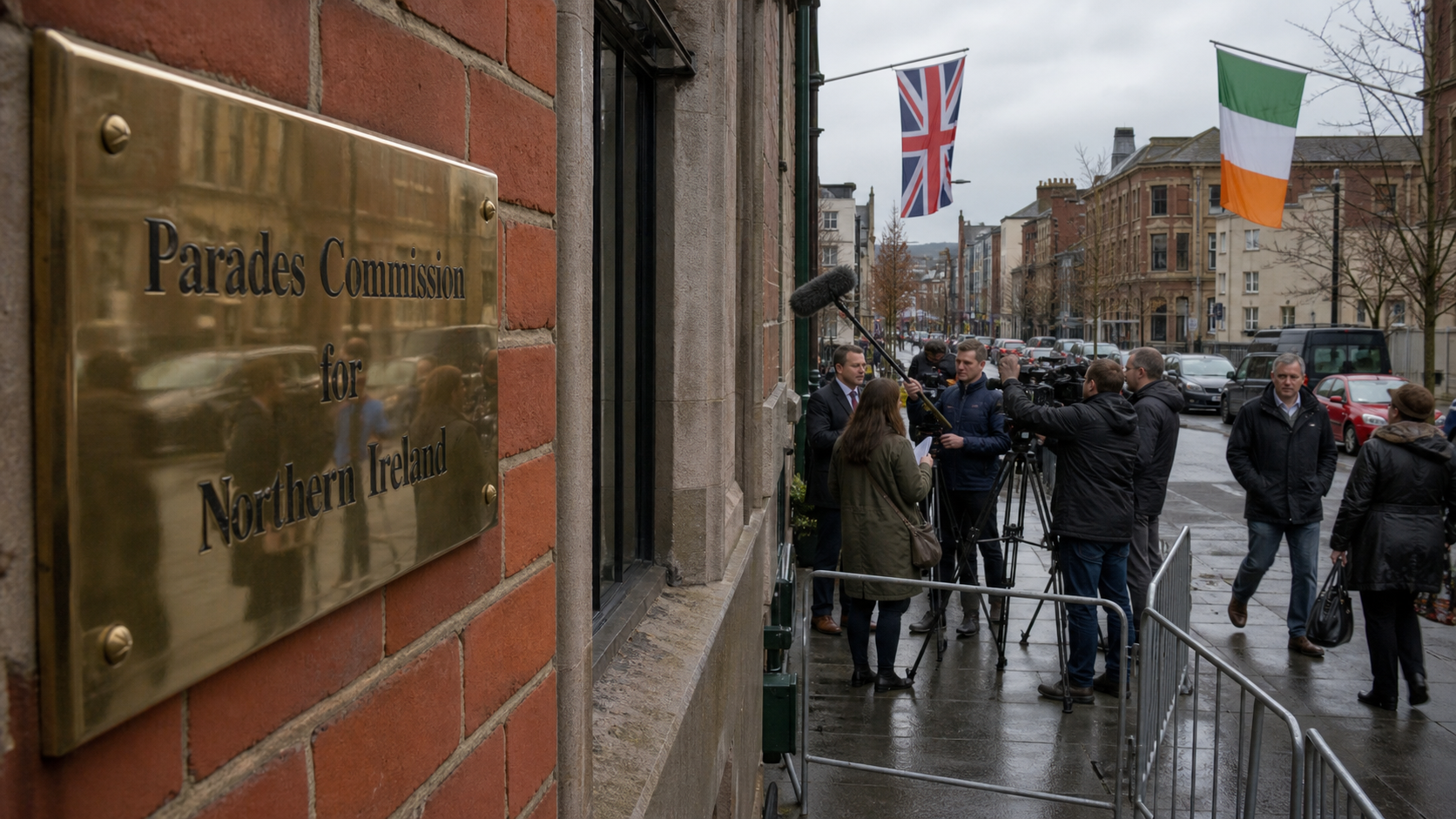
Northern Ireland Secretary Chris Bryant has ordered an independent, judge-led review of the Parades Commission's internal decision-making processes, following a High Court ruling that found the commission had made errors, taken short cuts, and applied sloppy procedures in its handling of the Drumcree parade determination — a judgment that has plunged the body into its deepest crisis in years.
Background
The Parades Commission for Northern Ireland was established under the Public Processions Act 1998 as part of the broader architecture of the peace process. Its role is to adjudicate on contentious parades — primarily, though not exclusively, those organised by the Orange Order and other loyal orders — and to issue determinations that balance the rights of those wishing to march with the rights of residents in areas through which parades pass. The commission has, since its establishment, been one of the most contested institutions in Northern Ireland, viewed with deep suspicion by many unionists and loyalists who regard it as an instrument of restriction, and with cautious support by nationalist and republican communities who see it as a necessary check on the exercise of marching rights.
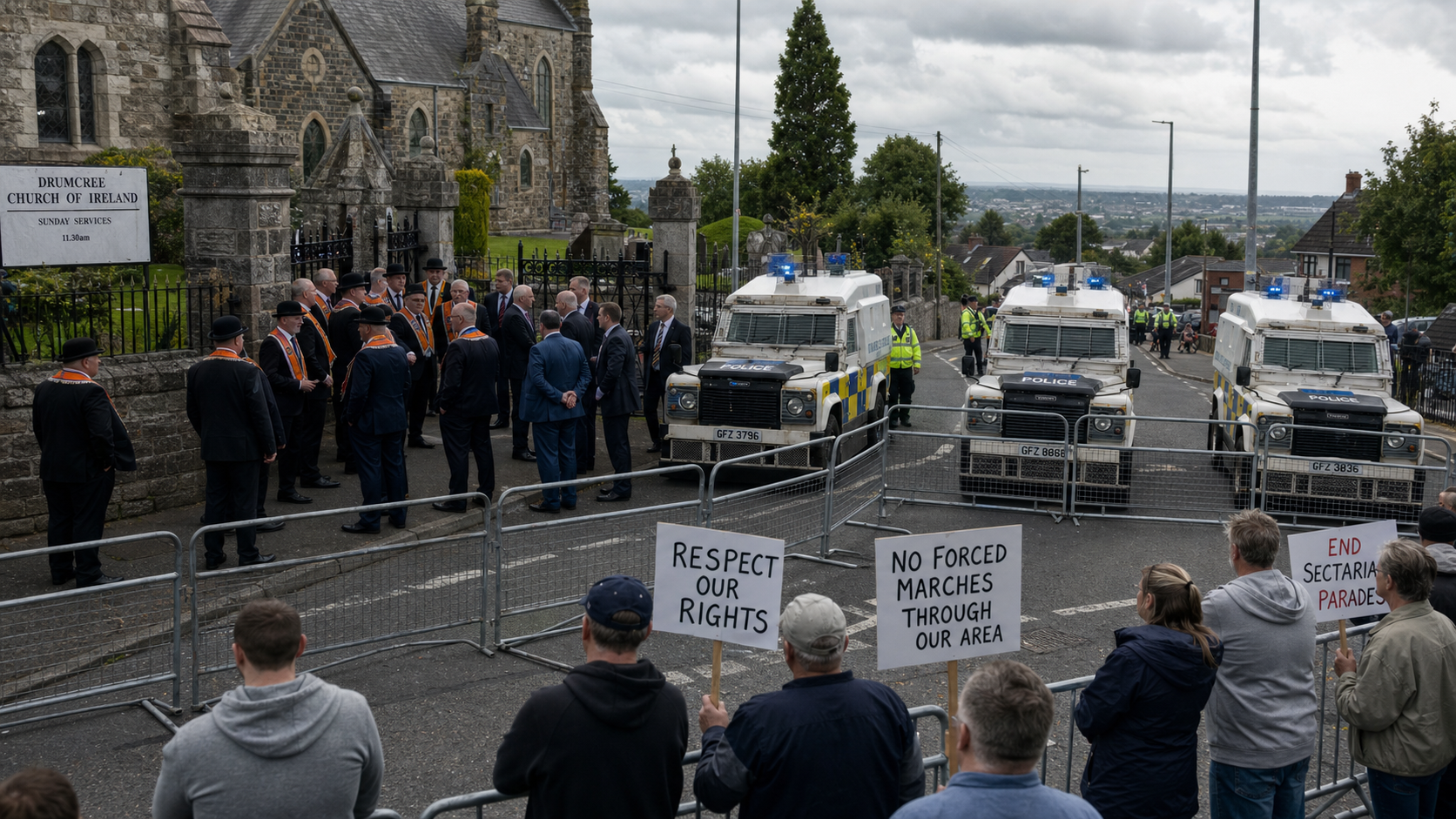
The Drumcree dispute — centred on the Orange Order's desire to march along the Garvaghy Road in Portadown, County Armagh, through a predominantly nationalist area — was one of the defining conflicts of the late 1990s. The annual standoffs at Drumcree Church in the summers of 1995, 1996, 1997, and 1998 produced scenes of violence and disorder that shocked the world and tested the limits of the peace process. The commission's determinations in subsequent years, consistently refusing to allow the march along the Garvaghy Road, brought a measure of stability to the situation, though the underlying dispute was never fully resolved.
The current crisis was triggered by a High Court ruling by Mr. Justice McAlinden, which quashed the commission's most recent determination on the Drumcree parade. In his judgment, the judge cited "errors," "short cuts," and "sloppy procedures" in the commission's decision-making process, noting specifically that not all six commissioners had signed off on the determination before it was issued — a procedural failure that the court found to be fatal to the determination's validity.
Key Developments
The fallout from the High Court ruling was immediate. Commissioner Billy Gamble resigned on 27 August 2026, citing the judgment's findings. Unionist politicians, led by DUP leader Gavin Robinson, called for the resignation of the remaining commissioners, including chair Professor Evelyn Collins. Robinson described Bryant's decision to retain the current commissioners as "indefensible," arguing that those responsible for the "fundamental failures" identified by the court should not remain in office during the review.
Bryant, however, confirmed that the remaining commissioners retain his "full backing," while simultaneously announcing that a public appointments process for all six commissioner positions would be launched "as soon as possible," noting that the terms of the remaining members are nearing their scheduled conclusion. The Northern Ireland Office confirmed that the judge-led review will examine the commission's internal processes and procedures to provide assurance and identify potential improvements.
UUP leader Jon Burrows welcomed the review but urged that it be granted full access to documentation and that the final report be published in full. TUV leader Jim Allister dismissed the move as a "climbdown," asserting that the commission lacks necessary cross-community support. Sinn Féin expressed concern that the review could be used to facilitate an unwanted march on the Garvaghy Road, stating that the issue of the march should remain closed. Residents of the Garvaghy Road also expressed concern about the process, with community representatives warning that any attempt to revisit the question of the march would be deeply damaging.
Why It Matters
The Parades Commission crisis matters for reasons that extend well beyond the specific question of the Drumcree parade. The commission is one of the key institutions of the peace process, and its credibility is essential to the management of contentious parades across Northern Ireland. If the commission is seen to have lost the confidence of significant sections of the community — whether unionist or nationalist — its ability to perform its function is fundamentally compromised.
The High Court's findings are particularly damaging because they go to the heart of the commission's procedural integrity. A body whose determinations can be quashed on the grounds of sloppy procedures is a body whose future determinations will be vulnerable to legal challenge. This creates a dangerous dynamic in which the commission's decisions become the starting point for litigation rather than the end point of a process designed to resolve disputes.
The timing is also significant. The Drumcree dispute has been dormant for years, and its re-emergence as a live political issue is a reminder of how quickly the embers of old conflicts can be fanned back into flame. The Secretary of State's decision to order a review is a recognition that the commission needs to rebuild its credibility — but the political reaction to that decision suggests that the path to rebuilding will be neither straightforward nor swift.
Local Impact
In Portadown, the news of the review has been received with a mixture of anxiety and resignation by residents on both sides of the divide. On the Garvaghy Road, community representatives have warned that any suggestion that the march might be permitted to proceed along the road would be met with fierce opposition. In the broader unionist community, the review has been welcomed as an acknowledgement that the commission's processes were flawed, though many unionists remain sceptical that the review will produce meaningful change.
Across Northern Ireland, the dispute has reignited debates about the future of the Parades Commission itself, with some commentators questioning whether the current model — a quasi-judicial body making determinations on contentious parades — is fit for purpose in 2026. Others have argued that the commission, whatever its flaws, remains the least bad option for managing a problem that has no easy solution.
What's Next
The judge-led review is expected to begin its work in the coming weeks, with a report anticipated before the end of 2026. The public appointments process for the six commissioner positions will run in parallel, with new appointments expected to be in place by early 2027. The Secretary of State has urged all parties to support the review process and to allow the commission time to rebuild confidence. Whether that confidence can be rebuilt — and whether the Drumcree dispute can be managed without a return to the disorder of the 1990s — remains to be seen.