Russian Drone Strike on Ukraine Market Kills Five as Zelenskyy Heads to Istanbul
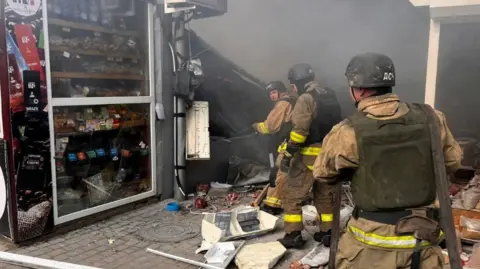
A Russian drone attack on a covered market in the eastern Ukrainian city of Nikopol on Saturday 4 April 2026 killed five people and wounded nineteen, including a 14-year-old girl left in critical condition, as Ukrainian President Volodymyr Zelenskyy travelled to Istanbul for talks with Turkish President Erdogan on security cooperation and peace efforts. The strike, which occurred at 7:50 AM local time as shoppers went about their morning routines, was part of an overnight barrage in which Russia fired 286 drones across Ukraine, with 260 intercepted by Ukrainian air defences.
Background
The attack on Nikopol is part of a sustained and deliberate Russian campaign against Ukrainian civilian infrastructure that has intensified throughout the winter of 2025–2026. Russia has repeatedly targeted markets, residential areas, energy facilities, and transport infrastructure in a strategy designed to break civilian morale and overwhelm Ukraine's air defence systems through sheer volume of attacks. Ukraine's air defences have proven increasingly effective — intercepting 260 of 286 drones in the overnight barrage — but the 26 that get through are sufficient to cause mass casualties when they strike densely populated civilian areas.
Nikopol, a frontline city on the southern bank of the Dnipro River, has been subjected to repeated Russian attacks throughout the war. Its proximity to the Russian-occupied Zaporizhzhia Nuclear Power Plant — the largest in Europe — makes it a strategically sensitive location, and its civilian population has endured years of bombardment. The targeting of a covered market, where ordinary people shop for food and daily necessities, is consistent with a pattern of attacks on civilian gathering places that international human rights organisations have documented throughout the conflict.
The broader drone campaign has largely failed to achieve its strategic objectives, according to UK military assessments. A statement by a UK military advisor to the Organisation for Security and Co-operation in Europe noted that Russia continues to "incur catastrophic losses for minimal gains in an unsustainable war," with Ukraine's increasingly effective air defences and its own successful drone strikes against Russian military and oil infrastructure shifting the tactical balance.
Key Developments
Regional governor Oleksandr Ganja confirmed that three women and two men were killed in the Nikopol market strike, with the 14-year-old girl among the wounded in critical condition. In the northeastern city of Kharkiv, five people were injured in a separate attack. In the northern Sumy region, eleven people were wounded in strikes on residential areas and civilian infrastructure. In Russia, the governor of the southern Rostov region reported that a Ukrainian missile and drone attack on the city of Taganrog left one person dead and four seriously wounded — a reminder that the conflict's violence flows in both directions.
Just three days later, on 7 April, another Russian drone attack in Nikopol targeted a bus, killing four people and injuring sixteen — Ukrainian officials described it as a deliberate act of terror against the civilian population. The two attacks within days of each other underscored the relentless pressure on Nikopol's residents.
Amid the escalating violence, President Zelenskyy arrived in Istanbul for talks with President Erdogan. The meeting produced a significant diplomatic outcome: Erdogan renewed Turkey's offer to host peace negotiations between Ukraine and Russia, which Zelenskyy accepted. The two leaders also agreed on new steps to enhance security cooperation and joint energy projects. Zelenskyy had separately invited an American delegation to Ukraine to help relaunch negotiations with Moscow, stating: "The American group can come to us and, after us, go to Moscow."
Why It Matters
The attack on a civilian market is not an aberration — it is a feature of Russia's military strategy in Ukraine. The deliberate targeting of civilian infrastructure, including markets, hospitals, and residential areas, constitutes a war crime under international humanitarian law, and the evidence of systematic targeting has been documented by the United Nations, Human Rights Watch, and Amnesty International throughout the conflict. The international community's response — condemnation, sanctions, and military support for Ukraine — has not yet been sufficient to deter these attacks. The diplomatic activity around Istanbul and the American delegation proposal suggests that all parties are aware that the war cannot continue indefinitely, but the gap between Ukraine's minimum acceptable terms and Russia's maximalist demands remains vast.
Local Impact
For the UK, the Ukraine war remains a defining foreign policy commitment. The government has reaffirmed its unwavering support for Ukraine's sovereignty and territorial integrity, and British military advisors continue to play an active role in training Ukrainian forces and providing intelligence support. The UK's deployment of its Rapid Sentry air defence system to Kuwait — in response to separate Gulf tensions — illustrates the breadth of the security challenges facing British foreign policy simultaneously. Public support in the UK for continued assistance to Ukraine remains strong, though the economic costs of the conflict — through energy prices, defence spending, and refugee support — are increasingly felt by ordinary households.
What's Next
The outcome of Zelenskyy's Istanbul talks with Erdogan and the proposed American delegation visit to Kyiv will be closely watched in the coming weeks. Any progress towards a ceasefire or renewed negotiations would be a significant development, though the Kremlin's dismissal of Zelenskyy's Easter truce proposal suggests Moscow is not yet ready to engage seriously with peace overtures. Peace negotiations are described as "90 percent complete" by some officials, but the remaining 10% — territorial concessions and sanctions relief — represents the hardest ground of all. Sources: Reuters — Five killed by Russian strike on market in Nikopol; UK Government — OSCE statement on Russia's losses in Ukraine.