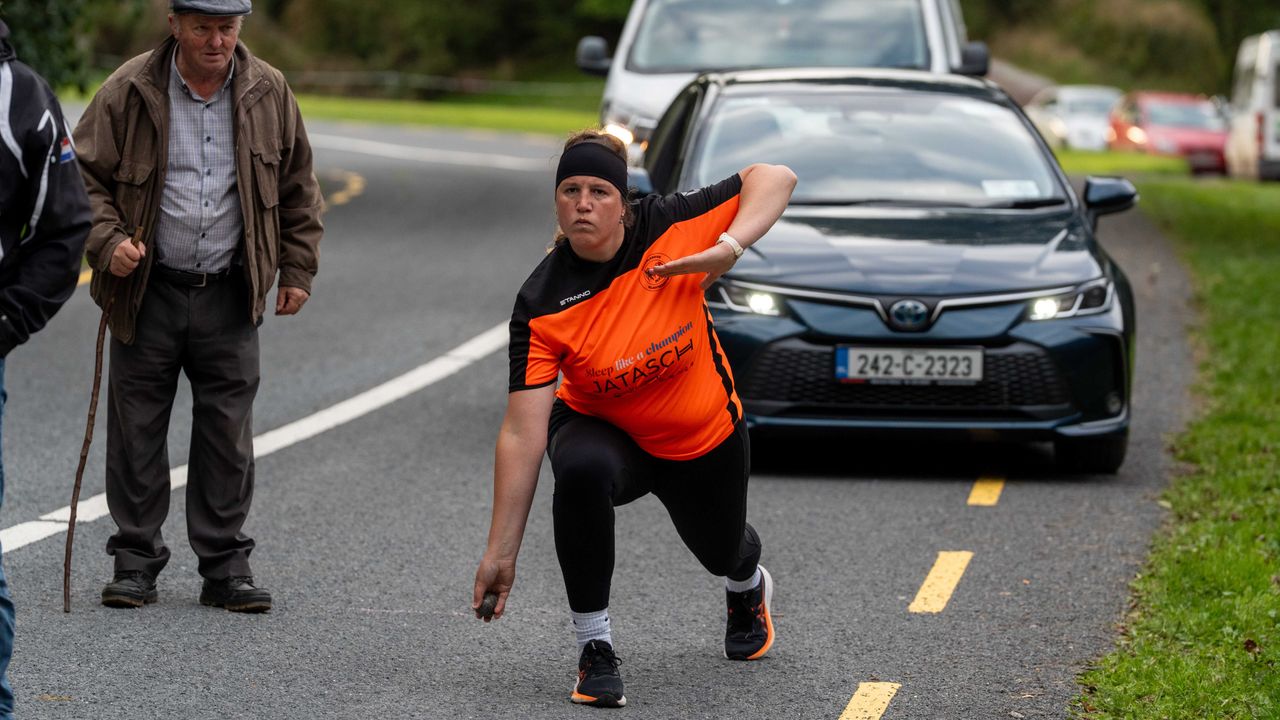
Road Bowling Seeks UNESCO Status as Ból Chumann na hÉireann Launches Heritage Campaign
The governing body of Irish road bowling, Ból Chumann na hÉireann, has formally launched a campaign to have the sport recognised as part of Ireland's intangible cultural heritage, with the ultimate ambition of securing a place on the UNESCO Representative List of the Intangible Cultural Heritage of Humanity — the same international register that already honours hurling, uilleann piping, and Irish harping.
Background
Road bowling is one of the oldest surviving sports in Ireland, with documented records stretching back to at least 1714, though oral tradition places its origins considerably earlier. The game involves competitors hurling a cast-iron ball — known as a bullet — along a public road, with the winner being the player who covers a set course in the fewest throws. The sport is played primarily in County Cork and County Armagh, with smaller but active communities in Waterford, Kerry, Limerick, Tipperary, Mayo, Louth, and Dublin.
Unlike most Irish sports, road bowling has no fixed pitch, no stadium, and no broadcast deal. It is played on ordinary country roads, watched by crowds who walk the course alongside the competitors, and governed entirely by volunteers who have kept the tradition alive through generations of quiet dedication. Multiple-time All-Ireland champion Kelly Mallon from Armagh is among the sport's most celebrated contemporary figures, but the game's appeal has always been rooted in community rather than celebrity.
The campaign for UNESCO recognition follows a well-established Irish precedent. Hurling was inscribed on the UNESCO Representative List in 2018, uilleann piping in 2017, and Irish harping in 2019. Each of these recognitions required the practice to first be added to Ireland's National Inventory of Intangible Cultural Heritage, a list currently containing 42 recognised practices maintained by the Department of Culture, Communications and Sport.
Key Developments
Séamus Ó Tuama, secretary of Ból Chumann na hÉireann, confirmed this week that the association is formally seeking inclusion on the national inventory. Fine Gael TD John Paul O'Shea has publicly backed the campaign, arguing that road bowling deserves the same institutional support and cultural recognition afforded to other Irish traditions. The Department of Culture has confirmed that no formal application has yet been received but has explicitly encouraged the association to engage with officials to explore the application process.
The Expert Advisory Committee that assesses applications to the national inventory will review any submission from Ból Chumann na hÉireann against criteria including the practice's living nature, its community transmission, and its cultural significance. Advocates are confident the sport meets all relevant thresholds. The application process is expected to take between 12 and 18 months from submission to a ministerial decision.
Why It Matters
The campaign for UNESCO recognition is about more than prestige. Advocates argue that formal heritage status would provide the practical and financial scaffolding the sport needs to survive and grow in the twenty-first century. Unlike GAA clubs, which benefit from substantial Croke Park funding and a national infrastructure, road bowling is managed almost entirely by volunteers with limited resources. Heritage recognition would open access to state and EU cultural funding streams that are currently unavailable to the sport.
There is also a preservation argument. Road bowling is uniquely vulnerable to the pressures of modern infrastructure: the widening of country roads, the installation of safety barriers, and the increase in traffic volumes have all reduced the number of suitable courses available to the sport. UNESCO status would give the sport a stronger voice in planning and infrastructure decisions, ensuring that the roads on which it has been played for centuries remain accessible to future generations.
Compared to hurling, which now commands global attention and significant commercial investment, road bowling remains genuinely grassroots — and that is precisely what makes it worth protecting. It is a sport that belongs to the people who play it, not to broadcasters or sponsors.
Local Impact
In Cork, where road bowling is most deeply embedded, the campaign has been welcomed by clubs from Bandon to Macroom and from Mallow to Skibbereen. The sport draws large crowds to rural roads across the county on summer weekends, generating informal economic activity for local pubs and communities. In Armagh, the sport is similarly woven into the social fabric of rural townlands, with inter-county competitions drawing participants from both sides of the border. A successful UNESCO application would be a source of enormous pride for both counties and for the wider Irish sporting community.
What's Next
Ból Chumann na hÉireann is expected to formally engage with the Department of Culture in the coming weeks to begin the application process. The association will need to compile a comprehensive dossier documenting the sport's history, its community transmission, and its living practice — a process that will itself serve as a valuable archive of road bowling's heritage. A decision on inclusion in the national inventory is unlikely before mid-2027, with any subsequent UNESCO application taking a further two to three years to process through the international system.