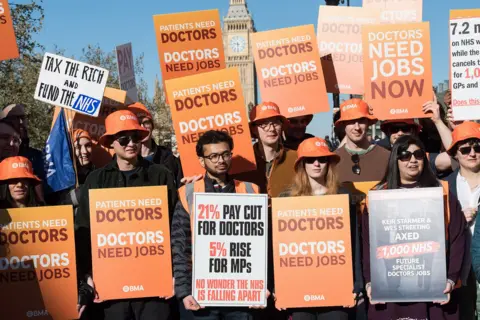
BMA and Government at Impasse as 15th Walkout Ends and Streeting Warns of 'Last Resort' Measures
Resident doctors across England have returned to work today as their six-day strike concludes, but the underlying pay dispute remains unresolved — with Health Secretary Wes Streeting refusing to rule out legislation to ban doctors from striking and the British Medical Association warning that further action cannot be ruled out.
The Strike Ends
The 15th strike by resident doctors since March 2023 concluded on Monday 13 April 2026, after six days of industrial action that caused significant disruption to NHS services across England. Thousands of pre-planned treatments and appointments were cancelled or rescheduled, with senior medics deployed to cover emergency services. The walkout is estimated to have cost the health service approximately £300 million — bringing the total cost of industrial action since 2023 to more than £3 billion.
Why Talks Broke Down
The British Medical Association is demanding the restoration of doctors' pay to 2008 levels, which it calculates requires a 26% increase to account for inflation. The government's most recent offer — which included an average basic pay rise of 4.9% and a commitment to create between 4,000 and 4,500 additional specialty training posts over three years — was rejected by the BMA. Dr Jack Fletcher, chair of the BMA Resident Doctors Committee, said a last-minute reduction in the financial offer and the stretching of the pay progression framework over three years was "the breaking point" in negotiations. The government disputed this account, and subsequently withdrew the offer of 1,000 additional training places for the current year.
Streeting's Warning
Health Secretary Wes Streeting has not ruled out the controversial possibility of banning doctors from striking, as frustration grows over a three-year campaign of industrial action. Senior health officials have been discussing the option as a last resort, though any such legislation would be deeply contentious and likely to face significant legal and political opposition. Public opinion on the strikes has shifted, with recent polling suggesting 53% of people now oppose the industrial action, compared to 38% who support it.
What Happens Next
With negotiations at an impasse and both sides trading blame for the breakdown of talks, the prospect of further strike action remains very real. The BMA has not ruled out additional walkouts, and the government faces the difficult task of resolving the dispute without setting a precedent that could trigger similar demands from other NHS staff groups. The next BMA Resident Doctors Committee meeting is expected to determine whether further action will be announced. NHS England has urged patients to attend scheduled appointments and seek care as normal now that the strike has ended. Full BBC News report.