Australians Chase the 'Fairy Gold Dust' Irish Passport in Record Numbers as EU Rights Drive Surge
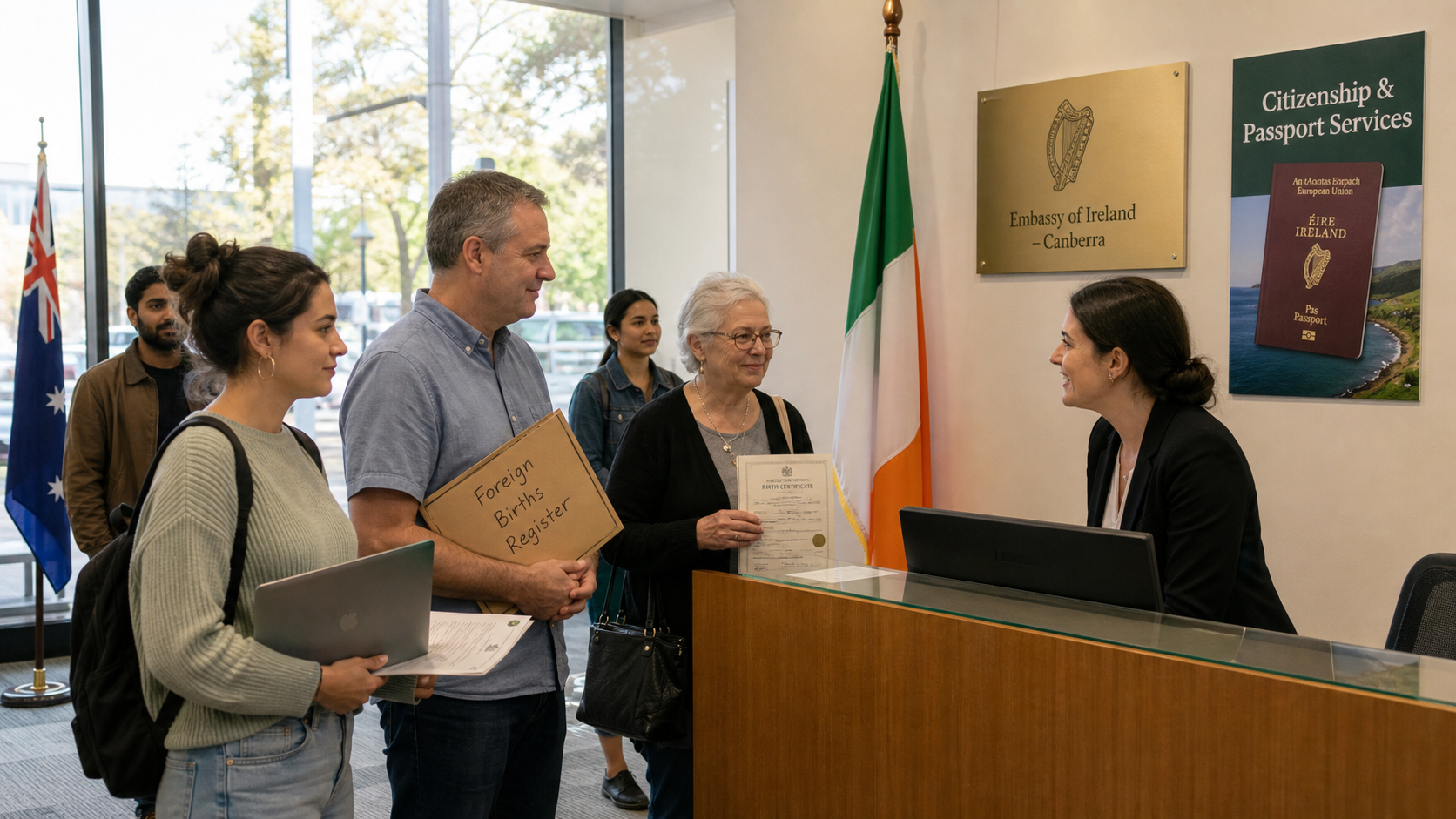
Applications for Irish citizenship from Australians have reached a record high since electronic records began in 2013, with more than 1,880 applications filed through the Foreign Births Register in 2025 — a 133% increase compared to 2022 — as Australians with Irish heritage seek the European Union residency, work, and study rights that an Irish passport provides, in a trend that has extended processing times to approximately 12 months and is reshaping the demographics of the global Irish diaspora.
The surge, which has continued into 2026 with nearly 800 applications submitted by the end of May, reflects a growing recognition among Australians of Irish descent that an Irish passport is one of the most valuable travel documents in the world, providing visa-free access to 186 destinations and the right to live, work, and study across all 27 EU member states.
Background
Ireland's citizenship by descent provisions allow individuals with an Irish-born parent or grandparent to apply for Irish citizenship through the Foreign Births Register, a process that has been available for decades but which has seen a dramatic increase in applications in recent years. The surge in Australian applications reflects both the growing awareness of the benefits of Irish citizenship and the increasing ease with which Australians can trace their Irish heritage through online genealogical resources.
Australia has a large and historically significant Irish diaspora, with the Irish-born population in Australia reaching a record 103,080 in the most recent census data. The Irish community in Australia has deep roots, dating to the transportation of Irish convicts in the late 18th and early 19th centuries and the waves of emigration that followed the Great Famine and subsequent periods of economic hardship in Ireland. Many Australians of Irish descent have maintained strong connections to their heritage, and the opportunity to formalise that connection through citizenship has proven enormously attractive.
The value of an Irish passport has increased significantly in recent years as a result of Brexit, which removed the right of British passport holders to live and work freely in the EU, and as a result of the growing recognition of the EU's passport as one of the most powerful in the world. For Australians who are considering working or studying in Europe, an Irish passport removes the need for visas and work permits and provides a level of mobility that is simply not available to those travelling on an Australian passport alone.
Key Developments
The Irish Department of Foreign Affairs has confirmed the record application numbers and has indicated that it has increased staffing levels to manage the surge in demand. However, processing times have extended to approximately 12 months, reflecting the volume of applications and the complexity of the genealogical research required to verify eligibility.
Applicants often face challenges in reconciling historical civil records across different jurisdictions, where names, dates, and locations may have been recorded inconsistently over the past century. The Department has developed online resources to help applicants navigate the process, but the complexity of individual cases means that many applicants require professional assistance from genealogists or solicitors.
The surge in applications has also prompted a broader conversation about the nature of Irish identity and the relationship between Ireland and its diaspora. The Irish government's Diaspora Strategy 2026-2030, which was launched in May, formally recognises the "affinity diaspora" — people without hereditary Irish links who have strong cultural or professional connections to Ireland — and commits to strengthening the State's relationship with Irish communities abroad.
Why It Matters
The surge in Australian applications for Irish citizenship is a reflection of the extraordinary value that the Irish passport has acquired in the global mobility landscape. For Ireland, the growing number of Irish citizens in Australia and other countries represents both an opportunity and a responsibility — an opportunity to strengthen economic and cultural ties with a large and influential diaspora, and a responsibility to ensure that the citizenship process is fair, efficient, and accessible to all who are entitled to it.
The trend also has implications for Australia, where the acquisition of dual citizenship by a growing number of citizens raises questions about political participation, national loyalty, and the legal implications of holding citizenship in two countries. Australian law prohibits dual citizens from nominating for the federal parliament unless they renounce their foreign citizenship, a provision that has become increasingly relevant as the number of Australians with Irish citizenship grows.
For the Irish diaspora in Australia, the surge in citizenship applications represents a deepening of the connection between the two countries and a recognition that Irish identity is not just a matter of heritage but of active engagement with the rights and responsibilities of citizenship. The growing number of Irish citizens in Australia is likely to strengthen the bilateral relationship between the two countries and to create new opportunities for economic and cultural exchange.
Local Impact
The surge in Australian applications has had a direct impact on the workload of the Irish Department of Foreign Affairs, which processes Foreign Births Register applications at its offices in Dublin. The department has recruited additional staff to manage the increased volume, but the 12-month processing time reflects the scale of the challenge. Irish consulates in Sydney, Melbourne, and Perth have also reported increased demand for citizenship-related services, and the Irish community organisations in those cities have been providing support and guidance to applicants navigating the process.
What's Next
The Department of Foreign Affairs has indicated that it is exploring options for further streamlining the citizenship application process, including the development of improved online tools and the expansion of the genealogical research resources available to applicants. The government's Diaspora Strategy commits to reducing administrative barriers for Irish citizens abroad, including in the area of citizenship applications, and the Department is expected to announce further improvements to the process in the coming months.