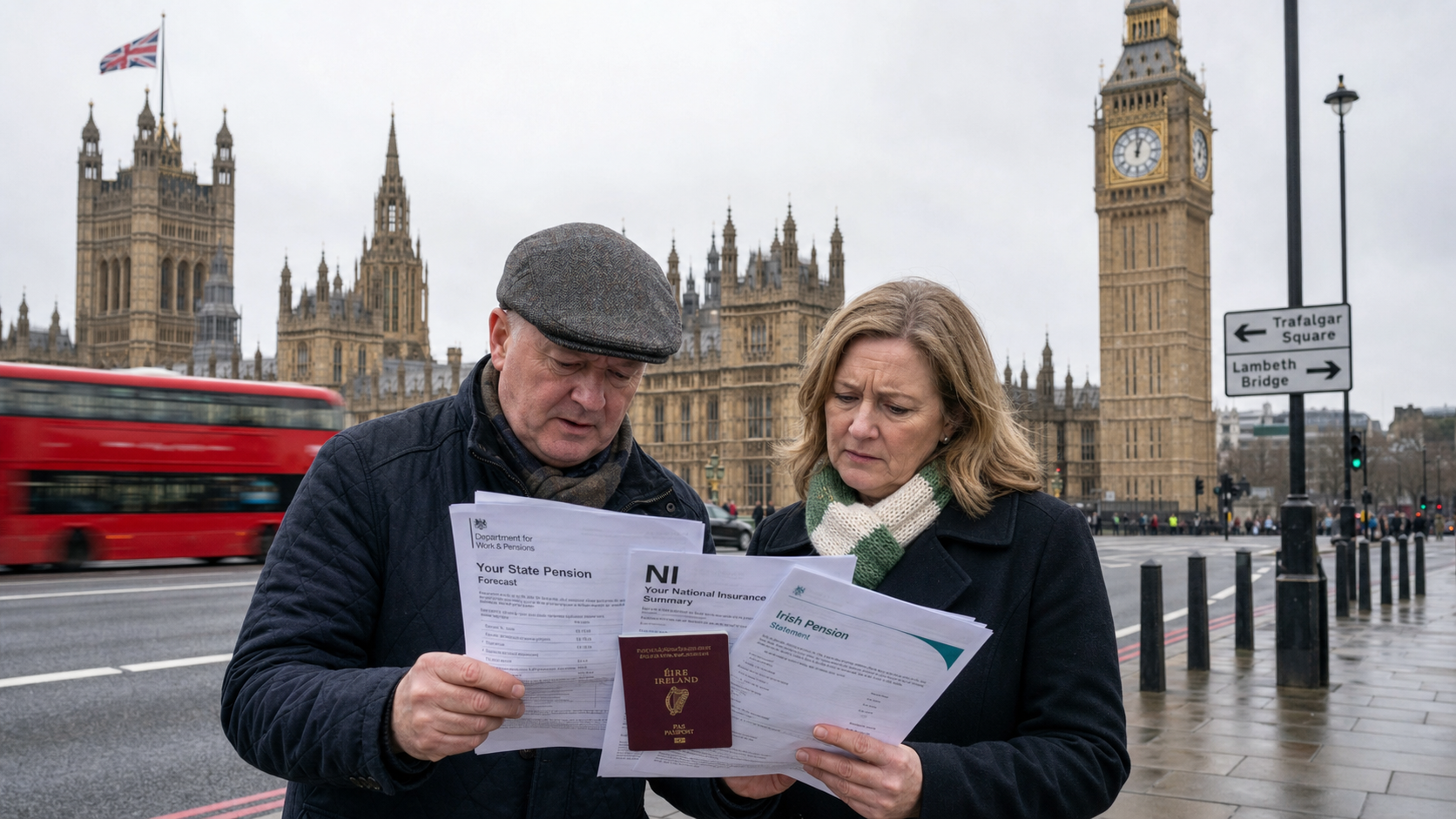
UK Tightens Rules for Irish Residents Seeking to Boost British State Pension Rights
The UK government has tightened the rules for Irish residents seeking to top up their British state pension entitlements through voluntary National Insurance contributions, with new restrictions affecting thousands of Irish people who worked in Britain and returned home — a change that has been described as a "significant blow" to those who had been planning to use voluntary contributions to maximise their retirement income.
Background
The relationship between Ireland and the United Kingdom in matters of social security and pension entitlements is shaped by a combination of historical ties, the Common Travel Area, and the bilateral social security agreement that has governed the treatment of workers who have contributed to both systems. For generations of Irish people who emigrated to Britain to work — a pattern that was particularly pronounced during the 1950s, 1960s, and 1980s — the question of British state pension entitlements has been a significant practical concern in retirement planning.
The British state pension is based on a record of National Insurance contributions, with a full pension requiring 35 qualifying years of contributions. Workers who have fewer than 35 qualifying years can, in many cases, make voluntary contributions to fill gaps in their record and increase their eventual pension entitlement. This option has been particularly valuable for Irish people who worked in Britain for a period before returning to Ireland, as it has allowed them to maximise their British pension entitlement by topping up their contribution record from abroad.
The UK government has periodically reviewed the rules governing voluntary National Insurance contributions, and the changes announced in 2026 represent the most significant tightening of those rules in recent years. The changes affect not just Irish residents but all non-UK residents who have worked in Britain and are seeking to make voluntary contributions, though the impact on the Irish community is particularly significant given the historical patterns of Irish emigration to Britain.
Key Developments
The new rules, which took effect in August 2026, restrict the ability of Irish residents to make voluntary Class 3 National Insurance contributions to top up their British state pension record. Under the previous rules, Irish residents who had worked in Britain could make voluntary contributions for any gaps in their National Insurance record going back to 2006. Under the new rules, the window for making voluntary contributions has been significantly narrowed, and the eligibility criteria have been tightened in ways that will exclude many Irish residents who had been planning to use this mechanism to boost their pension entitlements.
The Irish Times reported that the changes have been described as a "significant blow" by financial advisers working with Irish clients who have British pension entitlements. The changes are particularly problematic for those who are approaching retirement age and had been planning to make a lump-sum voluntary contribution to fill gaps in their National Insurance record before claiming their British state pension. For those individuals, the narrowing of the window for voluntary contributions may mean that they are unable to achieve the full pension entitlement they had been expecting.
The changes have also raised questions about the future of the bilateral social security agreement between Ireland and the UK, which has historically provided a degree of protection for workers who have contributed to both systems. The agreement allows periods of contribution in Ireland and the UK to be combined for the purposes of qualifying for a pension in either country, but the new restrictions on voluntary contributions represent a unilateral tightening of the UK's rules that was not subject to bilateral negotiation.
Why It Matters
The tightening of the rules for voluntary National Insurance contributions matters for a significant number of Irish people who have worked in Britain at some point in their lives. The Irish diaspora in Britain is one of the largest and most established in the world, and the return migration of Irish people from Britain — particularly those who emigrated in the 1980s and are now approaching retirement age — has been a significant demographic trend in recent years. For many of those returning migrants, British state pension entitlements are an important component of their retirement income, and the new restrictions will affect their financial planning in ways that may be difficult to address at this stage of their lives.
The changes also have a broader significance in the context of the post-Brexit relationship between Ireland and the UK. The Common Travel Area, which predates both countries' membership of the EU, has provided a degree of continuity in the treatment of Irish and British citizens in each other's countries. However, Brexit has created new complexities in the social security relationship between the two countries, and the new restrictions on voluntary National Insurance contributions are a reminder that the UK government is free to change its rules in ways that affect Irish residents without any obligation to consult or negotiate with the Irish government.
Local Impact
The impact of the new rules will be felt most acutely by Irish people who are approaching retirement age and who have significant gaps in their British National Insurance record. Financial advisers in Ireland have reported a significant increase in enquiries from clients seeking to understand the implications of the changes for their retirement planning. The Citizens Information Board has updated its guidance on British state pension entitlements for Irish residents, and the Department of Social Protection has indicated that it is monitoring the situation and will provide updated information to those affected. For those who are most directly affected — typically those in their 50s and 60s who worked in Britain in the 1980s and 1990s — the changes represent a significant and unwelcome disruption to their retirement plans.
What's Next
The Department of Foreign Affairs has indicated that it is in contact with the UK government about the implications of the new rules for Irish residents, and has raised the issue through the bilateral channels that govern the Ireland-UK social security relationship. However, the UK government has indicated that the changes are a matter of domestic policy and are not subject to bilateral negotiation. Financial advisers are urging Irish residents with British pension entitlements to review their position as a matter of urgency and to take professional advice on the options available to them under the new rules. The Citizens Information Board and the Pensions Authority have both indicated that they will provide updated guidance in the coming weeks.