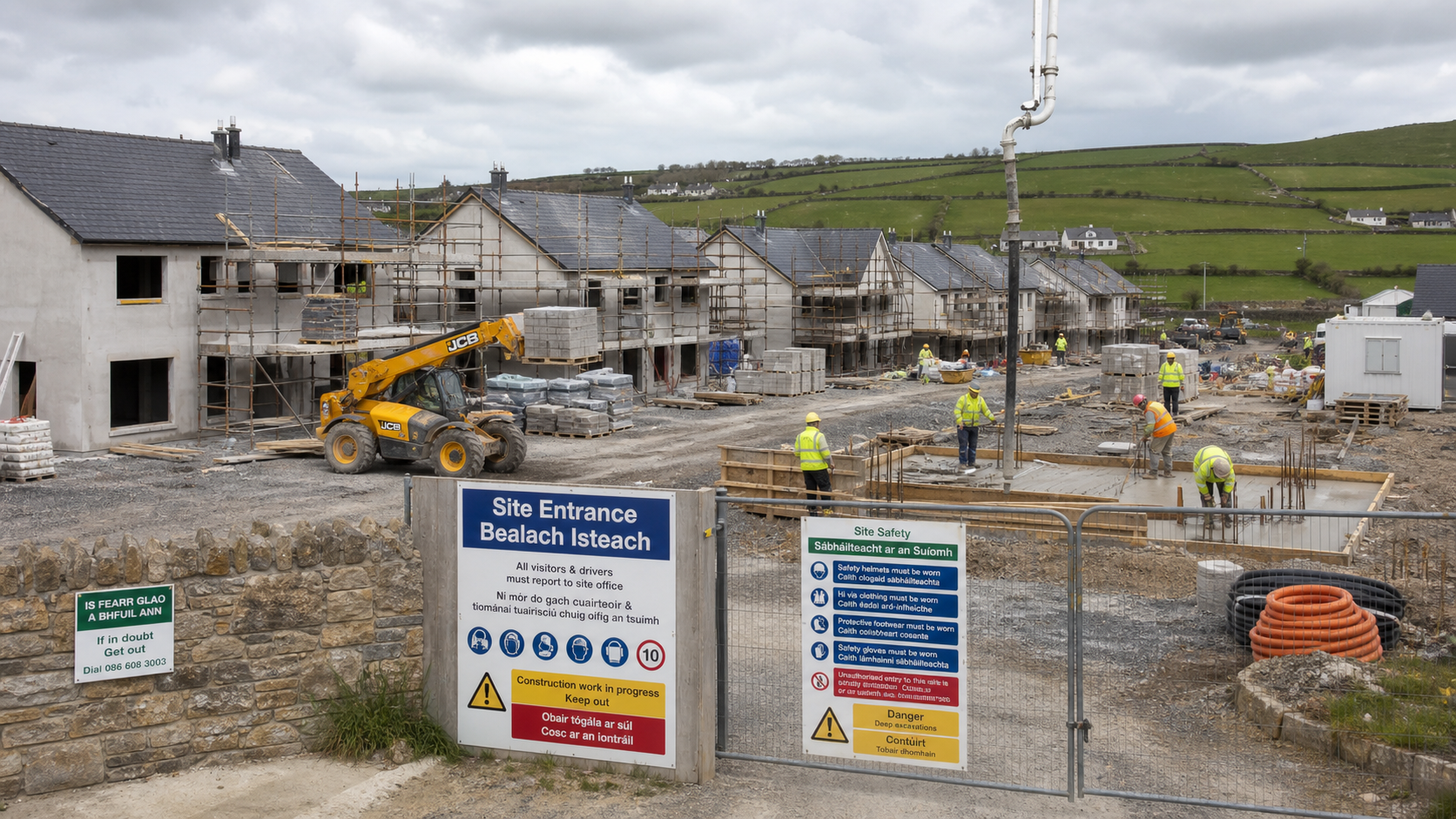
Record 3,028 New Homes Commenced in July as Ireland's Housing Construction Surge Continues
Ireland commenced construction on 3,028 new homes in July 2026, a 169 per cent increase on the same month last year, the Department of Housing confirmed on Thursday — a figure that brings the year-to-date total to 18,974 and represents the second-highest commencement figure for this period since records began in 2014, though the government still faces a formidable challenge in meeting its long-term housing targets.
Background
Ireland's housing crisis has been the defining domestic policy challenge of the past decade. A combination of underinvestment in construction during the post-crash years, planning system delays, infrastructure constraints, and rising construction costs has produced a chronic shortfall of housing supply that has driven prices and rents to levels that are unaffordable for a growing proportion of the population. The government's Housing for All strategy, and its successor frameworks, have set ambitious targets for new home delivery — but meeting those targets has proved consistently difficult.
The commencement figures published by the Department of Housing track the number of new homes on which construction has formally begun, as notified to local authorities under the building control regulations. They are a leading indicator of future completions, though the relationship between commencements and completions is not straightforward: projects can be delayed, abandoned, or extended, and the time between commencement and completion varies considerably depending on the type and scale of development.
The July 2026 figures follow a period of sustained policy activity aimed at accelerating housing delivery. The government introduced new planning exemptions in late July, expanding the range of residential development that can proceed without full planning permission. These include provisions for auxiliary dwellings — self-contained units of up to 45 square metres in back gardens — and increased size limits for rear extensions and garden structures. The exemptions are designed to add housing supply at the margins of the existing stock, complementing the larger-scale developments that are the primary driver of commencement figures.
Key Developments
Of the 3,028 homes commenced in July 2026, 1,612 were houses within multi-unit developments, 1,004 were apartments, and 412 were one-off houses. The apartment figure is particularly significant: apartment construction has historically been the most challenging segment of the Irish housing market, given the higher per-unit costs associated with multi-storey development and the planning and financing complexities involved. The strong July apartment figure suggests that some of the policy interventions aimed at making apartment development more viable — including changes to development levies and the introduction of the Croí Cónaithe scheme — are beginning to have an effect.
The year-to-date total of 18,974 commencements represents a 152 per cent increase over the 7,539 homes started during the same period in 2025. Minister for Housing James Browne described the figures as "very encouraging" and noted that they follow a combined total of 85,723 commencements throughout 2024 and 2025. He acknowledged, however, that the government's target of 300,000 new homes by 2030 requires an average of 50,000 completions per year — a figure that has not yet been achieved in any single year.
Why It Matters
The commencement figures matter because they represent the pipeline of future housing supply. A home commenced today will typically be completed within 12 to 24 months, depending on its type and scale. The strong July figure therefore suggests that the completion numbers for 2027 should be significantly higher than those for 2026 — a prospect that will be welcomed by housing advocates, though they caution that commencements do not always translate into completions at the expected rate.
The 169 per cent year-on-year increase in July commencements is striking, but it needs to be contextualised. July 2025 was an unusually weak month for commencements, partly due to delays in the planning system and partly due to uncertainty about the government's housing policy direction following the general election. The comparison base is therefore flattering, and the underlying trend — while positive — is less dramatic than the headline figure suggests.
The government's 300,000-home target by 2030 remains ambitious. At the current pace of commencements, and assuming a reasonable conversion rate to completions, Ireland would need to sustain or exceed the current level of activity for the next four years to come close to that target. That will require continued investment in planning capacity, infrastructure, and construction workforce development — areas where progress has been slower than the commencement figures might suggest.
Local Impact
In Dublin, the July commencement figures include a significant number of apartment units in the city's South Docks area, where a long-delayed development of 103 homes has finally begun construction following the resolution of planning and infrastructure issues. In Cork, new developments in the city's north and south suburbs are contributing to a regional commencement figure that is running well ahead of last year. In Galway, Limerick, and Waterford, the figures are more modest but still represent a significant improvement on the same period in 2025.
For first-time buyers, the commencement figures offer a degree of hope — but the timeline between commencement and the availability of homes for purchase means that the immediate impact on affordability will be limited. The homes commenced in July 2026 will not be available for occupation until 2027 or 2028 at the earliest, and by that point, the demand-supply gap will have continued to evolve.
What's Next
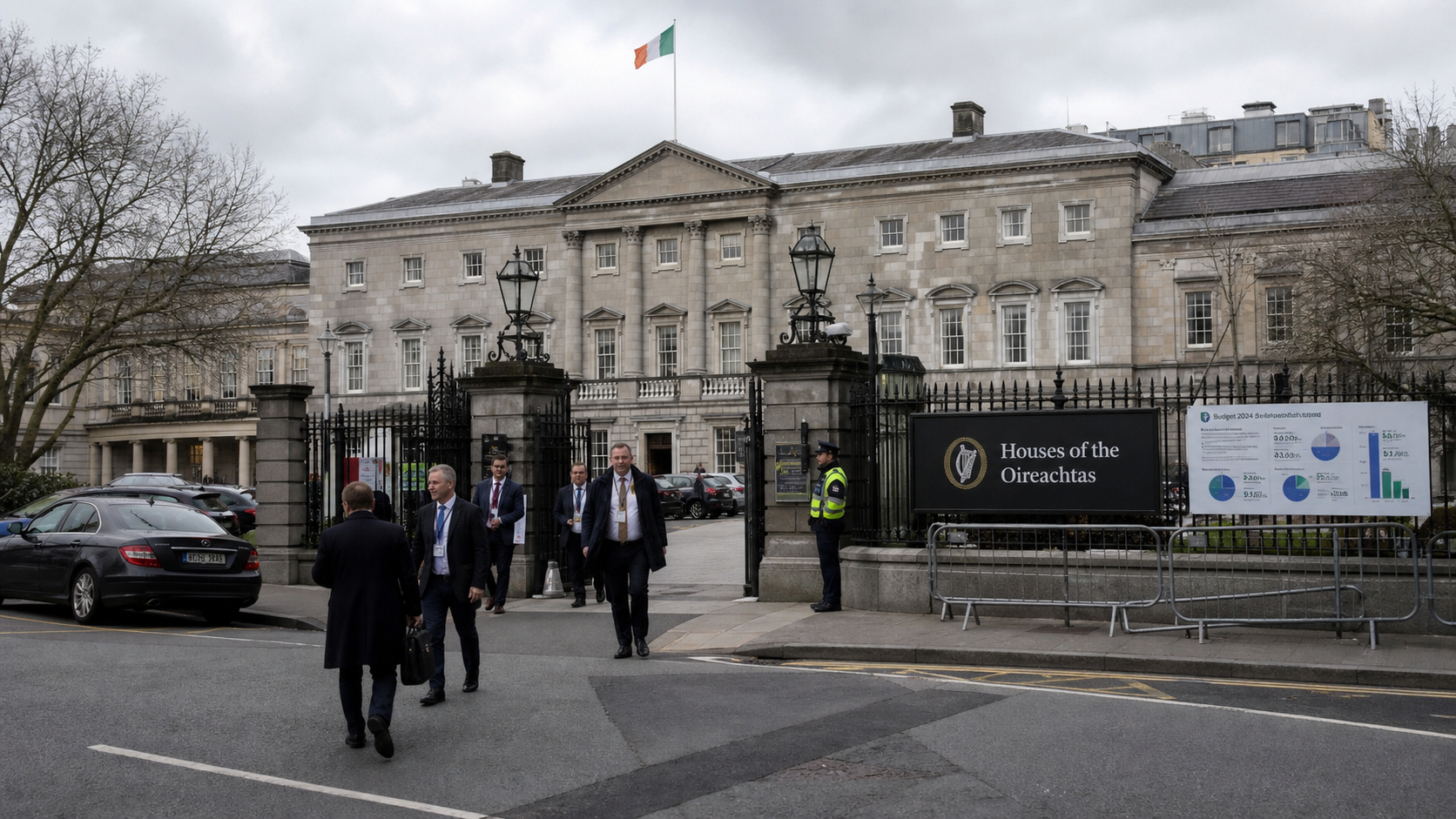
The Department of Housing will publish August commencement figures in September, and the government is expected to use the strong July data to support its case for continued investment in housing infrastructure in the October budget. Minister Browne has indicated that the budget will include further measures to support housing delivery, including additional funding for the Land Development Agency and an expansion of the Croí Cónaithe apartment scheme. The government's annual housing progress report, due in November, will provide a comprehensive assessment of progress against the 300,000-home target.