PSNI Investigates UVF Flag Flown at Carrigatuke Viewpoint in County Armagh as Sectarian Intimidation
Police in Northern Ireland are investigating the appearance of a purple Ulster Volunteer Force banner flying from a telecommunications mast at the Carrigatuke viewpoint in County Armagh, a hilltop beauty spot that local representatives describe as a shared public space, after the flag was condemned as an act of sectarian intimidation in an area with painful historical associations with loyalist violence during the Troubles.
Background
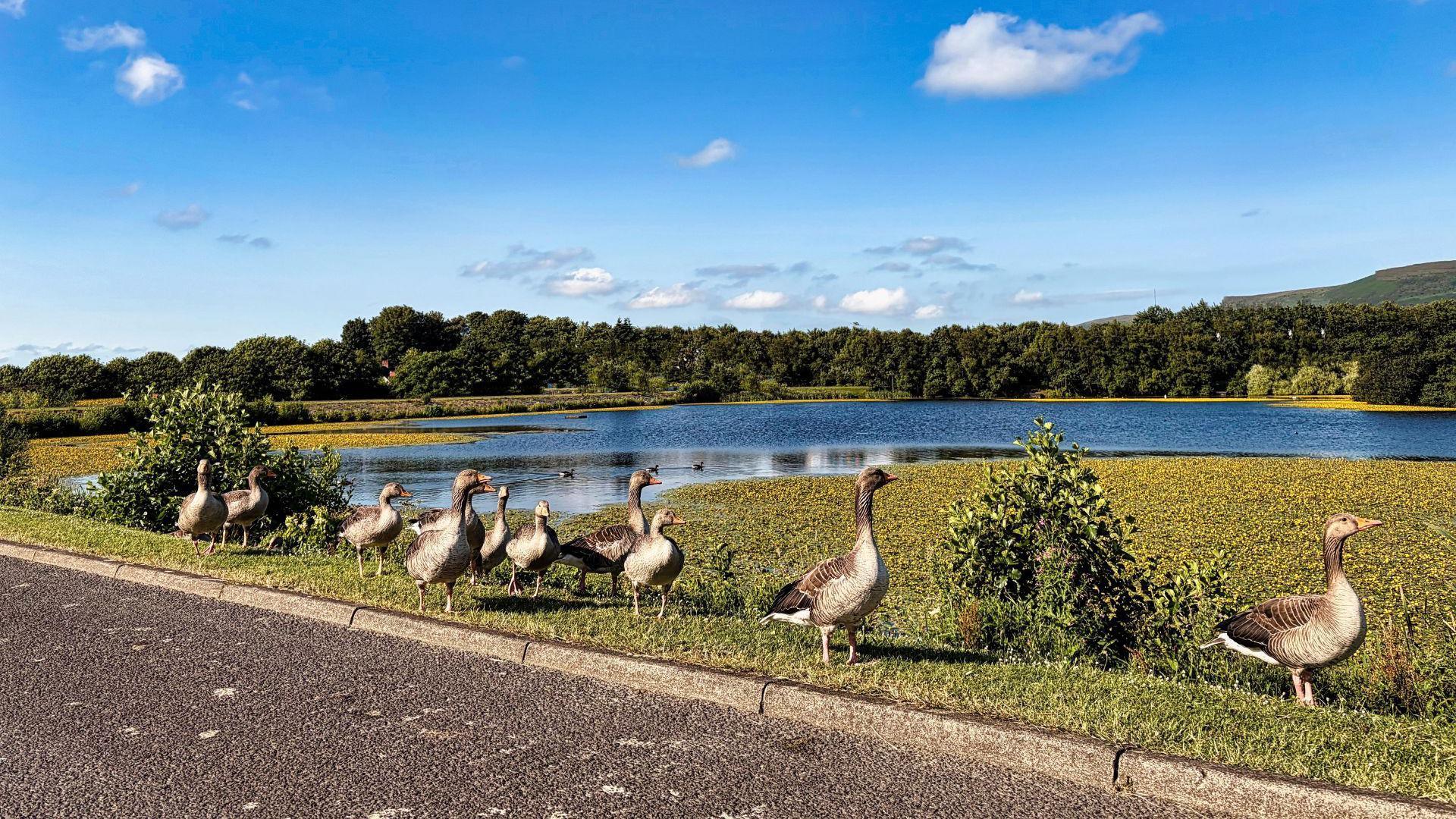
Carrigatuke, a prominent hill in south Armagh near the village of Markethill, commands sweeping views across the drumlin landscape of the county and into the Republic of Ireland. The viewpoint has long been a popular destination for walkers and families from both communities in the area, and its designation as a shared public space has been an important symbol of the post-conflict normalisation of everyday life in a part of Northern Ireland that experienced some of the most intense violence of the Troubles.
The area around Carrigatuke has particular historical significance in relation to loyalist paramilitary activity. The Glenanne Gang, a collusion network involving members of the Ulster Defence Regiment, the Royal Ulster Constabulary, and the Ulster Volunteer Force, was responsible for a series of murders in south Armagh and north Monaghan during the 1970s. The gang's activities, which included the Dublin and Monaghan bombings of 1974, left deep scars on the communities of the area, and the appearance of a UVF flag at a prominent local landmark has been experienced by many residents as a deliberate provocation.
The UVF is a proscribed organisation under the Terrorism Act 2000, meaning that the display of its flag or symbols in a public place can constitute a criminal offence. The organisation, which was responsible for hundreds of murders during the Troubles, has never fully decommissioned and retains a presence in some loyalist communities in Northern Ireland, though its active membership has declined significantly since the Good Friday Agreement.
Key Developments
The flag — a purple banner bearing the UVF insignia — was reported to have appeared at the Carrigatuke viewpoint around the Twelfth of July period, alongside a Union flag and an Ulster banner. The combination of flags at a prominent public location during the marching season was interpreted by local nationalist and republican representatives as a deliberate attempt to assert territorial dominance and intimidate the nationalist community in the area.
Sinn Féin councillor Bróna Haughey, who represents the area on Armagh City, Banbridge and Craigavon Borough Council, reported the matter to the PSNI and issued a public statement condemning the display. Haughey described Carrigatuke as "a shared public space that belongs to everyone in this community" and said the appearance of a proscribed organisation's flag was "deeply offensive and intimidating" to residents who had suffered at the hands of the UVF.
The PSNI confirmed it is investigating the incident as a potential criminal offence under Section 13 of the Terrorism Act 2000, which gives police powers to confiscate flags and symbols of proscribed organisations displayed in public. Officers attended the site and removed the UVF banner. The investigation is ongoing, and police have appealed for anyone with information about who erected the flag to come forward.
Why It Matters
The Carrigatuke incident is a reminder that the normalisation of public space in Northern Ireland remains an unfinished project, particularly in areas with strong historical associations with paramilitary activity. The marching season — the period from late June to mid-August when Orange Order parades and associated loyalist events take place — has historically been a flashpoint for tensions, and the display of paramilitary flags during this period is a recurring source of community conflict.
The legal framework for dealing with such displays is clear in principle but complex in practice. Section 13 of the Terrorism Act gives police the power to act, but prosecutions for flag-related offences are relatively rare, and the removal of flags often becomes a protracted process involving negotiations between police, local councils, and community representatives. Critics argue that the law is not enforced consistently and that the threshold for prosecution is set too high.
For the nationalist community in south Armagh, the appearance of a UVF flag at Carrigatuke carries a weight of historical meaning that goes beyond the immediate offence. The area's experience of loyalist violence during the Troubles — and the unresolved questions about state collusion in that violence — means that such displays are not experienced as mere provocations but as reminders of a past that has never been fully reckoned with.
Local Impact
In Markethill and the surrounding villages of south Armagh, the incident has generated significant community discussion. Local community groups have called for the PSNI to pursue the investigation vigorously and to bring charges if the evidence supports it. The Armagh City, Banbridge and Craigavon Borough Council has been asked to consider what additional measures it can take to protect shared public spaces from being used for paramilitary displays.
The incident has also been raised with the Parades Commission, which has responsibility for regulating contentious parades and related activities in Northern Ireland. The commission has indicated it is monitoring the situation and will consider whether any additional guidance is needed for the management of public spaces during the marching season.
What's Next
The PSNI investigation is expected to conclude within the coming weeks. If sufficient evidence is gathered to identify those responsible for erecting the flag, a decision on prosecution will be made by the Public Prosecution Service. Local councillors have indicated they will raise the matter at the next full meeting of Armagh City, Banbridge and Craigavon Borough Council and will seek a formal council response to the incident. Community relations organisations in the area have offered to facilitate dialogue between local representatives about the management of shared public spaces.