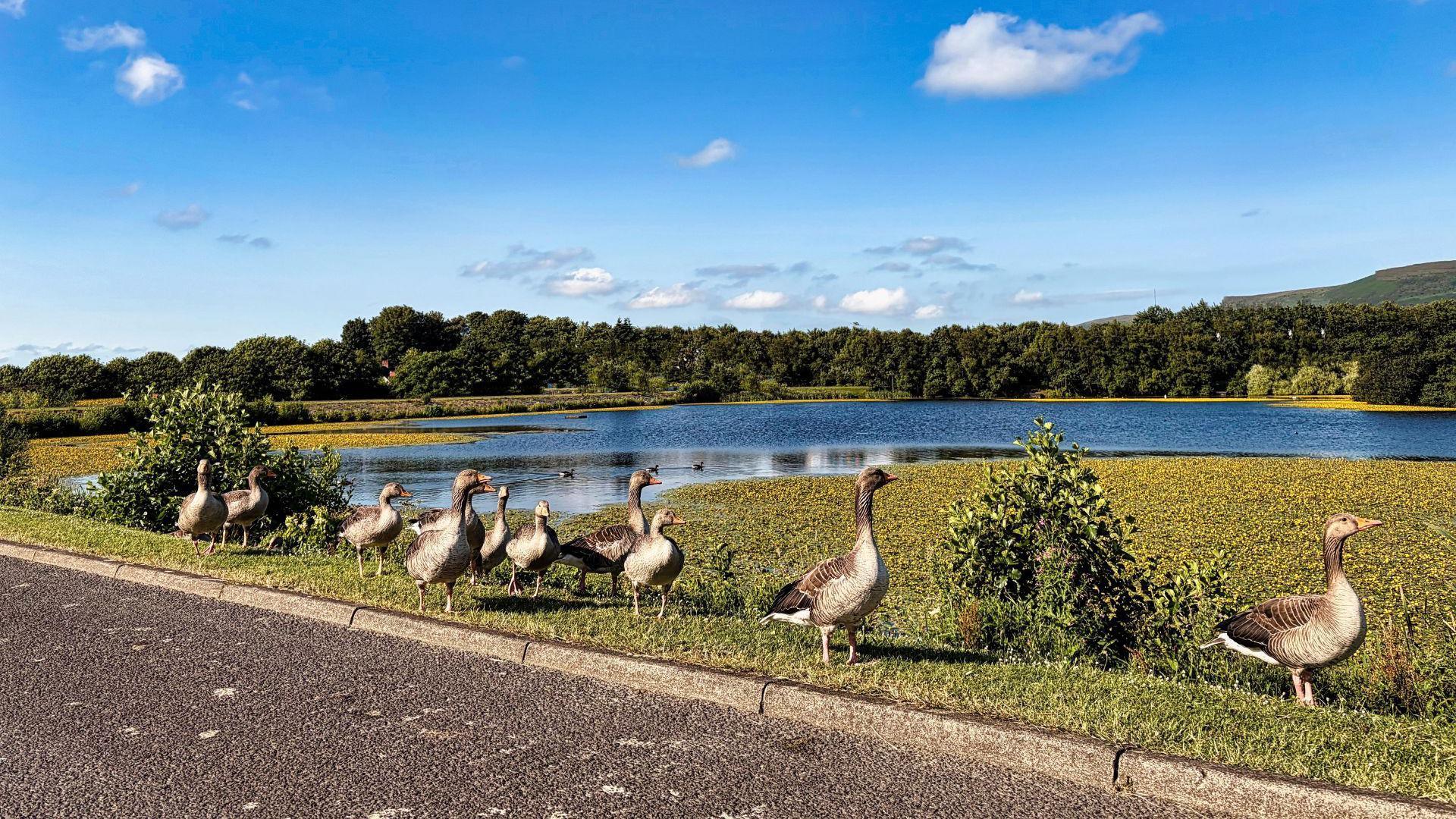
Northern Ireland Officially in Heatwave as Castlederg Hits 27.3°C and Dairy Farmers Warn of Mounting Losses
Northern Ireland is officially experiencing a heatwave, with the Met Office confirming that the weather station at Castlederg in County Tyrone has recorded three consecutive days of temperatures above 25°C — the threshold required for an official heatwave designation — after the mercury climbed to 27.3°C on Wednesday, July 15, bringing both public delight and mounting anxiety for the province's dairy farming sector.
Background
Castlederg, a small market town in west Tyrone near the border with County Donegal, has an unlikely distinction in the annals of Northern Ireland meteorology: it holds the all-time temperature record for the province, having reached 31.3°C in July 2021 during the exceptional European heatwave of that summer. The town's position in a sheltered river valley, surrounded by the Sperrin foothills, creates microclimatic conditions that can produce extreme temperatures during prolonged anticyclonic spells.
The current warm spell is the second heatwave to affect Northern Ireland in the summer of 2026, following an earlier period of elevated temperatures in late June. The combination of high pressure anchored over the British Isles and warm air drawn northward from continental Europe has produced conditions that, while welcome for tourism and outdoor recreation, place significant stress on agricultural systems designed for the province's more typical cool, wet climate.
Northern Ireland's agricultural sector is dominated by livestock farming, particularly dairy and beef production. The province has approximately 25,000 farm businesses, with dairy farming concentrated in counties Antrim, Down, and Tyrone. The sector is a cornerstone of the rural economy and a major contributor to the agri-food industry, which is Northern Ireland's largest manufacturing sector by employment.
Key Developments
The Met Office's confirmation of an official heatwave on July 15 came as temperatures across Northern Ireland reached levels that would be considered exceptional in any summer. Belfast recorded 24°C, Derry reached 25.5°C, and Armagh — home to the province's oldest meteorological observatory — logged 26.1°C. Castlederg's 27.3°C was the highest reading of the day across the province.
While the public has been making the most of the conditions — beaches at Portrush, Portstewart, Ballycastle, and Newcastle have been packed, and the Glens of Antrim have seen unusually high visitor numbers — the farming community has been sounding the alarm. Dairy farmers across Tyrone, Fermanagh, and Antrim have reported that their herds are producing less milk than normal, a well-documented response to heat stress in cattle. Grass growth, the foundation of Northern Ireland's pasture-based farming system, has also slowed significantly as the soil dries out.
The Ulster Unionist Party has called on the Department of Agriculture, Environment and Rural Affairs (DAERA) to assess the situation and consider what support mechanisms might be available to farmers if the conditions persist. UUP agriculture spokesperson Tom Elliott said the party was "monitoring the situation closely" and urged DAERA officials to engage proactively with the farming community rather than waiting for the crisis to deepen.
Why It Matters
The agricultural dimension of the heatwave is a reminder that extreme weather events, even those that are superficially pleasant, carry real economic costs. Northern Ireland's dairy sector contributes approximately £1.2 billion to the provincial economy annually, and a sustained period of heat stress can have measurable impacts on milk yields, animal welfare, and farm profitability. For family farms operating on tight margins — and the vast majority of Northern Ireland's dairy farms are family-run — even a modest reduction in output can be the difference between a viable year and a loss-making one.
The heatwave also raises longer-term questions about climate adaptation in Northern Ireland's agricultural sector. The province's farming systems were developed over centuries for a cool, wet climate, and the increasing frequency of extreme weather events — both heatwaves and severe flooding — is forcing farmers and policymakers to think seriously about how those systems need to evolve. DAERA has been developing a climate adaptation plan for agriculture, but critics argue that the pace of change is too slow given the accelerating frequency of weather extremes.
For the public, the heatwave has brought its own challenges. The Northern Ireland Ambulance Service has reported an increase in callouts related to heat-related illness, and the Public Health Agency has issued guidance urging people to stay hydrated, avoid prolonged sun exposure, and check on elderly or vulnerable neighbours.
Local Impact
In Castlederg itself, the heatwave has been a source of both pride and concern. The town's position as Northern Ireland's temperature hotspot is well known locally, and residents have a pragmatic relationship with extreme weather. Local farmers in the Derg valley have been moving cattle to shaded areas and increasing water provision to their herds. The Derg Valley Leisure Centre has seen a surge in demand for its swimming facilities, with families travelling from across west Tyrone to cool off.
In Derry, the city's parks — including Brooke Park and St Columb's Park — have been busy with families, and the Foyle River has attracted swimmers despite warnings from the PSNI about the dangers of open-water swimming. In Newry, the Canal Quarter has been a popular gathering spot, while in Armagh, the Palace Demesne grounds have been packed with visitors.
What's Next
The Met Office forecast suggests the current warm spell will persist until at least Friday, July 17, when a frontal system from the Atlantic is expected to bring cloud and some rain to the north and west of the province. Temperatures are forecast to remain above average through the following week, though the extreme peaks of the current heatwave are expected to ease. DAERA has indicated it will publish an assessment of the agricultural impact of the heatwave in the coming weeks, and the Ulster Farmers' Union has called for that assessment to be completed as quickly as possible.