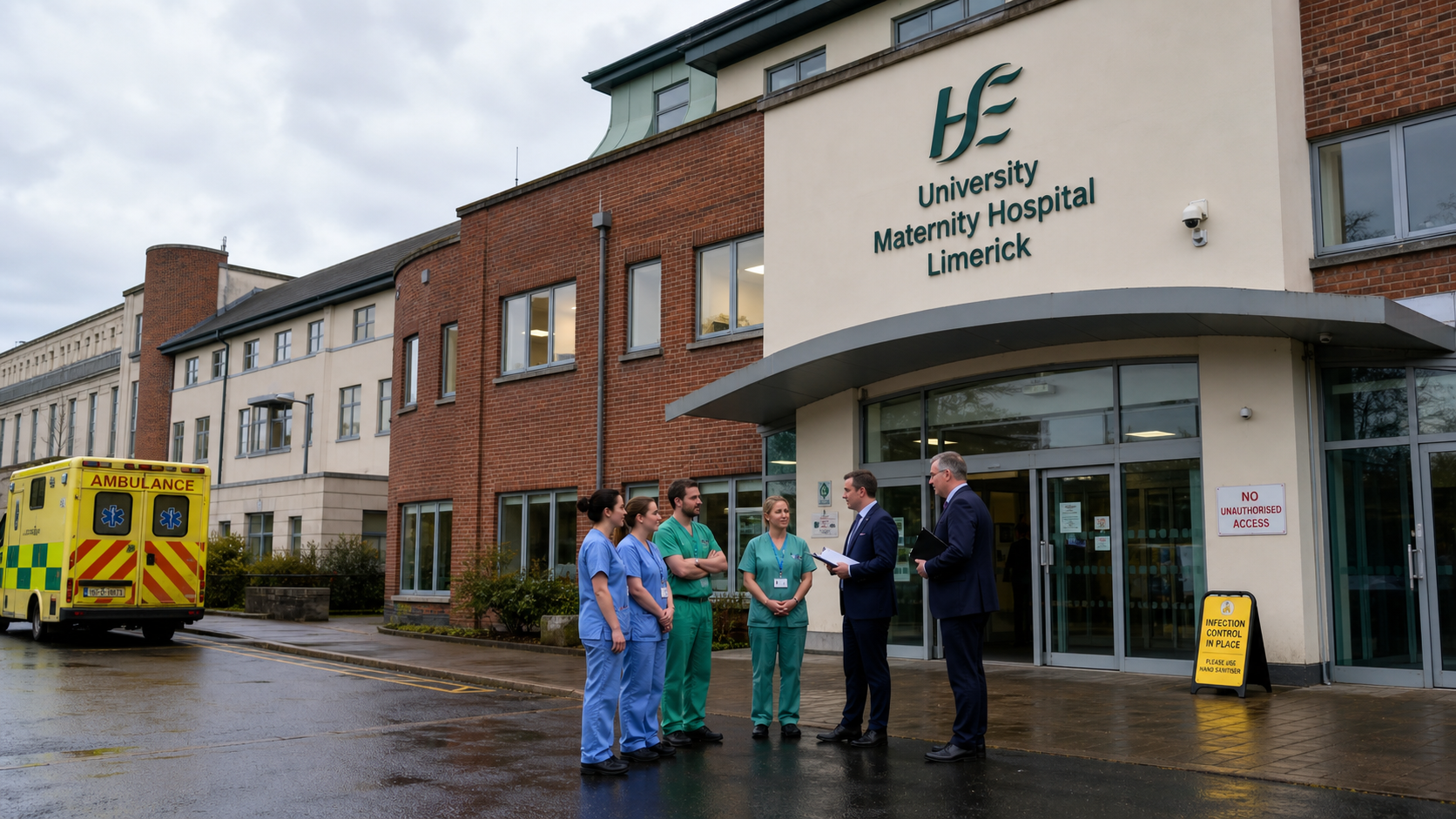
Pseudomonas Outbreak at Limerick Neonatal ICU Prompts Urgent HSE Investigation
The Health Service Executive has confirmed an outbreak of Pseudomonas aeruginosa at the neonatal intensive care unit of University Maternity Hospital Limerick, prompting the assembly of a multidisciplinary response team comprising neonatologists, microbiologists, obstetricians, public health specialists, and infection prevention and control experts — with health officials stressing that no infants have suffered adverse outcomes as of Thursday, while acknowledging the serious risks the bacterium poses to the unit's most vulnerable patients.
Background
Pseudomonas aeruginosa is an opportunistic gram-negative bacterium that thrives in damp hospital environments, particularly in plumbing systems, sinks, and water outlets. It is a significant concern in neonatal intensive care settings because premature and critically ill newborns — whose immune systems are still developing and who are often dependent on invasive medical devices such as ventilators and central lines — are particularly susceptible to infection. The bacterium can cause bloodstream infections, sepsis, and pneumonia, and its capacity for antibiotic resistance makes treatment challenging.
University Maternity Hospital Limerick is the principal maternity facility for the Mid-West region, serving a catchment area that includes Counties Limerick, Clare, and Tipperary. The neonatal intensive care unit provides specialist care for premature infants and those born with serious medical conditions, and it has been operating under significant pressure in recent years, with reports from unions and inspectors suggesting that staffing levels have at times fallen below agreed safety thresholds.
The detection of Pseudomonas aeruginosa in the unit triggered an immediate response from the HSE Mid-West, which assembled the multidisciplinary team and notified the Health Protection Surveillance Centre. The unit remained open to new admissions throughout the investigation, with enhanced infection control measures in place.
Key Developments
The HSE confirmed on Thursday that environmental sampling of water outlets, surfaces, and medical equipment was under way to identify the source of the bacterium. Clinical screening of infants in the unit was also ongoing, with the aim of distinguishing between those who are colonised with the bacteria — meaning it is present but not causing active infection — and those who have developed active infections requiring targeted antibiotic treatment.
The hospital reinforced hand hygiene protocols and restricted movement within the affected areas to prevent further transmission. Families of infants in the unit were informed directly by clinical staff, and the HSE stated that all affected infants who had been discharged from the hospital were doing well with no clinical concerns.
The HSE Mid-West confirmed that no infants had experienced adverse outcomes as of the time of the statement, a reassurance that will be welcomed by families but that does not diminish the seriousness of the situation. Pseudomonas outbreaks in neonatal units have caused deaths in other jurisdictions, and the speed and thoroughness of the response in Limerick reflects an awareness of the potential consequences.
Why It Matters
Neonatal intensive care units are among the most complex and high-stakes environments in any hospital system. The infants cared for in these units are, by definition, among the most vulnerable patients in the health service, and the consequences of a healthcare-associated infection can be catastrophic. The Limerick outbreak is a reminder of the constant vigilance required to maintain safe conditions in these settings, and of the importance of adequate staffing, infrastructure, and infection control resources.
The broader context — a unit that has been operating under pressure, with staffing levels that have at times been below agreed thresholds — raises questions about whether systemic factors may have contributed to the conditions in which the outbreak occurred. The HSE has not established a direct link between staffing pressures and the current outbreak, but the question will inevitably be asked as the investigation proceeds.
Local Impact
For families with infants currently in the neonatal unit at University Maternity Hospital Limerick, the outbreak is a source of profound anxiety. The HSE's commitment to direct communication with affected families is important, but the uncertainty inherent in any ongoing investigation is difficult to manage. The Mid-West region's maternity services have faced significant scrutiny in recent years, and the Pseudomonas outbreak will add to the pressure on health authorities to demonstrate that the unit is safe and that the response is adequate. The HSE Mid-West has confirmed that additional infection control resources have been deployed to the unit for the duration of the investigation.
What's Next
The environmental sampling and clinical screening process is expected to take several days, with preliminary results anticipated by early next week. The HSE has committed to providing regular updates to families and to the public as the investigation progresses. If a specific source — such as a contaminated water outlet or piece of equipment — is identified, remediation work will begin immediately. The Health Protection Surveillance Centre will also conduct a review of the outbreak once it is resolved, with findings to be shared with neonatal units across the country to inform infection prevention practice.