Pope Leo XIV and Archbishop of Canterbury Hold Historic First Meeting at Vatican
In a landmark moment for Christian unity, Pope Leo XIV and the Archbishop of Canterbury, Sarah Mullally, met for the first time at the Vatican on Monday, 27 April 2026. The historic encounter, marked by a joint prayer service and private discussions, has been hailed as a significant step towards healing the centuries-old division between the Roman Catholic and Anglican communions. The meeting between the first American-born pontiff and the first female head of the Church of England signals a renewed commitment to ecumenical dialogue and cooperation.
Background
The relationship between the Catholic and Anglican churches has been fraught with complexity since the 16th-century English Reformation, which saw King Henry VIII break from Rome. This schism created a deep and lasting divide that has defined much of British and European history. For centuries, theological disputes, political tensions, and cultural differences have separated the two great Western Christian traditions. However, the 20th century saw the dawn of a new era of ecumenical dialogue, initiated in earnest following the Second Vatican Council. Since then, a series of formal and informal conversations have sought to find common ground and address the doctrinal obstacles to full communion. The Anglican-Roman Catholic International Commission (ARCIC) has worked for decades to produce joint statements on issues like authority, the Eucharist, and ministry, laying the groundwork for moments like today's historic meeting. This long, patient work of theological diplomacy has been crucial in fostering an atmosphere of mutual respect and understanding, making such a high-level encounter possible.
Key Developments
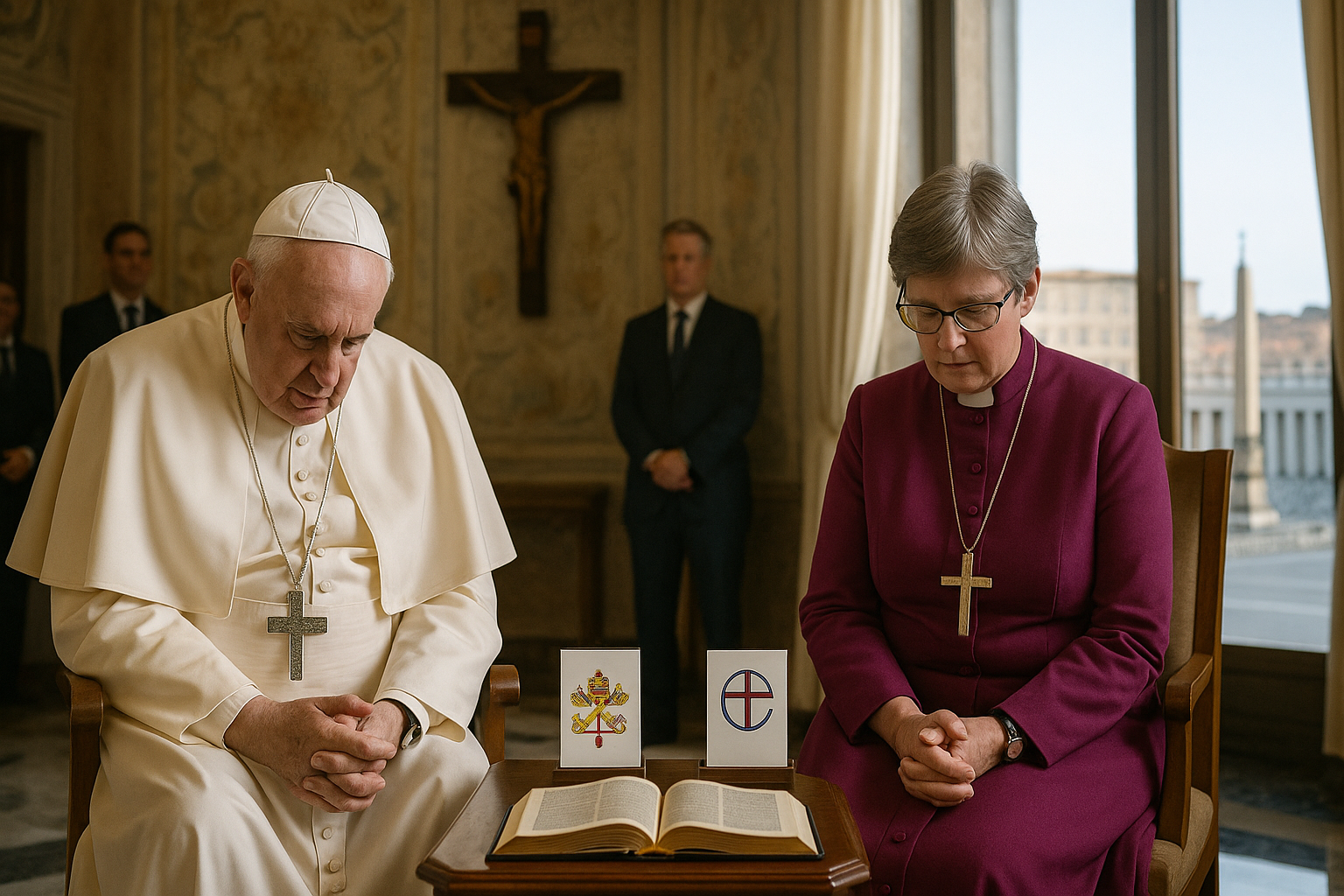
The meeting on Monday was rich with symbolic and substantive importance. Archbishop Mullally was welcomed to the Apostolic Palace with the full honours befitting her position. The two leaders then proceeded to the Redemptoris Mater Chapel, where they prayed together—a powerful visual representation of their shared faith and common purpose. According to a Vatican News report, the atmosphere was one of \"profound fraternity.\" Following the prayer, the Pope and the Archbishop held private talks lasting nearly an hour. While the specific details of their conversation remain confidential, sources indicate they discussed the major theological issues that still divide the churches, as well as areas for practical collaboration. In his public remarks, Pope Leo XIV, himself a figure who has broken with tradition as the first pontiff from the Americas, vowed to \"continue on the path to overcoming our differences.\" This was not merely a courtesy call; it was a substantive engagement aimed at charting a course for the future of Catholic-Anglican relations.
Why It Matters
This meeting is more than a diplomatic nicety; it represents a pivotal moment in the quest for Christian unity. The personal chemistry and shared commitment of these two leaders—both of whom are historic firsts in their own right—could provide new momentum to a process that can often feel slow and arduous. In a world increasingly fractured by political and social division, such a powerful symbol of religious reconciliation resonates far beyond the walls of the Vatican. It sends a message that dialogue and a search for common ground are possible even where divisions are deep and long-standing. As reported by The Washington Times, the focus on shared prayer and future cooperation highlights a practical, bottom-up approach to unity, focusing on what unites the two faiths rather than what divides them. This could inspire greater collaboration at local and international levels on pressing global challenges, such as poverty, climate change, and human rights, where a united Christian voice can be particularly influential.
Local Impact
For the United Kingdom and Ireland, this meeting carries particular weight. In the UK, where the Archbishop of Canterbury is the spiritual head of the established Church of England, the relationship with the nation's significant Catholic minority is a matter of ongoing social and cultural importance. This public display of warmth and cooperation at the highest level can only serve to strengthen inter-church relations on the ground, encouraging joint initiatives in parishes and dioceses across the country. In Ireland, where the legacy of sectarian division is still keenly felt, any move that brings the leadership of the Catholic and Anglican traditions closer is a welcome sign of healing and reconciliation. The image of the Pope and the Archbishop praying together offers a powerful counter-narrative to the historical conflicts that have so often been framed in religious terms. It reinforces the message of peace and shared heritage that has been central to the Irish peace process and the ongoing work of building a more inclusive society.
What's Next
While this single meeting will not erase 500 years of division, it sets a hopeful and constructive tone for the future. The immediate next steps will likely involve follow-up discussions between the Vatican's Dicastery for Promoting Christian Unity and its counterpart at Lambeth Palace. We can anticipate the establishment of new joint commissions to explore specific areas of theological difference or, perhaps more likely in the short term, to coordinate joint action on social justice issues. Pope Leo's public commitment to continuing the dialogue suggests that this will not be a one-off event. Future reciprocal visits, with the Pope potentially travelling to Canterbury, could be on the horizon. The road to full, visible unity remains long and challenging, with significant doctrinal hurdles yet to be overcome. However, this historic meeting at the Vatican has opened a new chapter, replacing centuries of estrangement with a renewed sense of shared purpose and the tangible possibility of a common future.