PSNI Failed Victim in Creswell Indecent Exposure Case, Ombudsman Finds — Failures Preceded Katie Simpson's Murder
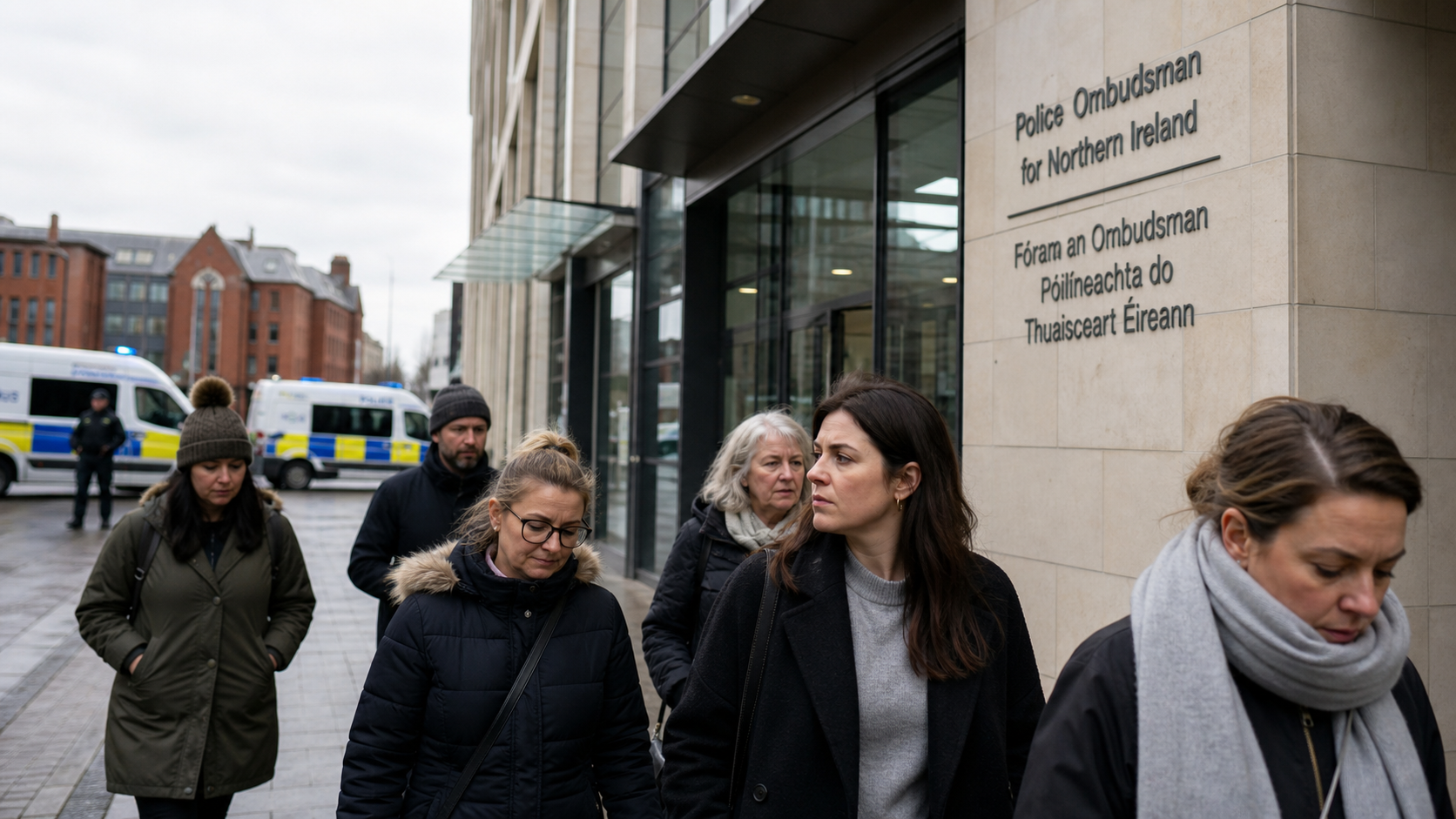
The Police Ombudsman for Northern Ireland has concluded that the PSNI's investigation into a 2015 indecent exposure allegation against Jonathan Creswell was "inadequate" and failed the complainant "both as a woman and as a victim" — a finding that adds a further layer of institutional failure to one of the most disturbing cases in recent Northern Ireland criminal history, and which has prompted renewed calls for systemic reform within the force.
Background
Jonathan Creswell was the partner of Katie Simpson's sister. In August 2020, 21-year-old showjumper Katie Simpson died at Altnagelvin Area Hospital following an incident at Gortnessy Meadows in Derry. The PSNI initially treated her death as a suicide — a narrative constructed by Creswell that police accepted without sufficient challenge. Creswell was subsequently charged with her murder, but died by suicide on the second day of his trial in April 2024. In the aftermath of his death, 37 other potential victims, including children, came forward.
An independent review published in May 2026, conducted by Dr Jan Melia, concluded that the PSNI investigation into Simpson's death was a "profound failure" characterised by systemic misogyny, complacency, and weak leadership. The review found that officers ignored clear warning signs, failed to consider coercive control, and disregarded Simpson's lived experience. Chief Constable Jon Boutcher subsequently issued a public apology to the Simpson family and pledged a zero-tolerance approach to misogyny within the force.
The Police Ombudsman's report published on Tuesday concerns a separate but related matter: a 2016 complaint regarding an incident of indecent exposure allegedly committed by Creswell in 2015. The investigation into that complaint, the Ombudsman has now found, was characterised by failures that mirror those identified in the murder investigation — and which, had they been handled properly, might have established a clearer picture of Creswell's pattern of behaviour before Simpson's death.
Key Developments
The Ombudsman's report identifies a series of specific failures in the PSNI's handling of the 2015 indecent exposure complaint. Officers failed to take statements from multiple witnesses, including a potential eyewitness to the incident. They did not listen to a threatening voicemail message sent by Creswell to the complainant. The file submitted to the Public Prosecution Service inaccurately stated that Creswell was known only for motoring offences — a significant omission, given that he had a prior conviction for violent assault against a woman. Officers also made inadequate efforts to locate and interview Creswell, despite evidence suggesting he was residing in County Donegal at the time.
The Ombudsman concluded that the investigation failed the complainant "both as a woman and as a victim" — language that echoes the findings of the Melia review and suggests a pattern of institutional failure rather than isolated individual error. The PSNI has declined to follow the Ombudsman's recommendation to discipline the officers involved, opting instead for measures described as being designed to "improve the officers' conduct."
The decision not to pursue disciplinary action has drawn criticism from victims' advocates and legal commentators, who argue that it sends the wrong signal about accountability within the force at a time when public confidence in the PSNI's treatment of women is already severely damaged.
Why It Matters
The significance of this report extends well beyond the specific failures it documents. Taken together with the Melia review, it presents a picture of a police service that, on multiple occasions and across multiple investigations, failed to take seriously the threat posed by a man who would go on to murder a young woman. Each failure — the inadequate indecent exposure investigation, the unchallenged suicide narrative, the failure to consider coercive control — represents a point at which a different decision might have changed the outcome. That is not to say that better policing would certainly have saved Katie Simpson's life. But it is to say that the PSNI's repeated failures to treat women's complaints with the seriousness they deserved created conditions in which Creswell was able to operate without meaningful scrutiny. The PSNI's decision not to discipline the officers involved in the 2015 investigation will be seen by many as a failure to take that lesson seriously.
Local Impact
The report will be felt most acutely in Derry, where Katie Simpson lived and where the indecent exposure incident occurred. The city's communities have followed the Creswell case with a mixture of grief, anger, and a determination that the failures it exposed should not be repeated. Women's organisations across Northern Ireland — including Women's Aid, Nexus, and the Rainbow Project — have called for the PSNI to implement the Ombudsman's recommendations in full and to demonstrate through concrete action that the cultural change promised by Chief Constable Boutcher is being delivered. The Policing Board is expected to raise the matter at its next meeting, and the Justice Committee at Stormont has indicated it will seek a briefing from the Ombudsman on the findings.
What's Next
The PSNI has been given a period of time to respond formally to the Ombudsman's report. Chief Constable Boutcher is expected to address the findings publicly in the coming days. The Policing Board will scrutinise the force's response at its next scheduled meeting. Separately, the Department of Justice is continuing its review of the legislative framework governing the Police Ombudsman's powers, including the question of whether the Ombudsman should have greater authority to compel disciplinary action in cases where its recommendations are not followed.