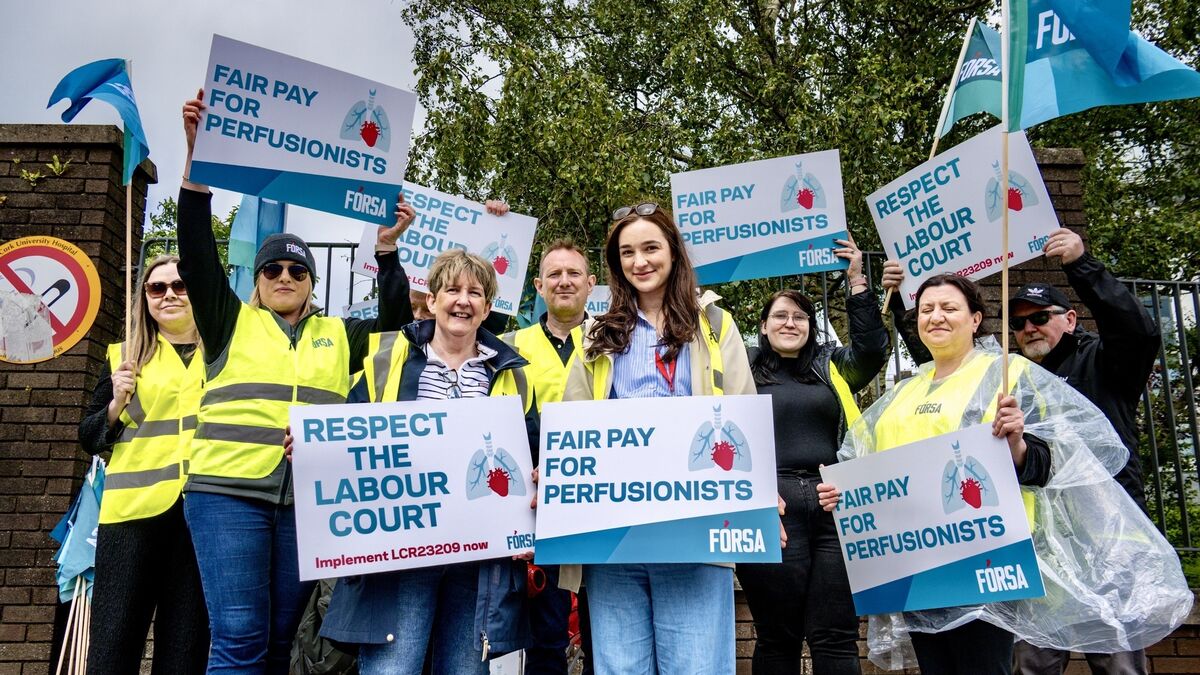
Perfusionists Strike Halts 14 Open-Heart Surgeries as HSE Ignores Labour Court Pay Ruling
At least 14 open-heart surgeries have been cancelled across Irish hospitals following a strike by the country's 25 perfusionists — the highly specialised technicians who operate the heart-lung bypass machines that keep patients alive during cardiac surgical procedures. The dispute centres on the HSE's failure to implement a Labour Court pay recommendation issued in January 2026, and it has exposed a critical and previously little-known vulnerability at the heart of Ireland's cardiac surgery system.
Background
Perfusionists are among the most specialised healthcare professionals in the Irish system. Their role — operating the cardiopulmonary bypass machine that takes over the function of the heart and lungs during open-heart surgery — is one of the most technically demanding in medicine, requiring years of training and a level of precision and concentration that few other healthcare roles can match. Without a perfusionist, open-heart surgery cannot take place.
Ireland has just 25 qualified perfusionists, all of whom are employed by the HSE. This extraordinarily small workforce — smaller than the number of consultants in many individual hospital departments — means that the cardiac surgery system has virtually no redundancy. If even a small number of perfusionists are unavailable, the impact on surgical capacity is immediate and severe.
The pay dispute that has led to the current strike has been building for years. Perfusionists have argued that their pay does not reflect the complexity and responsibility of their role, and that they are significantly underpaid relative to comparable specialists in other countries and in other parts of the Irish health system. The Labour Court, which adjudicates on pay disputes in the public sector, issued a recommendation in January 2026 that the HSE should implement a pay increase for perfusionists. The HSE has not done so, citing budgetary constraints — a decision that the perfusionists' union has described as "a deliberate and cynical disregard for the Labour Court process."
Key Developments
The Journal.ie reported on Saturday that the strike, which began this week, has already resulted in the cancellation of at least 14 open-heart surgeries across the hospitals where perfusionists are employed. The affected hospitals include the Mater, St Vincent's, and the Blackrock Clinic in Dublin, as well as Cork University Hospital and University Hospital Galway. Patients who had been waiting for surgery — some for months — have been informed that their procedures have been postponed indefinitely.
The HSE issued a statement expressing regret at the disruption to patients and calling on the perfusionists to return to work while negotiations continue. The statement did not address the specific question of why the Labour Court recommendation had not been implemented, and it did not offer any new proposals to resolve the dispute. The perfusionists' union responded by accusing the HSE of "bad faith" and indicating that the strike would continue until the Labour Court recommendation was implemented in full.
The Department of Health has been briefed on the situation and is understood to be monitoring it closely. Minister for Health Jennifer Carroll MacNeill has not yet made a public statement on the dispute, but her department is in contact with both the HSE and the union in an attempt to find a resolution.
Why It Matters
The perfusionists' strike matters for several reasons, each of which reveals something important about the state of Ireland's health system. Most immediately, it matters because 14 people who needed open-heart surgery have had their procedures cancelled. For some of these patients, the delay will be a source of anxiety and discomfort; for others, depending on the urgency of their condition, it could have more serious consequences. The human cost of the dispute is real and immediate.
But the strike also matters because of what it reveals about the HSE's approach to industrial relations and to the Labour Court process. The Labour Court is the cornerstone of Ireland's system for resolving pay disputes in the public sector. When the HSE ignores a Labour Court recommendation — as it has done in this case — it undermines the entire system and sends a signal to other groups of workers that the process is not worth engaging with. This is a dangerous precedent, particularly in a health system that is already struggling to recruit and retain staff.
The extraordinary smallness of the perfusionist workforce is also significant. The fact that 25 people can bring the entire cardiac surgery system to a halt is a reflection of a workforce planning failure that has been building for years. The HSE has known for a long time that the perfusionist workforce is dangerously small, and it has not done enough to address the problem through training, recruitment, or retention measures.
Local Impact
The impact of the strike is being felt most acutely by the patients whose surgeries have been cancelled and by the cardiac surgical teams who are unable to operate without perfusionist support. In Dublin, the Mater Hospital — which is one of the country's main cardiac surgery centres — has been particularly affected, with several of its surgical lists cancelled for the duration of the strike. In Cork, University Hospital Galway, and other affected centres, the situation is similar. The hospitals are working to identify which patients are most urgently in need of surgery and to prioritise their care, but the options are limited while the strike continues.
What's Next
The immediate priority is to resolve the dispute and restore cardiac surgical services as quickly as possible. The Department of Health is expected to intervene more directly in the coming days if the HSE and the union cannot reach an agreement. The most likely resolution is the implementation of the Labour Court recommendation, possibly with some modifications to address the HSE's budgetary concerns. If the dispute is not resolved quickly, there is a risk that some patients will need to be transferred to hospitals in the United Kingdom for surgery — a costly and disruptive outcome that all parties will want to avoid. A further round of talks is expected early next week, with both sides under significant pressure to reach a resolution.