PeacePlus Changemaker Programme Funds Over €800,000 in New Cross-Community Initiatives Across Northern Ireland
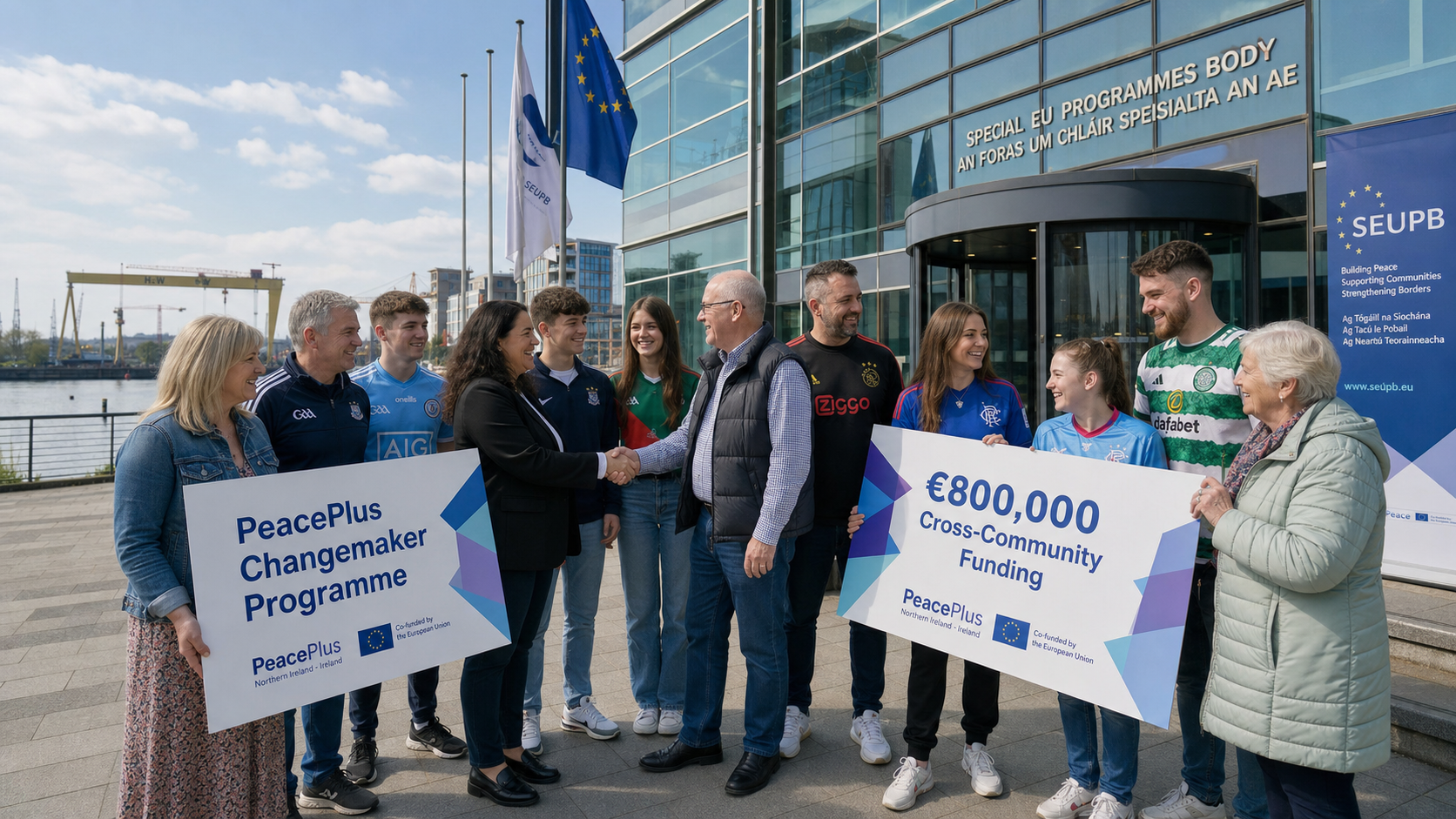
The Special EU Programmes Body (SEUPB) has announced over €800,000 in new funding for a series of grassroots cross-community initiatives under the PeacePlus Changemaker Programme, supporting projects that bring together people from different backgrounds — including refugees, asylum seekers, and residents from loyalist and republican communities — in a significant boost for community relations across Northern Ireland.
Background
The PeacePlus programme is the successor to the long-running PEACE programmes that have channelled European Union funding into cross-community and cross-border reconciliation work in Northern Ireland and the border counties of Ireland since 1995. Over three decades, these programmes have invested more than €3 billion in thousands of projects aimed at building a more peaceful and cohesive society in the aftermath of the Troubles. PeacePlus, which runs from 2021 to 2027 with a total budget of €1.1 billion, represents the continuation of this commitment even as the United Kingdom has left the European Union — a testament to the enduring political will on all sides to sustain the peace process.
The Changemaker strand of PeacePlus is specifically designed to support innovative, community-led projects that address the root causes of division and build new relationships across traditional boundaries. Unlike larger infrastructure or economic development projects, Changemaker grants are targeted at grassroots organisations with the capacity to reach people who might not otherwise engage with formal reconciliation processes. The strand has a particular focus on emerging challenges to community cohesion, including the integration of new communities and the management of social tensions arising from demographic change.
The announcement comes at a particularly sensitive moment for community relations in Northern Ireland. Recent months have seen outbreaks of anti-immigrant unrest in several areas, placing additional pressure on community organisations working to foster understanding and dialogue. The SEUPB's decision to prioritise projects that specifically address intercultural relations reflects an awareness of these contemporary pressures.
Key Developments
Among the projects receiving funding is 'Neighbours and Newcomers,' an initiative led by the Horn of Africa Peoples Aid Northern Ireland in partnership with the 174 Trust. The project will bring together refugees and asylum seekers with residents from loyalist and republican backgrounds for a programme of interfaith events, shared activities, and structured dialogue. The 174 Trust, based in North Belfast, has a long track record of cross-community work in one of the city's most divided areas, and its involvement lends the project significant credibility and reach.
A second major initiative, 'Women Around the Table,' will create a platform for women from diverse ethnic and political communities to engage in wellbeing programmes and community-building activities. The project aims to develop women's leadership capacity and foster personal relationships across community boundaries, recognising that women often play a disproportionately important role in sustaining community networks and transmitting values of tolerance and cooperation to younger generations.
Other funded projects address youth leadership, environmental sustainability as a shared concern, and the development of new cultural exchange programmes between communities in Belfast and border areas. SEUPB chief executive Gina McIntyre described the funded projects as representing 'the very best of what communities across Northern Ireland can achieve when they work together.'
Why It Matters
The PeacePlus Changemaker funding matters for reasons that extend well beyond the immediate projects it supports. It represents a sustained institutional commitment to the proposition that peace in Northern Ireland is not a fixed achievement but an ongoing process requiring active investment and renewal. This is a lesson that the history of the peace process has taught repeatedly — that the absence of violence is not the same as the presence of reconciliation, and that the social fabric of a divided society requires constant, patient repair. The focus on new communities and intercultural dialogue is particularly significant. Northern Ireland's demographic landscape has changed dramatically in recent decades, with significant immigration from Eastern Europe, Africa, and Asia creating new social dynamics that existing community relations frameworks were not designed to address. Projects like 'Neighbours and Newcomers' are pioneering new approaches to an evolving challenge.
Local Impact
The funded projects will operate primarily in Belfast, with additional activity in border areas and rural communities across Northern Ireland. In North Belfast — historically one of the most divided parts of the city, with interface areas between loyalist and nationalist communities in Ardoyne, Tiger's Bay, and the New Lodge — the 174 Trust's involvement in 'Neighbours and Newcomers' will bring cross-community work to streets where it is most needed. The 'Women Around the Table' initiative will operate across multiple Belfast communities, with sessions planned in community centres in East, West, and South Belfast. For the refugee and asylum seeker communities involved, participation in these projects offers not only social connection but practical support in navigating life in a new country. For long-established residents, the projects offer an opportunity to engage with new neighbours in structured, supported settings that reduce the anxiety and misunderstanding that can fuel tension.
What's Next
The funded projects will begin their activities in the coming months, with most programmes running for between 18 months and two years. The SEUPB will monitor progress and publish interim reports on outcomes, with a full evaluation of the Changemaker strand planned for 2027. The broader PeacePlus programme will continue to accept applications for funding across its various strands until 2026, with final project completions expected by the end of 2027. Community organisations across Northern Ireland and the border counties are encouraged to explore funding opportunities through the SEUPB's website and regional offices.