Parades Commission to Face Independent Review as UK Government Acts on Drumcree Clashes and Stormont Pressure
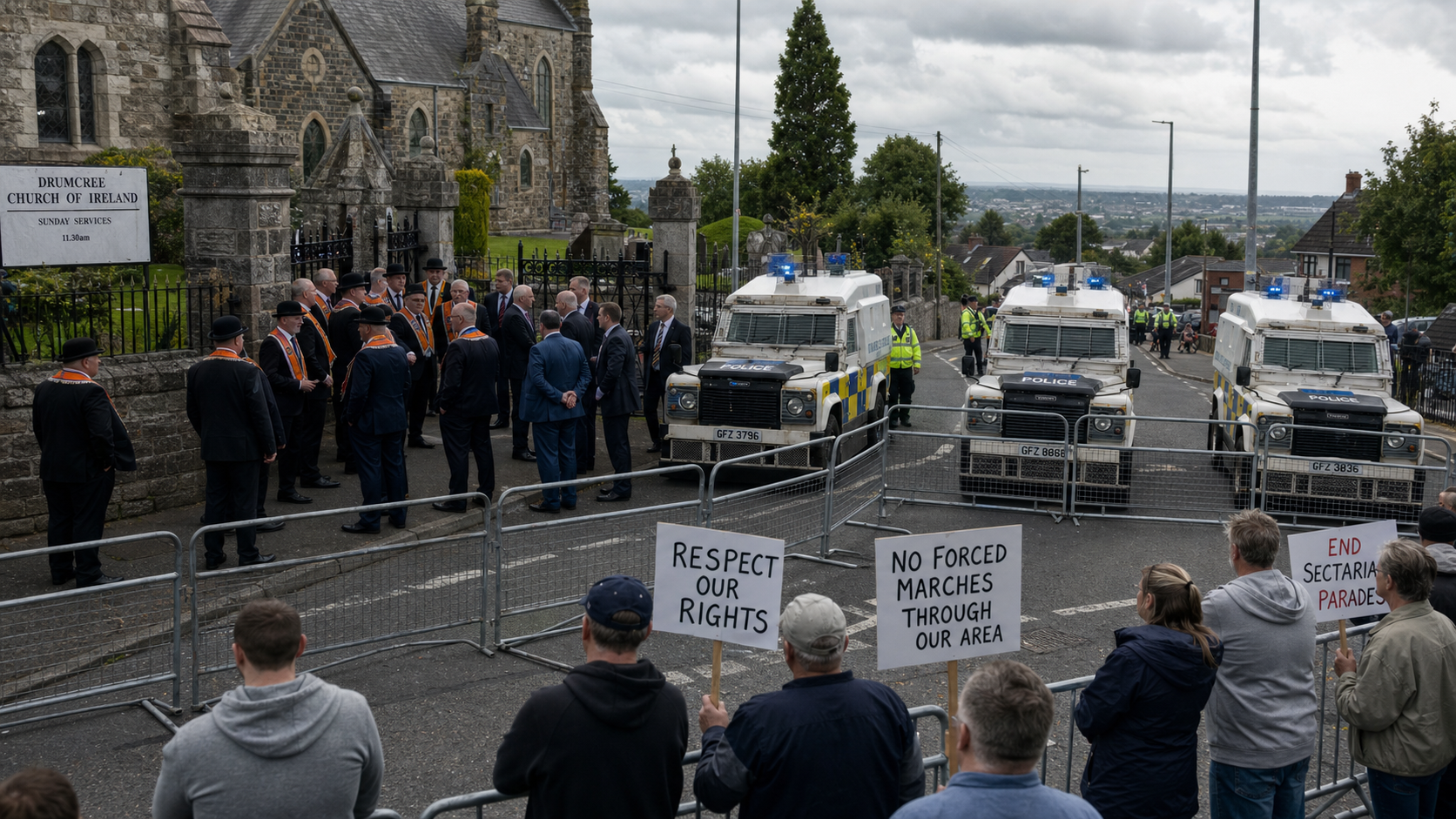
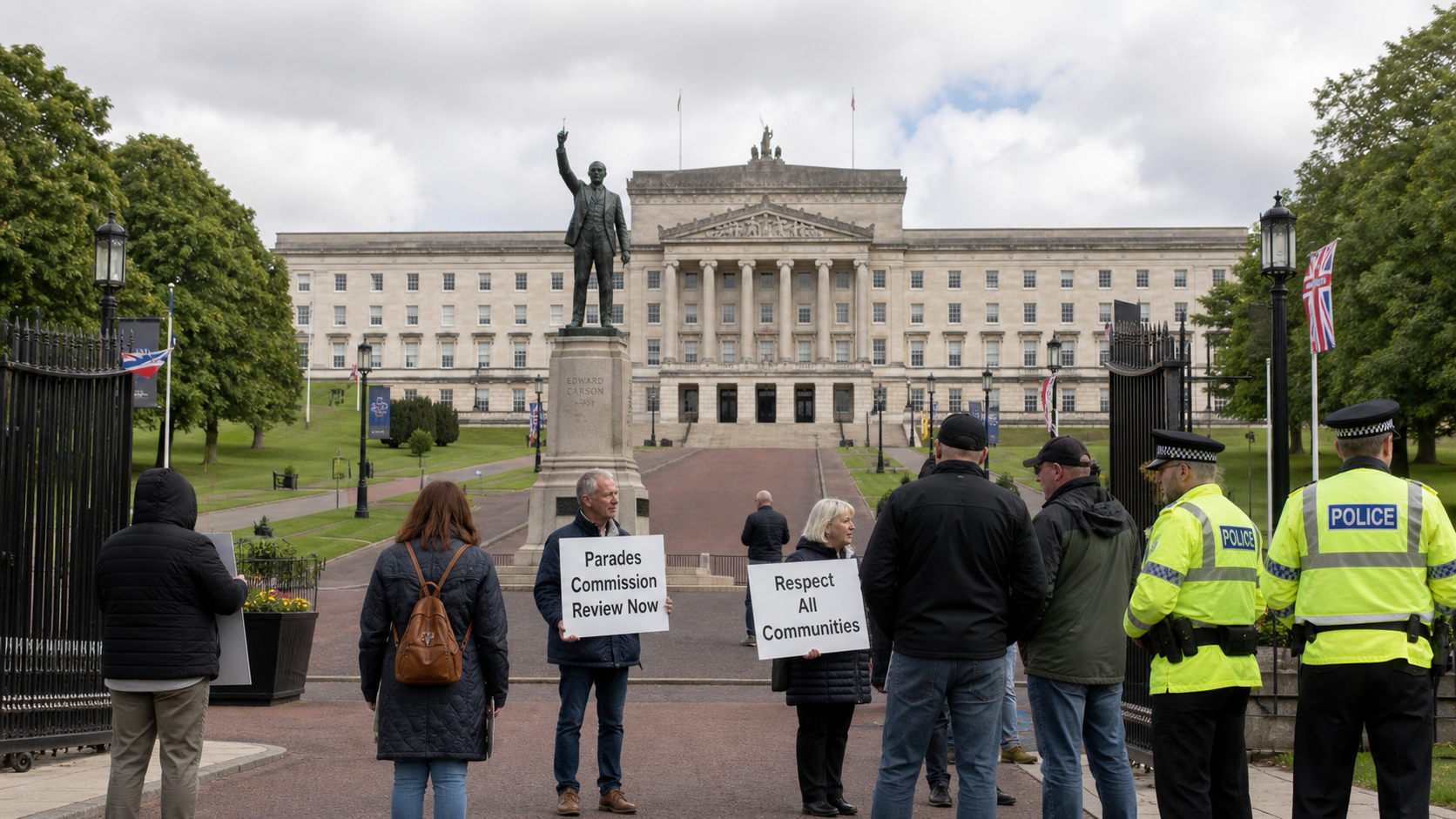
The UK government has ordered an independent review of the Parades Commission for Northern Ireland following renewed controversy over the handling of the Drumcree parade dispute, which generated heated exchanges at Stormont and prompted calls from across the political spectrum for a fundamental reassessment of how contentious parades are managed across the six counties — one of the most persistently sensitive issues in Northern Ireland's community relations landscape.
Background
The Parades Commission was established under the Public Processions (Northern Ireland) Act 1998 as an independent body with the power to impose conditions on, or prohibit, contentious parades. Its creation was a direct response to the Drumcree crisis of the mid-1990s, when disputes over the routing of Orange Order parades through the Garvaghy Road in Portadown generated some of the most serious public disorder seen in Northern Ireland since the height of the Troubles. The Commission was intended to provide a neutral, evidence-based mechanism for resolving parade disputes that had previously been managed — or mismanaged — by the police and the courts.
In the nearly three decades since its establishment, the Commission has handled thousands of parade notifications and issued hundreds of determinations, many of them uncontroversial. But the most sensitive disputes — particularly those involving the Orange Order in Portadown, Ardoyne in north Belfast, and parts of Derry/Londonderry — have continued to generate controversy, with both loyalist and nationalist communities at various times accusing the Commission of bias, inconsistency, or inadequate engagement with affected residents.
The Drumcree dispute, which centres on the Orange Order's desire to march along the Garvaghy Road through a predominantly nationalist area of Portadown, has never been fully resolved. Periodic flare-ups have continued to test the Commission's capacity to manage a dispute in which the underlying community relations issues remain unaddressed.
Key Developments
The independent review ordered by the UK government will examine the Commission's powers, processes, and effectiveness in managing contentious parades. It will also consider whether the legislative framework within which the Commission operates — the 1998 Act — remains fit for purpose in the context of a Northern Ireland that has changed significantly since the Good Friday Agreement. The review is expected to take several months and will involve consultation with parade organisers, residents' groups, the police, and community relations organisations.
The decision to order the review follows clashes at Stormont over the Commission's handling of recent determinations, with unionist parties arguing that the Commission has been too restrictive in its approach to loyalist parades and nationalist parties arguing that it has not done enough to protect residents from intimidation. Northern Ireland Secretary Chris Bryant has indicated that the review will be genuinely independent and that its findings will be taken seriously, though he has stopped short of committing to specific legislative changes in advance of the review's conclusions.
Why It Matters
The Parades Commission review matters because parades remain one of the most visible and emotionally charged expressions of identity in Northern Ireland. For the Orange Order and other loyalist organisations, the right to march along traditional routes is a fundamental expression of cultural and religious identity. For nationalist and republican communities in areas through which contentious parades pass, those same marches can feel like an assertion of dominance over shared public space. The Commission sits at the intersection of these competing claims, and its legitimacy depends on being seen as fair by both communities — a standard that is extraordinarily difficult to meet.
The review also comes at a moment when community relations in Northern Ireland are under broader pressure. The Ballymena riots of June 2025, in which loyalist mobs attacked ethnic minority homes and businesses, demonstrated that the potential for serious disorder remains real. The budget crisis at Stormont has reduced the resources available for community relations work. And the approach of the 2027 Assembly election is sharpening political tensions across the board.
Local Impact
The review will have particular significance for communities in Portadown, where the Drumcree dispute has cast a shadow over community relations for three decades. The Garvaghy Road Residents Coalition and the Orange Order in Portadown are both expected to make submissions to the review. In north Belfast, where parades through the Ardoyne area have generated repeated controversy, residents' groups and the loyal orders will similarly engage with the process. The PSNI, which bears the operational burden of policing contentious parades, will also be a key stakeholder in the review.
What's Next
The terms of reference for the independent review are expected to be published in the coming weeks, along with the appointment of a chair. The review is likely to run through the autumn and winter of 2026, with a report expected in early 2027. Any legislative changes arising from the review would need to be taken through Westminster, as parades legislation is a reserved matter, adding a further layer of complexity to the process.