Parades Commission Deliberates on Drumcree as Orange Order Seeks Scaled-Back Garvaghy Road March
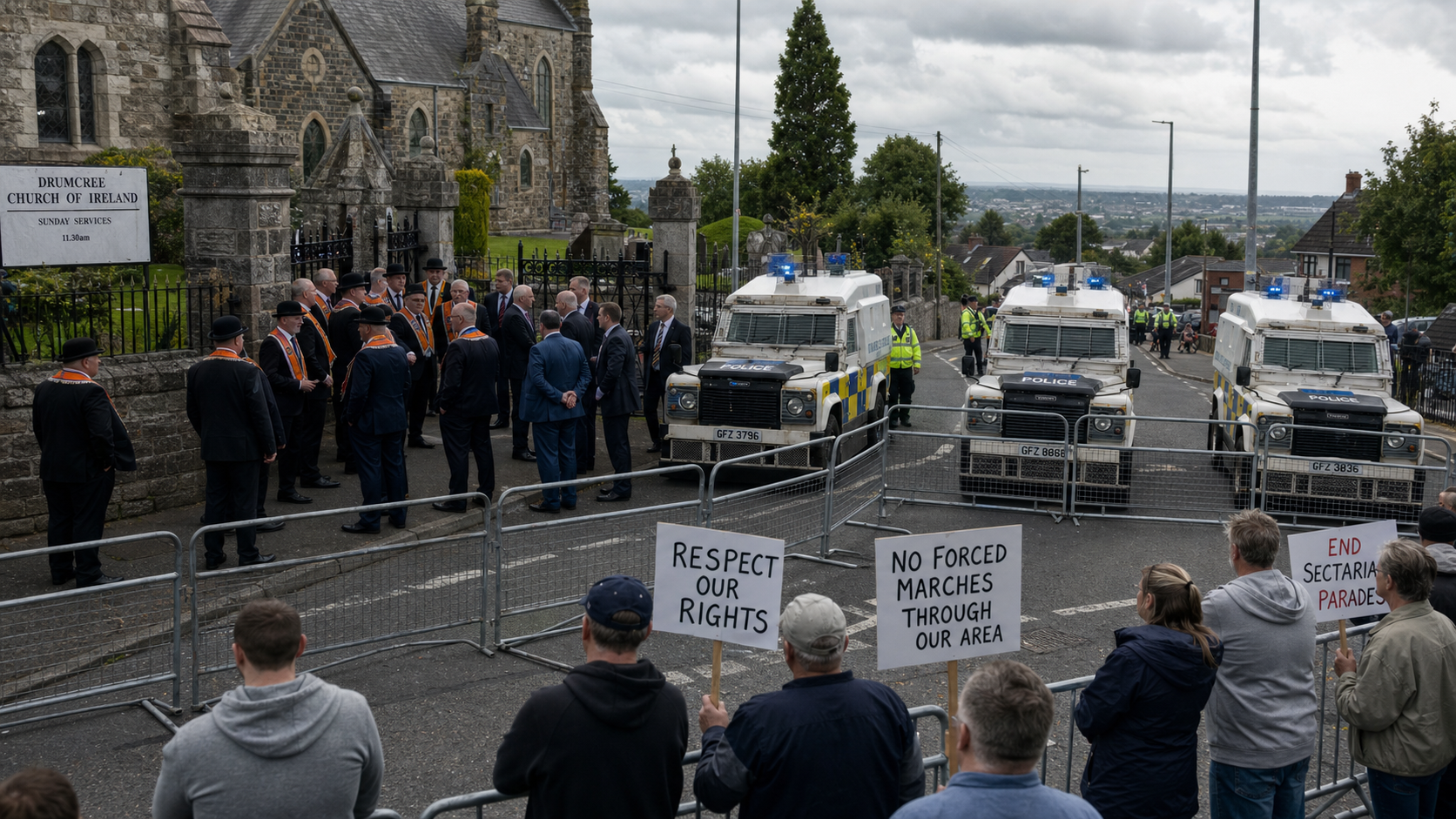
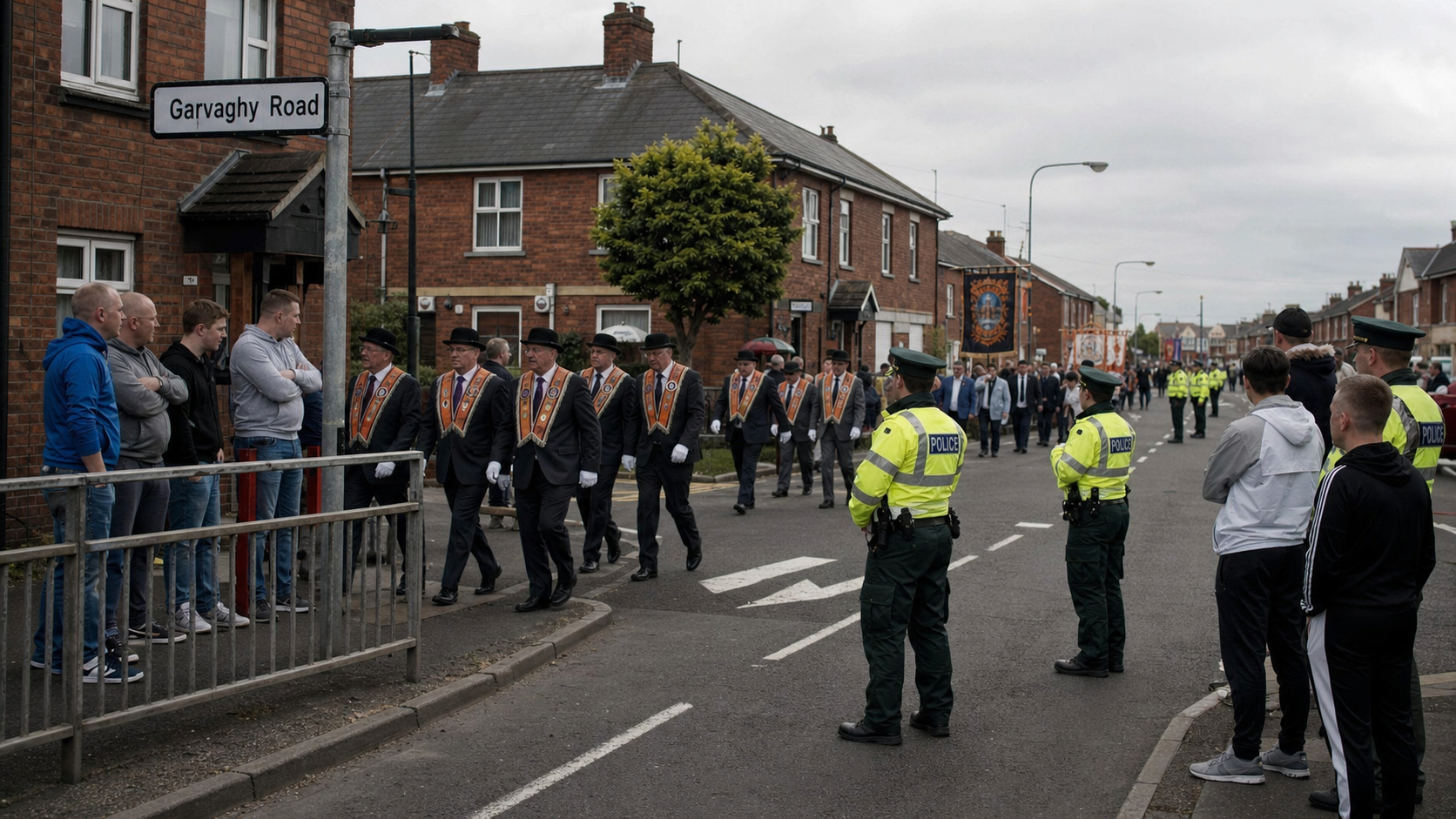
The Parades Commission is deliberating on whether to permit a scaled-back Orange Order march along the Garvaghy Road in Portadown on Sunday, September 27, in what is shaping up to be one of the most scrutinised parade determinations in decades. The Portadown District Orange Lodge has applied for 60 members to march in silence — a significant reduction from the traditional application of 400 participants and two bands — following a High Court ruling that quashed a previous commission determination on procedural grounds. The Garvaghy Road Residents Coalition has rejected the appointed mediator and called for international mediation, while political parties including the SDLP and Alliance have warned of the potential for renewed community tension.
Background
The Drumcree dispute is one of the most enduring and painful conflicts in Northern Ireland's recent history. The annual Orange Order parade from Drumcree Church to Portadown town centre via the Garvaghy Road — a predominantly nationalist residential area — was the flashpoint for some of the most serious public disorder of the post-ceasefire period, with the summers of 1995, 1996, 1997, and 1998 all marked by violence, road blockades, and community polarisation that threatened to derail the peace process itself. The Parades Commission's decision to restrict the parade in 1998 effectively ended the annual confrontation, but the underlying dispute has never been resolved through dialogue.
The current situation has been triggered by a High Court ruling that quashed a previous Parades Commission determination on the grounds that not all six commissioners had signed off on the decision — a procedural error that the court found to be legally significant. The ruling prompted an independent review of the commission, led by Sir John O'Hara KC, which is expected to conclude by the end of November 2026. In the meantime, the Portadown District Orange Lodge submitted a new, scaled-back application for a parade on September 27, arguing that the legal landscape had changed and that the commission was obliged to consider the application afresh.
The commission began its deliberations on Wednesday, September 23, following a series of consultations with the Portadown District Orange Lodge, the Garvaghy Road Residents Coalition, and other interested parties. A formal written determination was expected within 24 to 48 hours of those consultations, meaning a decision could come at any point on September 25 or 26.
Key Developments
The Portadown District Master, Nigel Dawson, has stated that the Order is willing to engage in mediation with anyone at any time, emphasising that the lodge views the matter as a legal issue regarding its rights to march on a public road. The scaled-back application — 60 members, marching in silence, with no bands — is presented by the Order as a gesture of goodwill, though residents' groups have questioned whether the reduction in numbers changes the fundamental nature of the dispute.
The Garvaghy Road Residents Coalition has rejected the mediator appointed by the commission, calling instead for the appointment of an international mediator to resolve what it describes as a long-standing dispute that could take months to address properly. The coalition has argued that any parade on the Garvaghy Road, regardless of its scale, would be experienced by residents as an assertion of dominance over a nationalist community that has consistently opposed the march.
Unionist leaders have indicated that if the commission applies the law correctly, Orangemen intend to walk the route. Nationalist residents have expressed their intent to mobilise if the parade is approved. The SDLP and Alliance Party have both voiced concerns about the potential for renewed social tension, with Alliance warning that the dispute risks disrupting community relations that have improved significantly over the past 28 years.
Why It Matters
The Drumcree dispute matters in 2026 not because it is likely to produce the kind of violence seen in the 1990s — the security environment and the political context are fundamentally different — but because it tests the capacity of Northern Ireland's institutions to manage contested identity in a way that respects the rights and dignity of all communities. The Parades Commission was established precisely to provide a structured, impartial mechanism for resolving disputes of this kind, and the High Court ruling that triggered the current situation has raised questions about the commission's procedures and its authority.
The independent review led by Sir John O'Hara KC will be crucial in determining whether the commission's framework needs to be reformed. If the review concludes that the procedural error that led to the quashing of the previous determination reflects a systemic weakness, there will be pressure on the government to legislate for changes. More broadly, the Drumcree dispute is a reminder that the peace process has resolved many of the most acute conflicts of the Troubles era without resolving the underlying questions of identity, belonging, and contested public space that gave rise to those conflicts in the first place.
Local Impact
In Portadown, the prospect of a parade determination has generated significant anxiety in both the Garvaghy Road area and the wider unionist community. Local businesses in the town centre have expressed concern about the potential for disruption, and the PSNI has been in contact with community representatives on both sides to assess the security implications of different outcomes. The Parades Commission's determination, when it comes, will be binding, and any breach of its conditions would be a criminal offence. The commission has the power to impose conditions on the route, timing, and conduct of any parade it permits, and it is expected that any determination permitting the march would include stringent conditions designed to minimise the risk of confrontation.
What's Next
The Parades Commission's written determination is expected before the end of September 25 or on September 26, giving both sides time to prepare for Sunday's potential march. If the commission permits the parade, the Garvaghy Road Residents Coalition has indicated it will consider its legal options. If the commission restricts or bans the parade, the Orange Order has indicated it will consider a further legal challenge. The independent review of the commission, led by Sir John O'Hara KC, is expected to report by the end of November 2026, and its findings will inform any legislative changes to the parades framework. Taoiseach Micheál Martin has indicated he is keeping a request to meet Garvaghy Road residents under review.