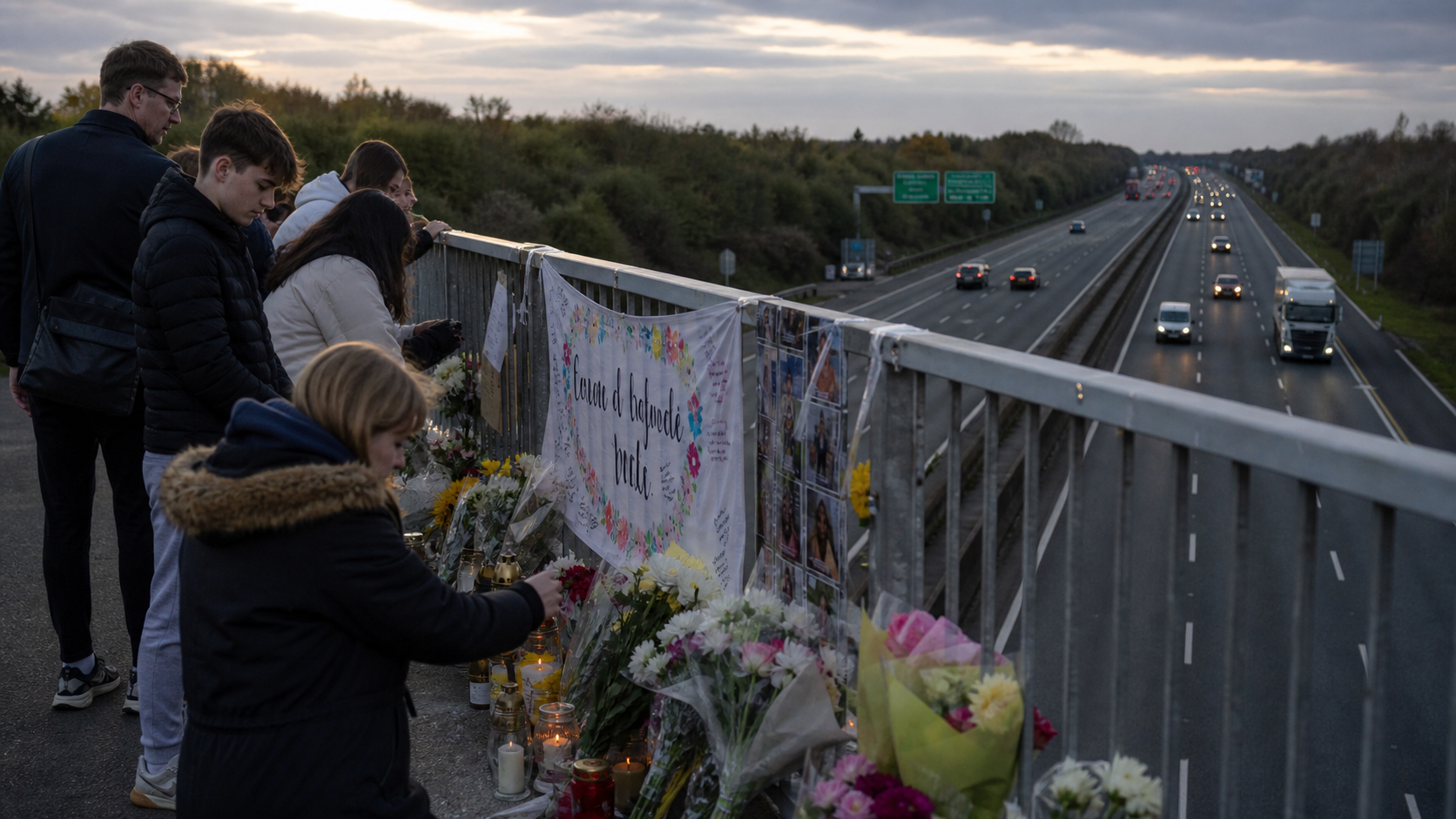
Over €100,000 Raised for Sisters Critically Injured in M9 Motorway Crash as Ireland Rallies Around Bereaved Families
More than €100,000 has been raised in a matter of days for two sisters who sustained serious injuries in the M9 motorway crash that killed five teenagers last week, with communities across Ireland responding to the tragedy with an extraordinary outpouring of generosity that has provided a rare moment of solidarity amid profound national grief.
Background
The M9 crash, which occurred in County Kildare last week when a car drove the wrong way along the motorway, claimed the lives of five young people and left four others injured, including two sisters who face a long and difficult road to recovery. The incident sent shockwaves through Ireland, prompting urgent debate about road safety, juvenile crime, and the responsibilities of social media platforms in amplifying dangerous behaviour.
The five teenagers who died were among the youngest victims of a road tragedy in Ireland in recent years. Their deaths prompted an outpouring of grief that extended far beyond their immediate communities, touching a nerve across the country about the fragility of young lives and the consequences of reckless driving. Funeral notices, tributes, and community vigils have been held across Kildare and neighbouring counties in the days since.
Against that backdrop of grief, the fundraising effort for the injured sisters emerged organically — not from any official organisation, but from individuals who wanted to do something tangible in the face of helplessness. The campaign spread rapidly across social media, with contributions arriving from across Ireland and from the diaspora in Britain, the United States, and Australia.
Key Developments
The fundraising total passed €100,000 within days of the campaign launching, a pace that organisers described as humbling and unexpected. The funds will go directly to supporting the sisters' medical care and rehabilitation, which is expected to be extensive. Both women face a prolonged recovery process, and the financial burden on their family — already devastated by the circumstances of the crash — would have been considerable without community support.
The Journal reported that the sisters face "a long and challenging road ahead," with medical teams at the treating hospital working to stabilise their conditions. The nature and extent of their injuries have not been disclosed publicly out of respect for the family's privacy.
Separately, the broader community response to the M9 tragedy has included the establishment of support services for those affected by grief and trauma. The HSE's National Counselling Service has made additional resources available in the Kildare area, and local schools have been provided with guidance on supporting students who knew the victims.
Why It Matters
Ireland's capacity for communal generosity in the face of tragedy is well documented — the country consistently ranks among the most charitable in Europe relative to its population, and the speed with which fundraising campaigns mobilise following major incidents reflects a deep-seated instinct toward collective care. The M9 fundraiser is a particularly striking example because it emerged without institutional backing, driven entirely by individual impulse.
There is something important in that spontaneity. It speaks to a society that, for all its fractures and frustrations, retains a fundamental orientation toward solidarity when it matters most. The €100,000 raised will not undo the tragedy, but it will ease a burden that the sisters' family should not have to carry alone.
The fundraiser also stands in contrast to some of the uglier responses to the crash — the social media posts glorifying the victims, the tribute pages that attracted angry backlash, the TikTok content that regulators are now investigating. Ireland's better instincts, it turns out, are louder than its worst ones.
Local Impact
In Kildare, where the crash occurred and where many of the victims' families are based, the fundraising effort has provided a focus for community grief. Local GAA clubs, schools, and parish organisations have shared the campaign widely, and several businesses in the county have made direct contributions. The response has been described by community leaders as a reminder of what holds communities together in the darkest moments.
For the sisters' family, the financial support removes one source of anxiety during an already overwhelming time. Medical rehabilitation in Ireland can be costly and protracted, and the certainty that resources are available will allow the family to focus entirely on recovery rather than logistics.
What's Next
The fundraising campaign remains open, with organisers indicating that all funds will be transferred directly to the family once the campaign closes. The sisters' medical teams are expected to provide an updated prognosis in the coming weeks. Meanwhile, the broader policy response to the M9 crash — including new legislation on wrong-way driving and the introduction of Garda pursuit training — continues to develop at government level.