Orange Order Seeks Drumcree Return as Parades Commission Faces Independent Review After High Court Finds 'Sloppy Procedures'
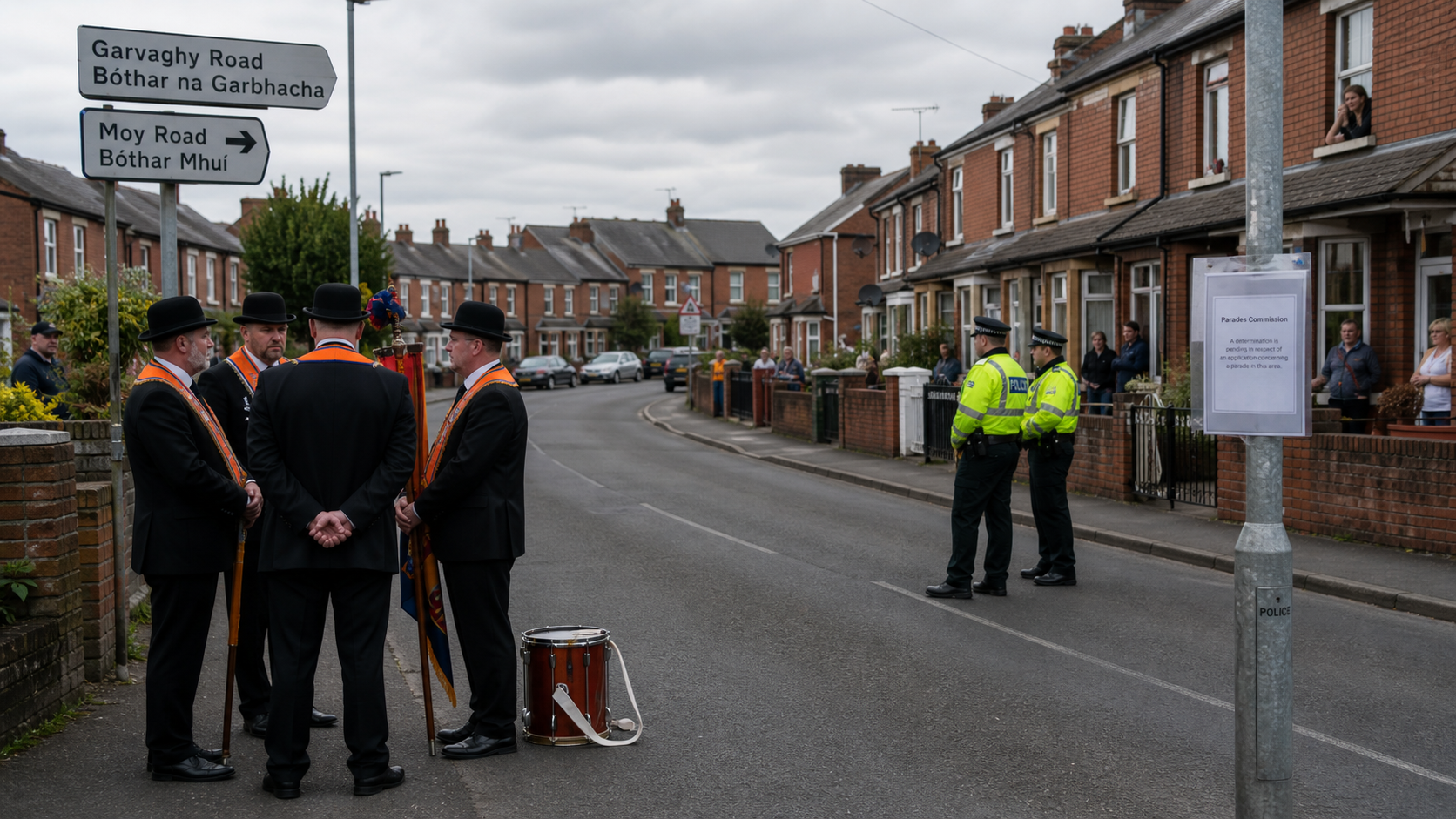
The Orange Order has lodged a new application for a scaled-back parade along the Garvaghy Road in Portadown, scheduled for 27 September 2026, after a High Court ruling quashed the Parades Commission's previous determination on procedural grounds — a development that has prompted the Northern Ireland Secretary to order an independent judge-led review of the Commission's decision-making processes and reignited one of the most contentious disputes in Northern Ireland's recent history.
Background
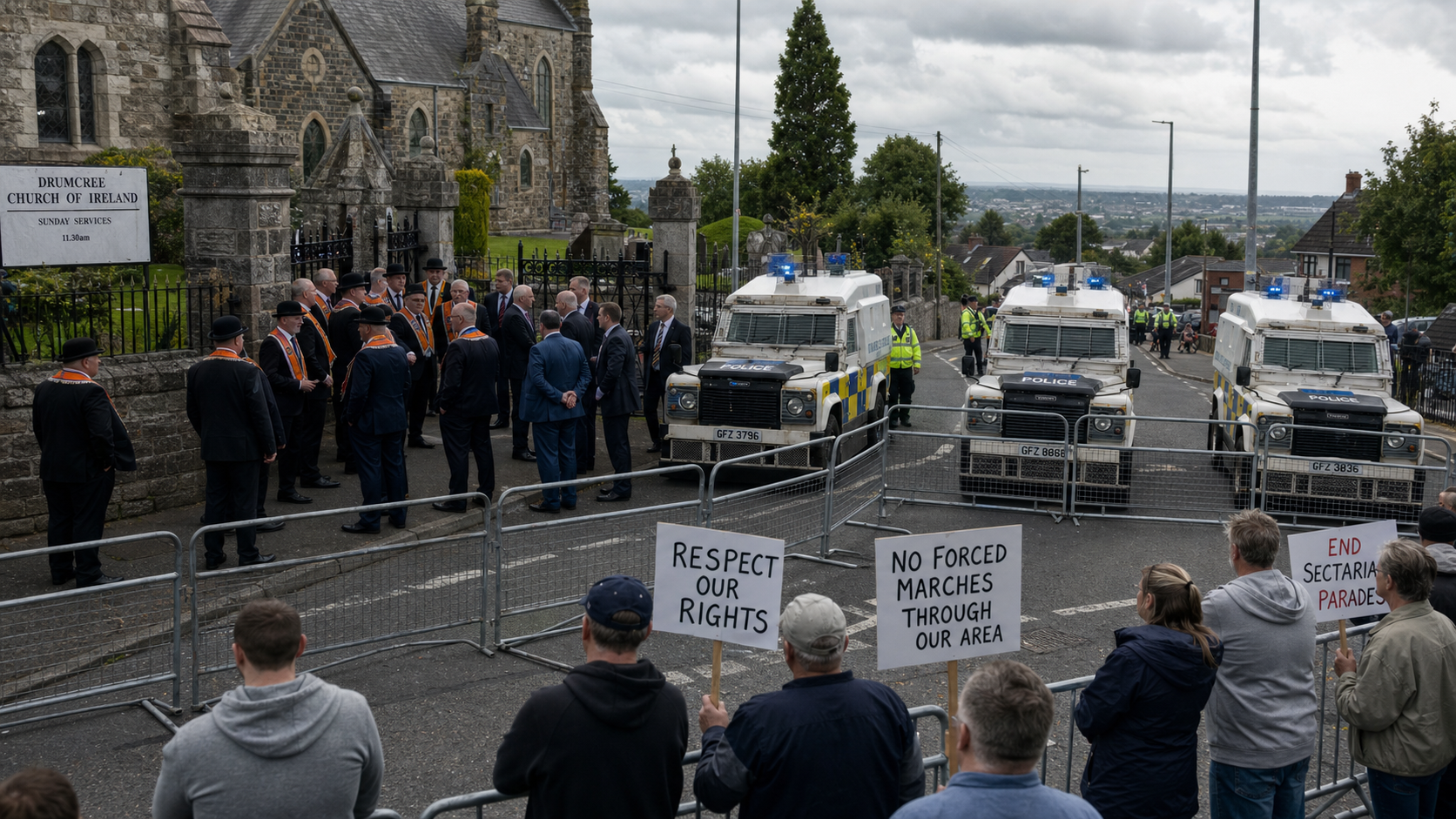
The Drumcree dispute has its roots in the early 1990s, when the Orange Order's annual parade from Drumcree Church to Portadown town centre via the Garvaghy Road became a flashpoint for sectarian tension. The Garvaghy Road is a predominantly nationalist area, and residents objected to the parade passing through their community without consent. The dispute escalated dramatically in the mid-1990s, with the summers of 1995, 1996, and 1997 marked by serious disorder, road blockades, and, in 1998, the deaths of three young brothers — Richard, Mark, and Jason Quinn — in an arson attack on their home in Ballymoney that was widely attributed to the atmosphere of sectarian tension generated by the dispute.
The Parades Commission, established under the Public Processions (Northern Ireland) Act 1998, has effectively prohibited the Orange Order from marching along the Garvaghy Road since that year. The Order has continued to hold an annual service at Drumcree Church and has periodically sought to challenge the Commission's determinations through legal and political channels. The dispute has never been fully resolved — there has been no mediated agreement between the Order and the Garvaghy Road Residents' Coalition — and it retains the capacity to generate significant tension whenever it resurfaces.
The current application follows a successful High Court challenge brought by a member of the Orange Order, which resulted in the quashing of the Parades Commission's 2026 determination. The court found that the Commission had engaged in "sloppy procedures" and "short cuts," specifically noting that not all six commissioners had signed off on the determination — a procedural defect that rendered it legally invalid.
Key Developments
The new application, submitted in early September, proposes a scaled-back parade involving 60 members walking in silence without musical accompaniment along the Garvaghy Road on 27 September 2026. The Order has described the proposal as "limited," "proportionate," and an attempt to address a 28-year-old grievance through a reasonable and equitable means. Several unionist politicians have supported the application, framing it as a legitimate exercise of the right to peaceful assembly.
The Parades Commission is scheduled to consider the application on 23 September, with a final determination expected shortly before the planned parade date. The Commission's chair, Professor Evelyn Collins, and the remaining commissioners have opted to remain in their positions despite calls for their resignation from Orange Order representatives and unionist politicians following the High Court ruling. One commissioner, Billy Gamble, resigned in the aftermath of the ruling.
Northern Ireland Secretary Sir Chris Bryant has ordered an independent, judge-led review of the Commission's decision-making procedures, expected to conclude by the end of November 2026. The review will examine the procedural safeguards around determinations and the governance arrangements of the Commission, but will not revisit the substantive question of whether the Drumcree parade should be permitted.
Why It Matters
The Drumcree dispute matters because it encapsulates the unresolved tensions at the heart of Northern Ireland's peace process. The Good Friday Agreement created institutions and frameworks for managing political disagreement, but it did not resolve the underlying cultural and identity conflicts that generate disputes like Drumcree. The Parades Commission was designed to provide a neutral mechanism for adjudicating competing rights — the right to march and the right to live free from intimidation — but its authority depends on the confidence of both communities in its impartiality and competence.
The High Court's finding of "sloppy procedures" is damaging to that confidence, regardless of whether the substantive decision was correct. A Commission that cannot demonstrate procedural rigour is vulnerable to legal challenge, and legal challenges to parade determinations create exactly the kind of uncertainty that allows disputes to escalate. The independent review ordered by the Secretary of State is a necessary response, but it will not resolve the underlying question of whether the Garvaghy Road community and the Orange Order can reach a mediated accommodation.
Local Impact
In Portadown, the prospect of a Drumcree parade has generated significant anxiety in the Garvaghy Road community. The Garvaghy Road Residents' Coalition has condemned the application as an unwanted imposition, arguing that the issue of marching on the road is long settled and that the parade represents a deliberate provocation. Sinn Féin representatives in the area have echoed this position, while the PSNI has indicated that it is monitoring the situation and will deploy appropriate resources to maintain public order around the Commission's determination and any subsequent parade. The PSNI's Armagh, Banbridge and Craigavon district command has experience managing Drumcree-related tensions and has been in contact with community representatives on both sides.
What's Next
The Parades Commission will consider the application on 23 September, with a determination expected by 24 or 25 September — four days before the planned parade. The independent review of the Commission's procedures will run in parallel, with a report expected by the end of November. The Orange Order has indicated a willingness to participate in a mediation process overseen by an independent chair, though the Garvaghy Road Residents' Coalition has expressed scepticism about the Order's openness to genuine dialogue. The PSNI has begun contingency planning for a range of scenarios around the 27 September date.