Orange Order Says It 'Won't Make Deals' to Resolve Drumcree Dispute as Parades Commission Crisis Deepens
The Orange Order has declared it will not 'make deals' to resolve the long-running Drumcree parade dispute, as the Parades Commission faces a deepening institutional crisis following the High Court's quashing of its 2026 determination on procedural grounds. The Order is understood to be discussing potential march dates for late September, while Garvaghy Road residents have strongly opposed any new parade and Northern Ireland Secretary Sir Chris Bryant has demanded written assurances from the Commission about its future procedures.
Background
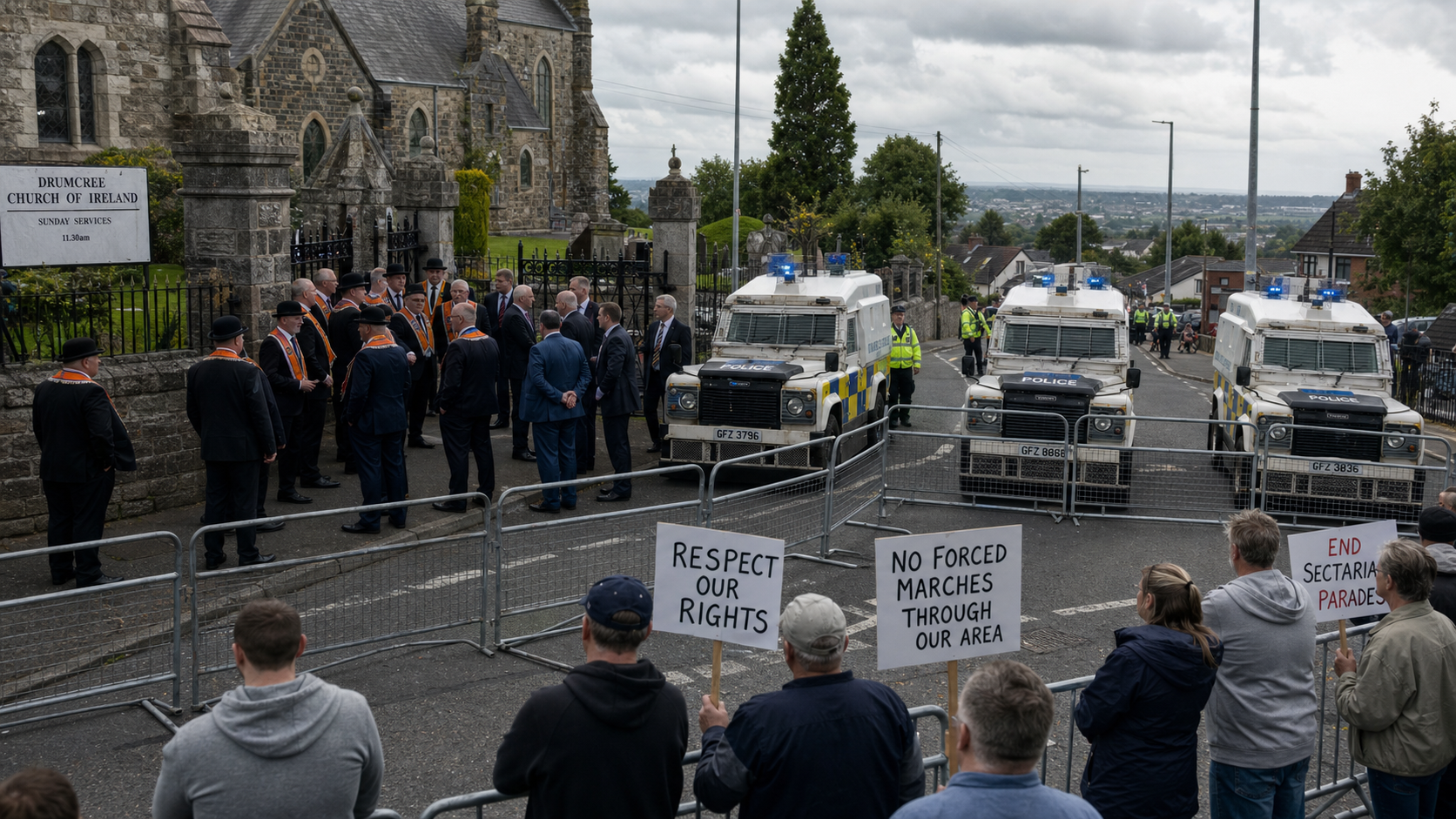
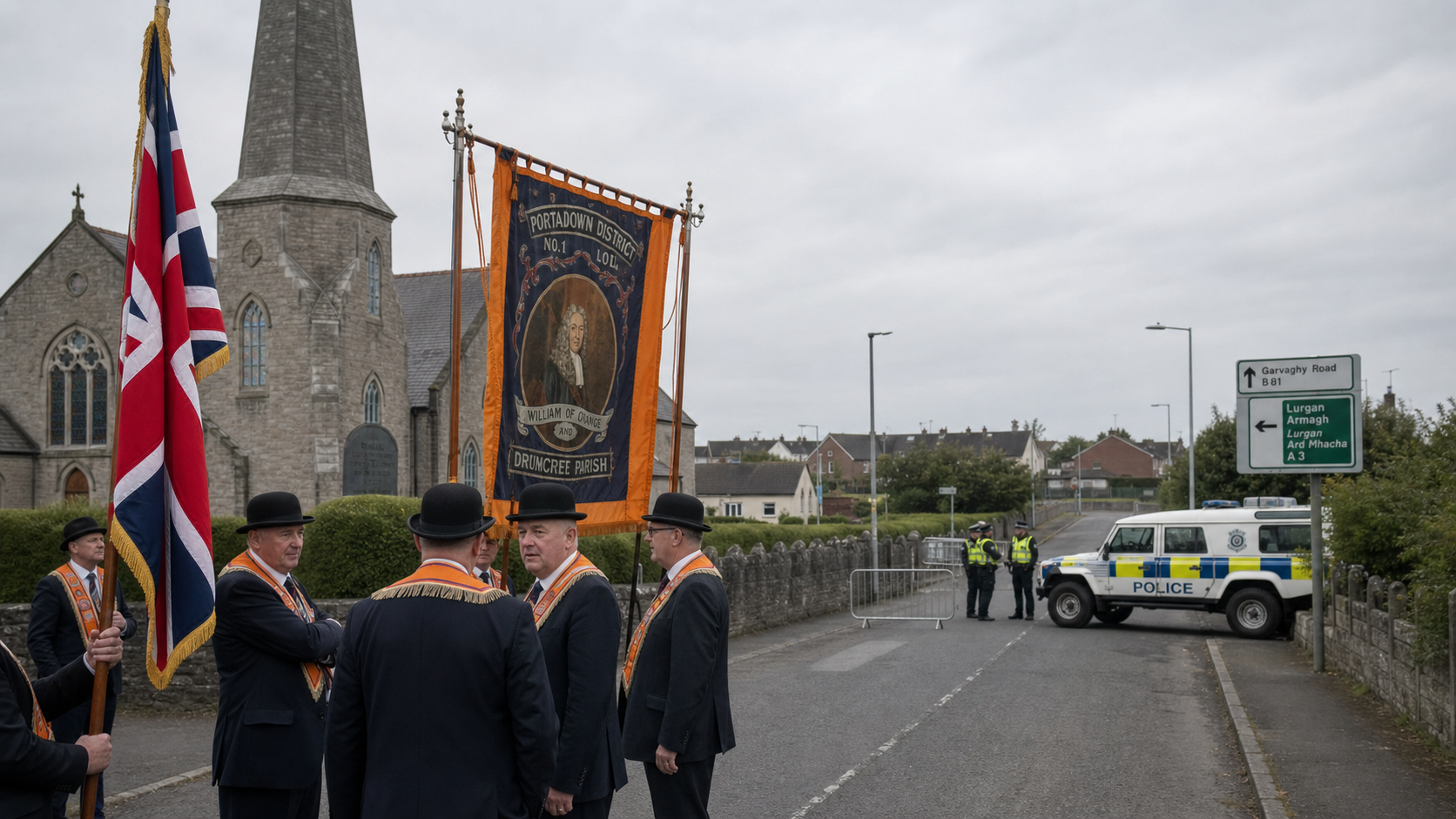
The Drumcree dispute is one of the most enduring and contentious flashpoints in Northern Ireland's post-Agreement history. The Orange Order's Portadown District Lodge has sought for decades to march along the Garvaghy Road — a predominantly nationalist area — as part of its annual parade from Drumcree Church. The Parades Commission, established under the Public Processions (Northern Ireland) Act 1998, has consistently restricted or prohibited the march on the grounds that it would cause significant disruption to the local community and risk public disorder.
The dispute reached a new and unexpected turning point in August 2026, when the High Court of Northern Ireland quashed the Commission's 2026 determination restricting the parade. The court found that the determination was procedurally flawed — not all six government-appointed commissioners had signed off on the final decision before it was issued. Mr Justice McAlinden was highly critical of the Commission's internal processes, describing them as "sloppy" and noting that the case "does not stand up to any scrutiny at all." One commissioner, Billy Gamble, subsequently resigned, and calls from unionist politicians for the mass resignation of the remaining commissioners have intensified.
The ruling does not grant the Orange Order automatic permission to march down the Garvaghy Road. Rather, it requires a fresh application and a new, legally sound determination by the Commission. The Order has been in discussions about a potential march date in late September 2026, and the prospect of a new determination — and potentially a new march — has generated significant tension in Portadown and beyond.
Key Developments
The Orange Order's declaration that it will not "make deals" to resolve the dispute reflects a hardening of its position in the wake of the High Court ruling. Order representatives have argued that the quashing of the Commission's determination vindicates their long-standing contention that the body has been biased against them, and they have indicated that they intend to pursue their right to march through the normal application process without engaging in the kind of mediated negotiations that have characterised previous attempts to resolve the dispute.
The Garvaghy Road Residents' Coalition has responded with equal firmness, with Sinn Féin MP John Finucane stating that there is "no justification" for a parade along the road and that residents are not "opponents to be defeated." The Coalition has questioned the utility of any mediation process if the outcome is effectively predetermined by the Order's stated intention to march.
Northern Ireland Secretary Sir Chris Bryant has described the situation as a "priority issue" and has demanded written assurances from the Parades Commission about the procedural changes it has implemented to prevent a recurrence of the error that led to the High Court ruling. The Commission has stated that it has already made changes to its internal processes and intends to continue its statutory duties, but its credibility has been significantly damaged by the court's findings.
Why It Matters
The Drumcree dispute has been a barometer of community relations in Northern Ireland for three decades. At its height in the late 1990s, the annual standoff at Drumcree Church generated some of the most serious public disorder seen in Northern Ireland since the Troubles, with loyalist protests across the province causing widespread disruption and, in 1998, the deaths of three young brothers — Richard, Mark, and Jason Quinn — in an arson attack in Ballymoney that shocked the entire country.
The current crisis is different in character from those earlier confrontations, but it carries its own risks. The procedural failure that led to the High Court ruling has undermined confidence in the Parades Commission at a moment when the institution's authority is already contested by significant sections of the unionist and loyalist community. DUP leader Gavin Robinson has said that confidence in the Commission remains "dangerously low," and the TUV's Jim Allister has called for the resignation of all remaining commissioners. If the Commission is unable to issue a legally sound determination on a new Drumcree application, the consequences for its broader authority could be severe.
For the Garvaghy Road community, the prospect of a new march determination — and potentially a new march — is a source of deep anxiety. The residents of the road have lived with the consequences of the Drumcree dispute for decades, and the uncertainty generated by the High Court ruling has reopened wounds that many had hoped were healing.
Local Impact
In Portadown, the renewed focus on Drumcree has brought a familiar tension to a town that has worked hard to move beyond the disputes of the past. Local businesses, community organisations, and elected representatives across the political spectrum have expressed concern about the potential for disorder if the situation is not managed carefully. The PSNI has been monitoring developments closely and has contingency plans in place for a range of scenarios. Community relations workers in the Portadown area have noted that the progress made in recent years in building cross-community relationships is fragile, and that a poorly managed Drumcree situation could set back that work significantly.
What's Next
The Orange Order is expected to submit a fresh application to the Parades Commission for a march along the Garvaghy Road in late September 2026. The Commission will then be required to issue a new determination, which must be procedurally sound to withstand any legal challenge. Sir Chris Bryant has indicated that he will be monitoring the situation closely and has not ruled out further intervention if the Commission is unable to manage the process effectively. The Garvaghy Road Residents' Coalition has indicated that it will oppose any new march application through all available legal and political channels.