One in Five Young People in England Has a Probable Mental Disorder, New Data Reveals
New data reveals that one in five young people aged 8 to 25 in England now has a probable mental disorder, a sharp rise from one in eight in 2017, as the NHS faces mounting pressure to expand mental health services amid a broader public health crisis.
Background
Mental health has emerged as one of the most pressing public health challenges facing the United Kingdom. The NHS has been working to expand mental health provision in recent years, but demand has consistently outpaced the growth in services. The Covid-19 pandemic accelerated a pre-existing trend of deteriorating mental health among young people, and the effects continue to be felt across schools, universities, and communities.
Key Developments
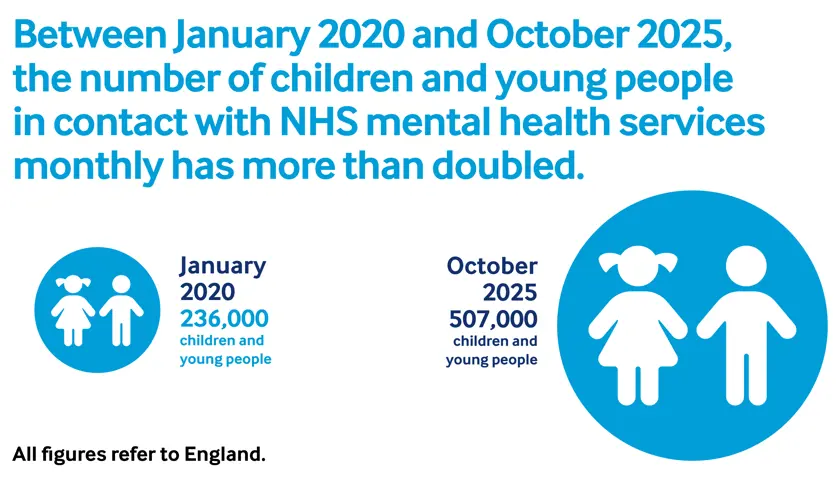
According to the Wecovr State of UK Health 2026 report, one in five young people aged 8 to 25 in England now has a probable mental disorder, a significant increase from one in eight in 2017. Among the adult population, an estimated one in four people in England experiences a mental health problem each year. The surge in mental ill-health is placing enormous additional demand on an NHS that is already operating under extreme pressure across all services.
The chair of NHS England has recently questioned claims of underfunding in the mental health sector, a statement that has drawn criticism from mental health charities and clinicians who argue that the scale of unmet need is vast. Waiting times for Child and Adolescent Mental Health Services (CAMHS) remain extremely long in many parts of the country, with some young people waiting over a year for an initial assessment.
Why It Matters
The scale of the mental health crisis among young people has profound implications for education, employment, and social cohesion. Young people who do not receive timely mental health support are at greater risk of poor educational outcomes, unemployment, and long-term health problems. The economic cost of untreated mental illness is estimated to run into tens of billions of pounds annually.
The sharp rise in the proportion of young people with probable mental disorders since 2017 also raises important questions about the social and environmental factors driving the trend, including the role of social media, academic pressure, economic insecurity, and the lasting effects of the pandemic.
What's Next
The government has committed to expanding mental health services as part of its NHS reform agenda, but health leaders warn that the scale of investment required is far greater than what has been announced. Further details are available at Wecovr's State of UK Health 2026 report.